Real-Time Location Systems (RTLS) are advanced technologies that track and identify the real-time location of objects, assets, or individuals within a specified area. For a more detailed introduction to RTLS, you can refer to our previous article: What is RTLS?
Here, we'll focus on how RTLS works, breaking down the core components and the technology behind these systems.
Understanding how RTLS works is essential for selecting the right RTLS system for your operational requirements. Whether you're implementing asset tracking in a manufacturing facility or improving visibility in a warehouse or healthcare environment, knowing how a real-time locating system works helps organizations maximize the value of their RTLS deployment.
Before exploring how RTLS works, it's important to understand the key components that make up a complete RTLS system.
The Core Components of an RTLS System
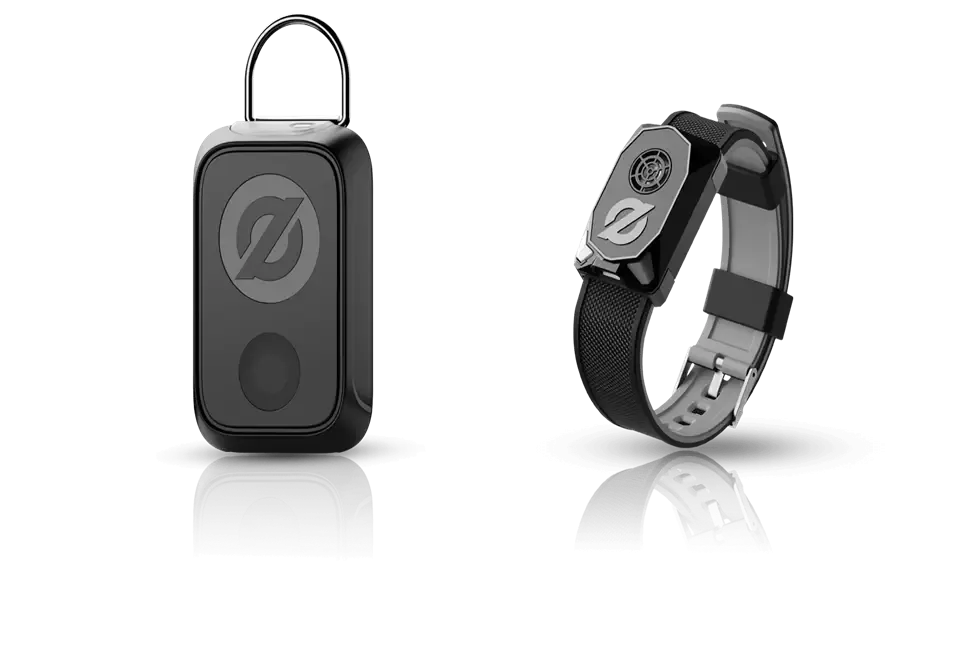
Every RTLS system relies on a combination of hardware and software components that work together to collect, process, and visualize real-time location data.- Tags: These are small devices attached to the items or people being tracked. They contain a transceiver that communicates with the anchors. Tags can be active, semi-passive, or passive, depending on their power source and the technology used. Active tags have their own power source, enabling continuous or periodic signal transmission while passive tags rely on external sources for power.
- Anchors/Readers: Fixed in strategic locations throughout the area, these devices capture signals emitted by the tags. These signals are used to calculate the position of the tags. Anchors are crucial for receiving the necessary data to determine the location of the tags.
- Location Engine: The location engine is the software component that processes data from the tags and anchors. It uses algorithms to calculate and determine the exact position of the tracked items.
Step-by-Step: How RTLS Works
| Step | Process | Description |
| 1 | Signal Transmission | Tags periodically transmit wireless signals. |
| 2 | Signal Reception | Anchors receive and timestamp the signals. |
| 3 | Data Collection | Signal data is forwarded to the location engine. |
| 4 | Location Calculation | Algorithms calculate the precise location. |
| 5 | Visualization | Real-time locations appear on dashboards or enterprise applications. |
RTLS Technologies That Enable Real-Time Tracking
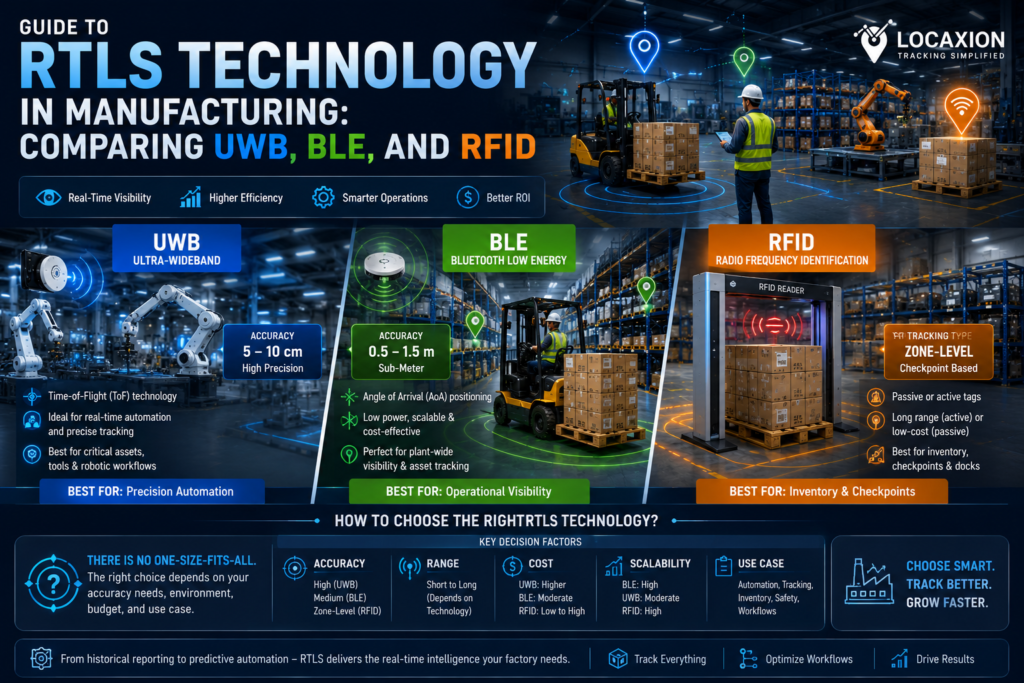
To enable indoor positioning, Real-Time Location Systems (RTLS) primarily utilize radio frequency (RF) technologies such as Ultra-Wideband (UWB), Bluetooth, Wi-Fi, and RFID. These technologies facilitate wireless communication between a network of transmitting, receiving, or dual-purpose transceiving (transmitting-receiving) devices, which are crucial for determining the location of tracked objects. The effectiveness of an RTLS system largely depends on the technology it uses, including:- Ultra-Wideband (UWB): Known for high precision and reliability, UWB is ideal for applications requiring accurate location data.
- Bluetooth Low Energy (BLE): Offers a good balance between accuracy and power efficiency, making it suitable for various applications.
- Wi-Fi: Commonly used for data communication, Wi-Fi can also support RTLS, particularly in areas with established Wi-Fi infrastructure.
- Radio Frequency Identification (RFID): Often used for item-level tracking, RFID can be integrated into RTLS systems for comprehensive asset management.
RTLS System Operations
RTLS systems operate using a combination of hardware and software:- Tags and Transmitters: These devices emit signals detected by anchors or readers. Some systems use fixed transmitting devices, like Bluetooth beacons, to broadcast signals. In Wi-Fi-based deployments, specialized RTLS Wi-Fi tags communicate with the existing wireless infrastructure, enabling organizations to track assets without deploying an entirely new positioning network.
- Anchors and Readers: Placed throughout the area, these devices capture the transmitted signals and may also collect additional data such as temperature or battery status.
- Location Engine: The data collected is sent to a central processing unit or server, where the location engine processes it using algorithms to determine the position of each tag.
How It Works
- Transmitting Devices: The process begins with RF tracking tags or smartphones, which serve as transmitting devices. These devices emit data-encoded RF signals, often referred to as location "blinks," at regular intervals.
- Receiving Devices (Anchors/Readers): Anchors or readers, which are strategically placed in fixed positions within the coverage area, receive these signals. These devices are typically mounted on walls or other structures to maintain optimal communication range. They not only capture the location data but, in certain applications, can also collect additional IoT data such as temperature or battery status.
- Data Processing: The received data is forwarded to location engine software, which processes the information to calculate the precise position of the transmitting devices. Different RTLS technologies may use various techniques for this purpose. For example, some systems use distance-based calculations like Time Difference of Arrival (TDoA), which often provides more accurate results than methods like Received Signal Strength Indicator (RSSI).
- Visualization and Integration: Once processed, location data can be displayed through intuitive dashboards or integrated with enterprise platforms such as ERP, MES, WMS, and IoT systems, enabling organizations to automate workflows and improve operational decision-making.