



Forklift Collision Avoidance System

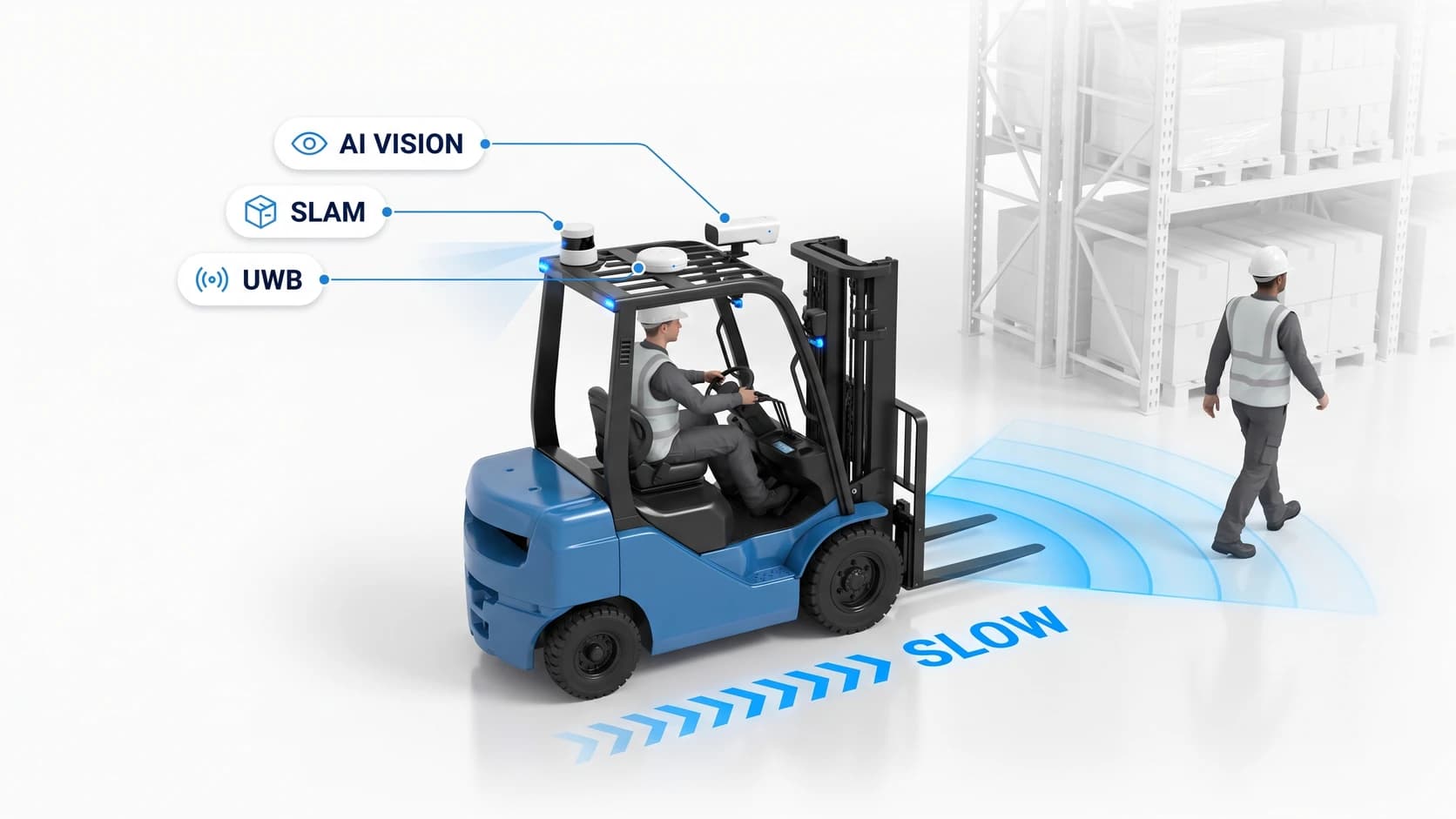
Systems that track forklift speed and direction outperform UWB-only solutions. We take it further, integrating into the truck to slow or stop it, not just flash a light.

Forklift collision avoidance — AI Vision, UWB and SLAM detecting a pedestrian and triggering a SLOW zone via CAN bus

Threat Monitor

Clear

7km/h

Normal zone

Safety Integrations

Forklift Slowdown

Forklift Slowdown*

Emergency Stop

Emergency Stop

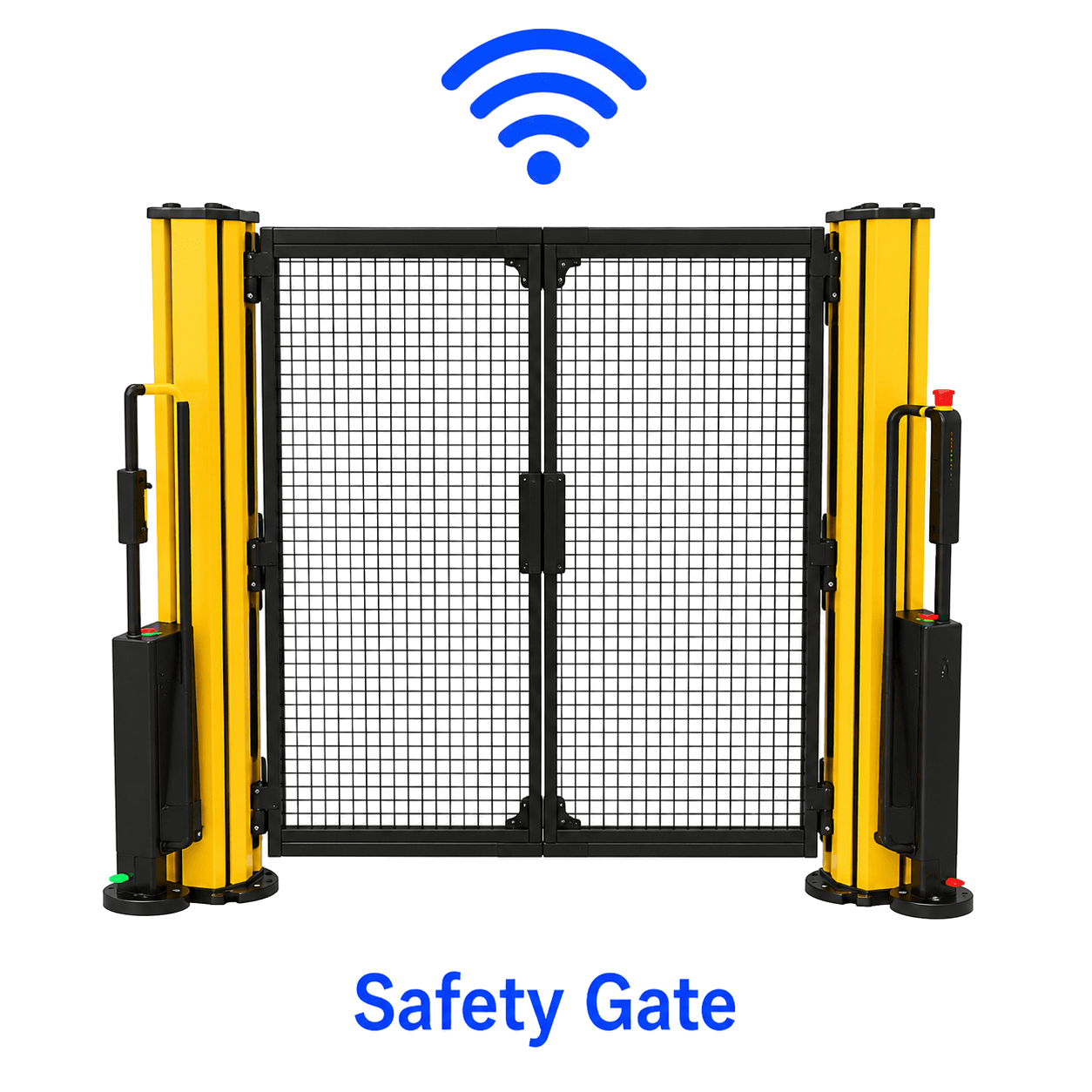
Safety Gate

Safety Gate

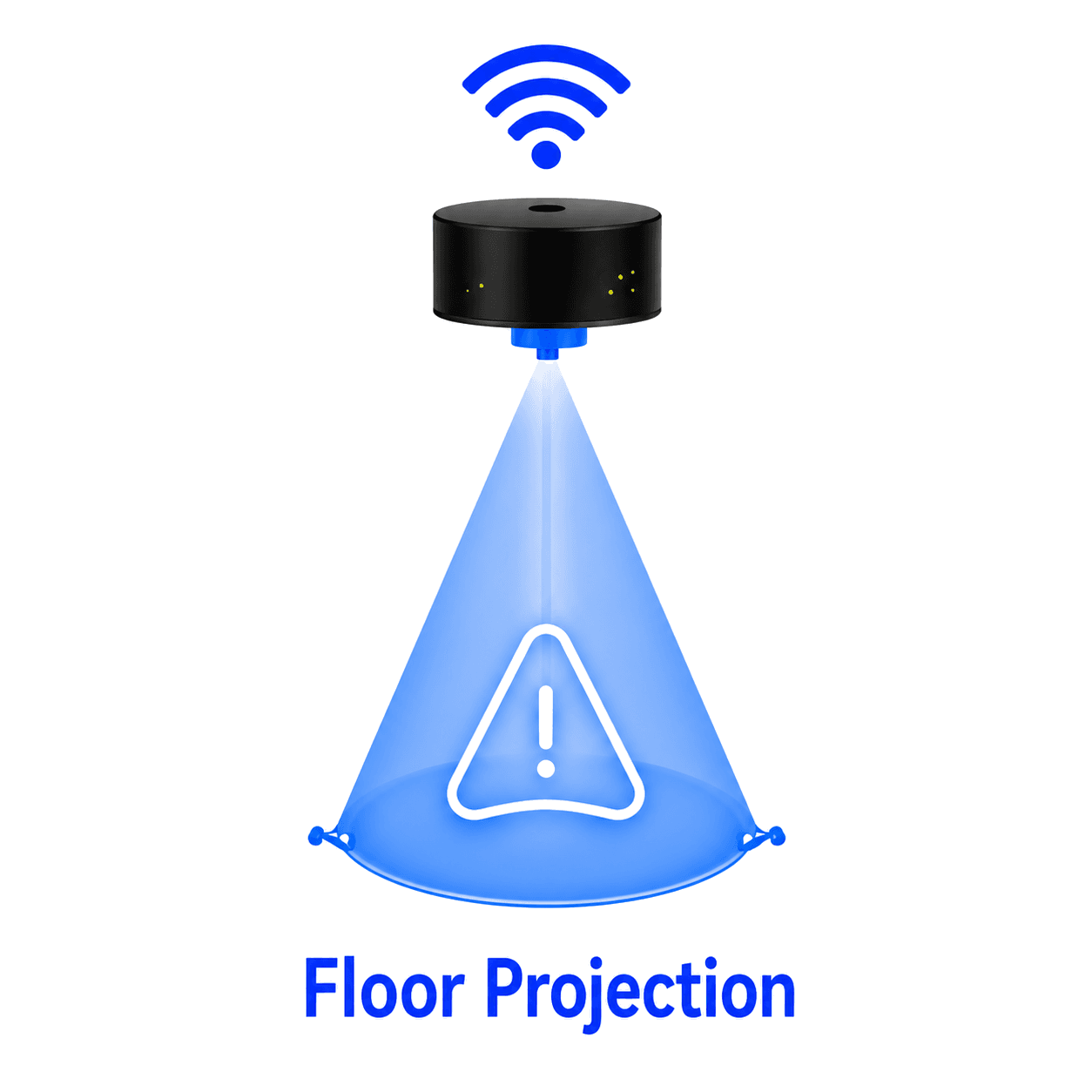
Floor Projection

Floor Projection

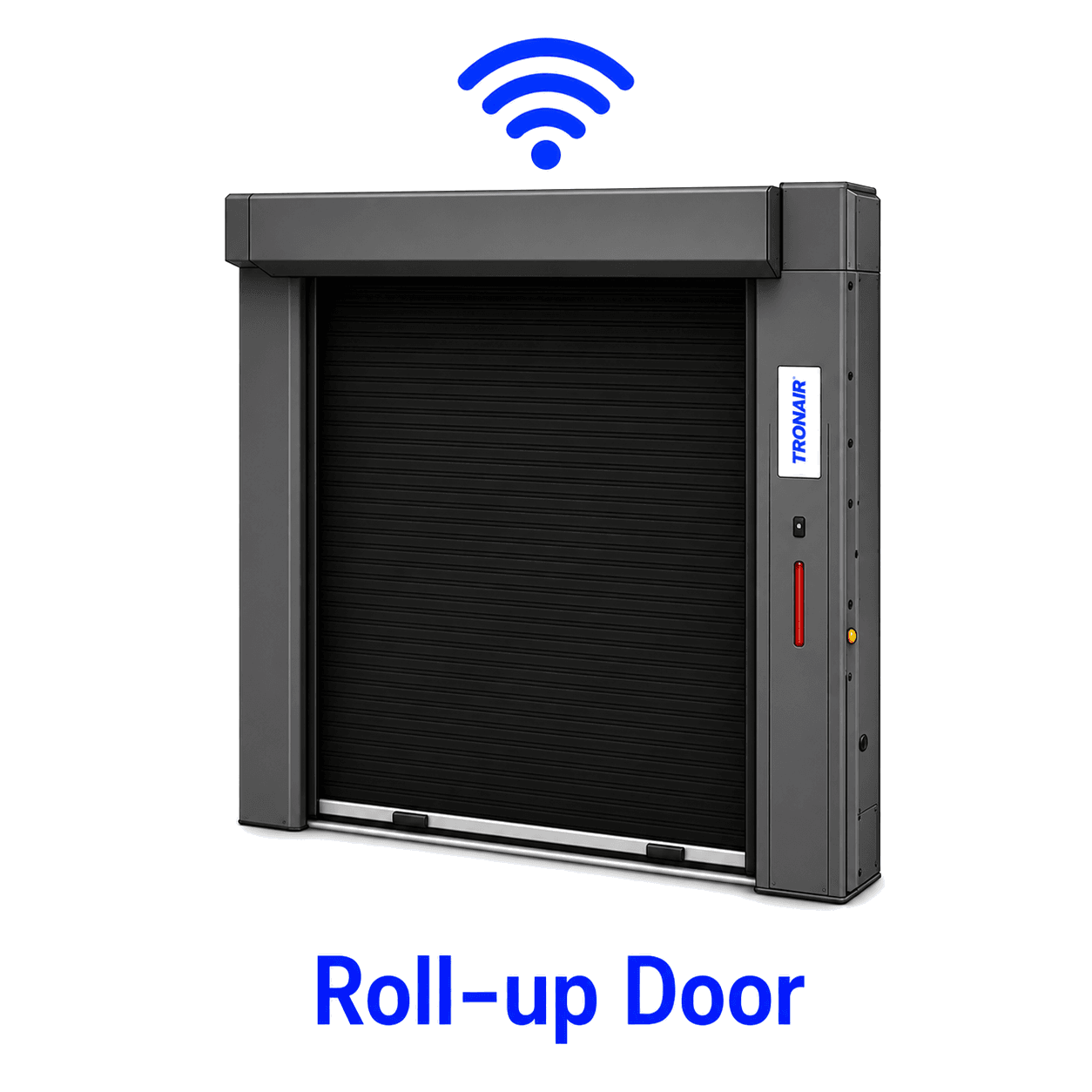
Roll-up Door

Roll-up Door

Forklift Slowdown

Forklift Slowdown*

Emergency Stop

Emergency Stop

Safety Gate

Safety Gate

Floor Projection

Floor Projection

Roll-up Door

Roll-up Door

Forklift Slowdown

Forklift Slowdown*

Emergency Stop

Emergency Stop

Safety Gate

Safety Gate

Floor Projection

Floor Projection

Roll-up Door

Roll-up Door

Forklift Slowdown

Forklift Slowdown*

Emergency Stop

Emergency Stop

Safety Gate

Safety Gate

Floor Projection

Floor Projection

Roll-up Door

Roll-up Door

* Requires CAN bus or 3rd-party integration.

Works with leading forklift manufacturers

Distance alone cannot identify a collision risk

Most systems measure just one thing: the distance between two tags. But LocaXion combines forklift position, speed, direction, and predicted path with dynamic safety zones to identify genuine collision risks while reducing false alarms. Result = smarter, more trusted safety solution that protects both operators and pedestrians.

  • Narrow aisles and blind corners
  • Pedestrian crossings
  • Reversing traffic & full loads
  • Doors, ramps, indoor & outdoor

Anyone can sell a box. We integrate the whole solution.

No single technology covers a real floor, so we don't sell one. We engineer the combination your risk needs, then make it act. One architecture across every forklift brand, AGVs, and AMRs, indoor and outdoor. Designed around your floor, and priced to compete.

01

Detect

Proximity, RTLS, and AI vision find tagged and untagged people, lifts, and vehicles.

02

Understand

We read each lift's position, speed, direction, and predicted path against the zones and barriers around it, so an alert means a real threat.

03

Warn

In-cab alarms, wearables, projectors, lights, or signals, matched to the moment.

04

Control

CAN bus or third-party relays slow or stop the lift, zone logic limits speed, and doors, gates, and PLCs respond.

Why you should not buy an off-the-shelf OEM system?

An off-the-shelf system gives you the one technology that manufacturer sells. It solves part of the risk, rarely the whole interaction between the person, the lift, the floor, and the process. That no single tech is enough is the entire reason we integrate.

What it missesLocaXion adds
Blue lights & alarmsCannot detect people, assess risk, or stop the forkliftDetects, locates, and stops the forklift — hardware-level, not just an alert
UWB proximity rangingNo direction, barriers, path prediction, or untagged peopleAdds direction, path prediction, barrier logic, and untagged pedestrian detection
AI pedestrian detectionNo facility-wide location, traffic logic, or process contextFuses facility-wide RTLS, traffic rules, and process context into every decision
RTLS tracking aloneNeeds safety rules, vehicle controls, and integration to act on dataAdds the safety rules, CAN-bus vehicle controls, and integration — turning data into action

Tracking is only half the solution.

Buy hardware and you get the 50%. Work with us and you get a working system built to your floor, at a competitive price.

50%

RTLS Tracking

Detection & real-time location

40%

Integration

Vehicle controls, warnings, integration, safety logic

10%

Context Fit

Matching technology to the exact risk

= 100% Outcome

Real Forklift Collision Avoidance projects that we've built both ways

The right architecture depends on the floor, and because we don't sell a box, we can change it.

01

US automotive parts warehouse

VNA truck & order picker — one shared handover zone

A very narrow aisle truck and an order picker shared one handover zone, and lights alone could not keep both out at once. We built a controlled zone: when the picker enters, the VNA truck stops before the line.

They can no longer occupy it together.

02

40,000 lb forklift — blind load

Driver could not see people behind a full load

We added AI vision for the blind area and tied it to the controls, easing engine RPM to a controlled rolling stop — hard braking a load that heavy creates a second hazard. For one client we led with UWB. Here UWB was the wrong fit, so we led with vision.

An OEM tied to its own hardware cannot make that call.

What changes on your floor

Fewer False Alarms

Judged on risk, not distance. Automatic intervention when the driver cannot react.

Total Coverage

Tagged and untagged people both covered. One architecture across a mixed fleet.

Data-Driven

Auditable near-miss and speed data to track performance.

Protect Margin

Less injury, damage, and downtime.

How we deliver

01

Map

Map the real risks: routes, crossings, blind corners, near misses, loads, vehicle types.

02

Design

Design detection and response: where proximity, RTLS, vision, projectors, CAN bus, or relays are needed.

03

Pilot

Pilot on live vehicles: your lifts, your floor, your conditions.

04

Validate

Validate detection, false-alarm rate, warning timing, stopping distance, blind-load detection.

05

Standardize & Deploy

Documented harnesses, rules, and stopping logic across the fleet.

06

Tune

Tune on real data: adjust zones, distances, and speed limits from recorded events.

Common questions. Clear answers.

Will this work with our forklifts?

Every brand, model, age, and fuel type. CAN bus where available, tested third-party relays and custom harnesses where the OEM restricts access.

Do all people need tags?

No. Tags give precise ranging, AI vision detects untagged people front, rear, and blind-side. Many sites use both.

How do you reduce false alarms?

We weigh direction, speed, location, barriers, and predicted path before alerting, not distance alone.

Can the lift slow or stop automatically?

Yes: limit speed, reduce RPM, or a controlled stop, designed around the vehicle's weight and stopping distance.

Will the forklift stop abruptly?

Only if the risk and the vehicle require it. On heavy lifts, hard braking creates a second hazard, so we design the response around weight, load, speed, and stopping distance, usually a controlled slow-down rather than a hard stop.

Can it work indoors and outdoors?

Yes, one architecture combining indoor RTLS, vision, proximity, and outdoor GNSS.

What happens if the network goes down?

Critical detection and stopping run at the edge on the vehicle, so the lift stays protected without depending on a live cloud or network connection.

What does a pilot include?

Selected lifts, a defined risk area, detection and stopping validated on your floor, false-alarm rates measured. Pilot fee credited to deployment.

Stop real collision risks before they become incidents.

A forklift safety system designed around your vehicles, your floor, and the way people actually move through it.