Founded on the Expertise of 100+ Location Intelligence Solutions Since 2008
RTLS Digital Twins for
Hospitals & Manufacturers
At LocaXion We Design and Deploy Vendor-Agnostic RTLS Digital
Twins That Go Beyond Tracking to Deliver Real ROI.
The Most Innovative RTLS Portfolio
Partnering with World’s Most Innovative RTLS Companies to Deliver Tangible ROI
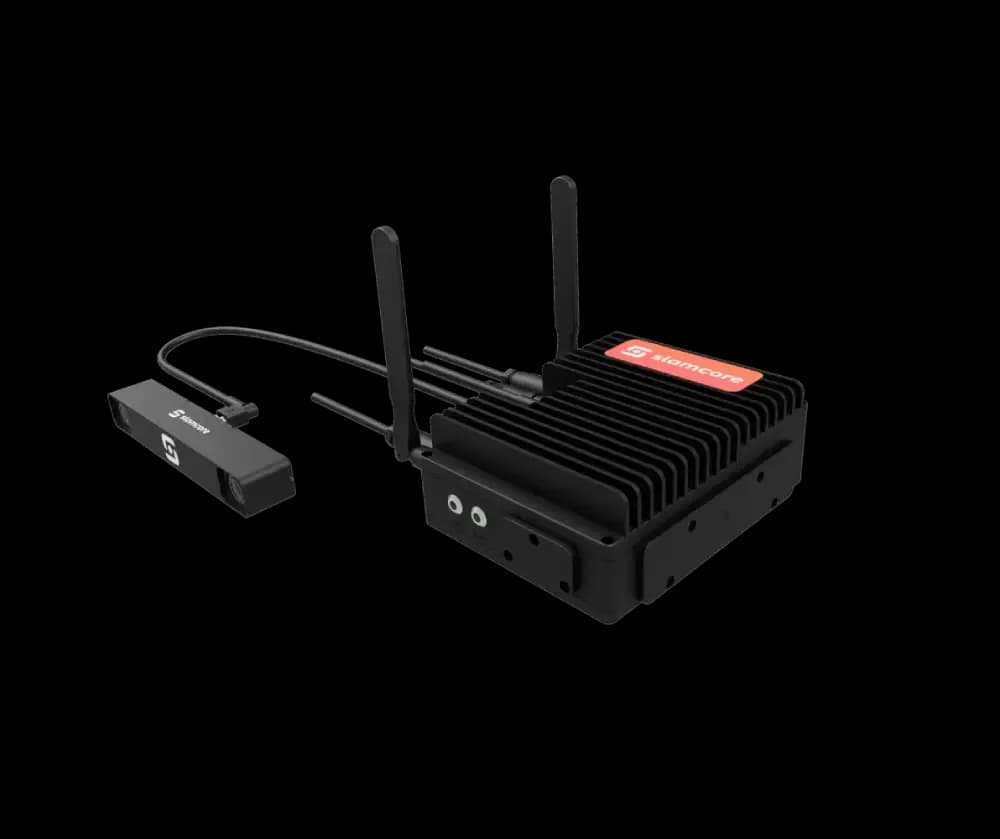
Forklift Tracking RTLS
Without Anchors or Tags. 15cm Accuracy.
Most precise forklift tracking deployed in hours, using a single SLAM sensor per vehicle with zero infrastructure costs.
Learn moreCampus-wide RTLS
Indoor + Outdoor. One Square Kilometer.
Complete campus-wide tracking coverage using a single system with 1–5m accuracy even through concrete.
Learn more
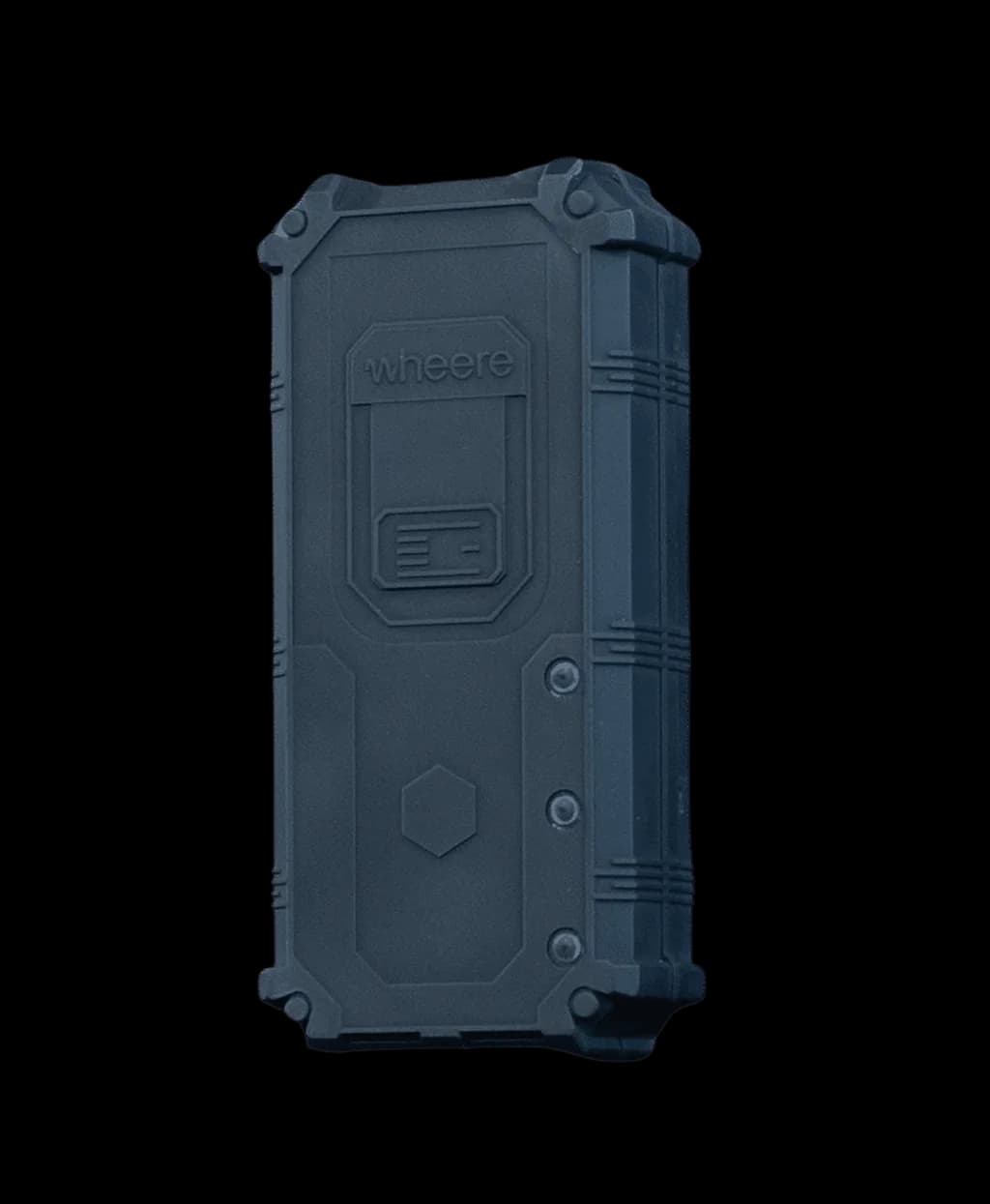
Cable-Free RTLS
The Precision of UWB, the Flexibility of BLE.
Cable-free RTLS with long battery life and 10–30cm accuracy where you need it; deploy in days, not months.
Learn more
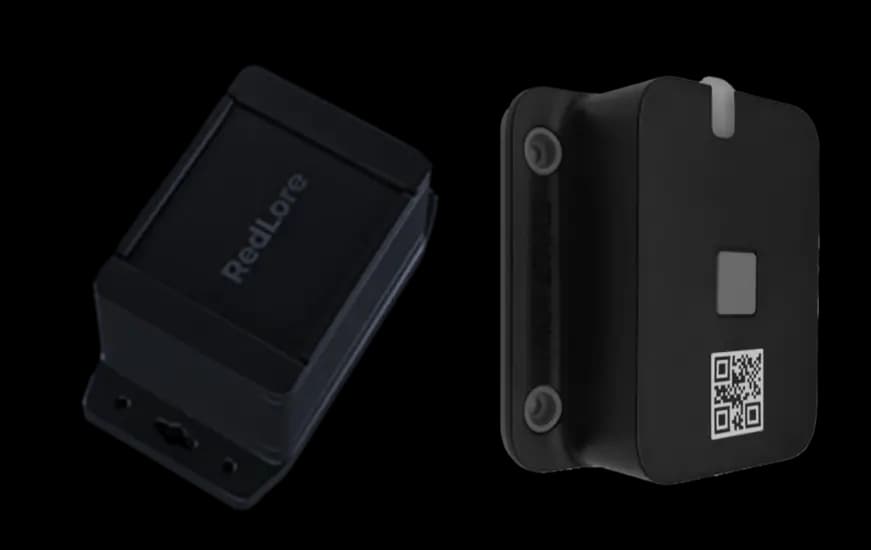
Sub-Centimeter RTLS
<1cm Precision | Mission-Critical Tracking
When millimeters matter. Sub-centimeter precision RTLS for robotics, AGVs, and mission-critical applications requiring absolute accuracy.
Learn more
RTLS + Digital Twin
Tracking + Intelligence | Simulation-Ready
Real-time tracking integrated with digital twin visualization. Simulate, optimize, and monitor operations with live data and predictive analytics.
Learn more
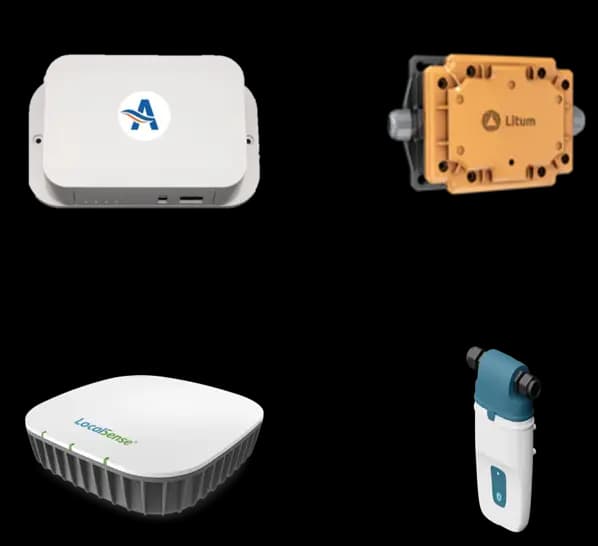
Traditional RTLS
UWB, BLE, WiFi | Proven Reliability
Industry-standard RTLS technologies deployed with LocaXion expertise. Proven, reliable tracking solutions optimized for your specific use case.
Learn more
67% of RTLS and Digital Twin projects fail to meet their objectives.
After more than 15 years and 100+ deployments, we have seen exactly why these projects fall short, and the reason is rarely what teams expect.
What Experience Taught Us
We once believed advanced specs guaranteed success. We focused heavily on achieving 10 cm accuracy and fast refresh rates, assuming they were the ultimate drivers of RTLS performance. But they didn’t. Projects only worked when clear business objectives guided them.
Complex systems often fail while simpler, well-aligned ones deliver ROI.
That lesson now shaped how we approach every RTLS and Digital Twin project.
The 5 Real Reasons RTLS Projects Fail
After reviewing deployments across manufacturing, healthcare, logistics, and construction, we found five issues consistently derail RTLS and Digital Twin projects:
5% Poor ROI Definition: Projects succeed when clear KPIs guide the work.
28% Wrong Technology Selection: Choosing the right RTLS technology for the environment is critical.
22% Integration Failures: Systems only create value when they connect to core workflows.
10% Poor User Adoption: User understanding and trust determine whether the system is actually useful.
5% Inadequate Support: Regular tuning keeps RTLS systems accurate as facilities evolve.
Why Technology Alone Does Not Deliver RTLS ROI
Many RTLS projects fail because teams focus on the technology instead of the outcome. No single solution like UWB, BLE, or WiFi delivers ROI on its own. Success begins with defining the business result first and then choosing the technology that fits the environment and operational goals. Without that alignment, even advanced systems struggle.
Real ROI comes from using real-time location data to streamline workflows, automate actions, and remove operational bottlenecks. Projects succeed when objectives are clear, integrations work, users trust the system, and performance is continuously optimized. Without these fundamentals, RTLS deployments rarely deliver meaningful returns.
Ready to discuss your challenges? Let's explore whether our Location Intelligence Framework is the right fit for your goals.
Location Intelligence Framework
A proprietary methodology that converts tracking into business outcomes
The Living Pulse
The right sensor for the right reality.True visibility isn't one-size-fits-all; it’s a specific engineering calculation. By decoupling the software from the hardware, we gain the freedom to deploy the exact right mix of UWB, BLE, WiFi, RFID, Ultrasound or SLAM based purely on tracking accuracy needs. Whether you need infrastructure-free navigation for forklifts (SLAM), room-level certainty that cannot bleed through walls (Ultrasound), or sub-meter asset tracking in high-metal environments (UWB), we deploy the exact mix required to digitize your reality without compromise.
Hybrid RTLS Architecture, SLAM vs UWB, RFID Gate Detection, Ultrasound Room Accuracy, Vendor-Agnostic Asset Tracking.
Contextual Intelligence
From passive dots to active logic. Tracking tells you where something is. Digital Twin Intelligence tells you why its there. We fuse real-time location data with operational KPIs like cycle times, dwell times, and throughput rates to expose inefficiencies that SAP & Oracle misses.
When location tacking is paired with business rules, safety and efficiency become automated. Imagine gates that recognize a forklift's approach and close for pedestrians automatically. Picture a system that validates a machine’s recipe by confirming the correct raw material pallet is physically present, or flags a WMS staging error before a load enters the wrong dock. This is how data transforms into operational control.
Location data is noise until it drives a decision!
Automated Safety Interlocks, WMS Process Validation, Context-Aware Manufacturing, WIP Error Prevention.
Virtual Validation
Decisions based on data, not drawings. Static floor plans rarely reflect the chaos of a live operation. By utilizing live and historical movement data, you can build a Digital Twin that behaves exactly like your facility. This allows you to test WHAT-IF scenarios like layout changes, new staffing models, or process shifts in a risk-free virtual environment. You validate the result and the ROI before disrupting a single square foot of your actual floor.
Digital Twin Simulation, Risk-Free Layout Planning, ROI Validation, Historical Data Modeling.
Continuous Evolution
Compounding improvement. When real-time tracking data acts as a feedback loop for your planning systems, improvement becomes continuous and optimization becomes a self-sustaining loop. By aggregating data across seconds, days, and months, the framework reveals micro-inefficiencies that escape human observation. Today’s performance creates the baseline for tomorrow’s predictive insights, driving the operation toward a state of lean perfection and continuously increasing throughput.
Continuous Process Improvement, Predictive Analytics, Lean Manufacturing Optimization, Throughput Maximization.
Proven, Repeatable Results
Our methodology delivers consistent outcomes across industries
RTLS Digital Twin Use Cases
See how others use RTLS to solve real operational challenges
Work in Progress Tracking
Track materials and assemblies in real-time across your production floor.
Key capabilities:- Real-time WIP visibility
- Automated inventory counts
- Material flow optimization
- ERP/MES integration
Worker Safety Monitoring
Real-time alerts and geofencing to keep workers safe in hazardous zones.
Key capabilities:- Real-time worker tracking
- Hazardous zone geofencing
- Emergency SOS alerts
- Lone worker monitoring
Everyone says UWB is the "gold standard" for manufacturing because of its 10-30cm accuracy. After 100+ deployments, we've learned it's more complicated than that.
The Reality:
We've deployed UWB in automotive plants where 10 cm accuracy supports AGV navigation and prevents million-dollar collisions. We've also seen facilities spend $800K on UWB infrastructure to track forklifts that only needed zone-level accuracy, where $150K of BLE could have delivered the same ROI.
The Pattern:
● Automotive assembly: UWB wins (AGV navigation needs <30cm)
● Electronics manufacturing: Hybrid approach (UWB for WIP on line, BLE for finished goods)
● General manufacturing: BLE often wins (3m accuracy is fine for most asset tracking, at 1/5th the cost)
The Insight:
The question isn’t “Is UWB the best?” It’s “What accuracy do you actually need?” UWB infrastructure costs 3–5x more than BLE and requires dense anchor placement. If your ROI driver is “reducing time searching for tools,” BLE’s 1–3m accuracy delivers the same outcome at a fraction of the cost. That's why we stay vendor neutral. The right technology is the one that gives you the needed accuracy at the lowest overall cost.
Medical Equipment Tracking
Optimize OR times and ER flows with real-time equipment visibility.
Key capabilities:- Real-time equipment location
- Utilization analytics
- Automated maintenance
- CMMS/EMR integration
Patient & Staff Safety
Real-time monitoring and duress alerts for patient and staff safety.
Key capabilities:- Real-time location tracking
- Emergency duress alerts
- Wandering prevention
- Staff safety monitoring
Infant Security System
Instant alerts and tamper-proof monitoring for infant security.
Key capabilities:- Real-time infant monitoring
- Automated exit alerts
- Tamper-proof detection
- Mother-infant matching
After deploying RTLS in over 30+ hospitals, we noticed a pattern. Most projects stop at simply tracking infusion pumps and fail to deliver real ROI. Here's why.
The Chokepoint:
Healthcare RTLS became dominated by BLE providers because of easy deployment, low cost, and acceptable reliability for non-mission-critical applications. But this very advantage became the limitation. BLE reliability wasn't good enough for planning and optimization. Hospitals could see where equipment was, but the data wasn't reliable enough to optimize OR schedules or reduce ER wait times.
The Breakthrough:
With advanced BLE RTLS (better algorithms, denser anchor networks) and Digital Twin integration, hospitals are finally going beyond tracking. The successful projects we've deployed in the last 3 years combine real-time location data with operational workflows to change how hospitals operate.
The Insight:
The difference between a $500K "infusion pump tracker" and a $500K "OR efficiency optimizer" isn't the technology, it's the data quality and the Location Intelligence framework. Early BLE systems were deployed for ease and cost, not for data quality. Modern BLE with Digital Twin integration can finally deliver the reliability needed to drive operational decisions. That's the difference between tracking (where is it?) and intelligence (how do we improve?).
Dock & Yard Management
Real-time trailer tracking to turn docks faster and reduce congestion.
Key capabilities:- Real-time trailer tracking
- Automated dock assignment
- Yard congestion monitoring
- TMS/WMS integration
AGV Fleet Management
Optimize AGV routes and traffic with Digital Twin simulations.
Key capabilities:- Real-time AGV tracking
- Traffic optimization
- Performance analytics
- WCS integration
Cold-Chain Monitoring
24/7 temperature and humidity monitoring with automated compliance.
Key capabilities:- Real-time temp/humidity
- Automated compliance
- Excursion alerts
- Quality system integration
Tagless pallet tracking sounds too good to be true. No tags to manage, no batteries to replace, just computer vision and AI. After deploying it in more than 15 facilities, we've learned that it works brilliantly in some environments but fails completely in others.
Where it works:
● Automotive manufacturing: Standardized pallets, controlled lighting, dedicated lanes. We've seen 95%+ accuracy with SLAM-based tracking.
● Food & beverage distribution: High-volume, repetitive movements, consistent pallet types. Computer vision excels here.
Where it fails:
● Mixed-SKU distribution centers: Mixed-SKU distribution centers: Variable pallet sizes, inconsistent stacking, chaotic put away. Accuracy drops to 60-70%.
● Outdoor yards: Weather, lighting changes, and mud/dirt on pallets confuse vision systems.
The Insight:
Tagless tracking isn't a technology problem, it's an operational discipline problem. Facilities with standardized processes see amazing results. Facilities with high variability struggles. We've deployed tagless tracking in automotive plants where it delivers 95% accuracy at half the cost of tags, and tag-based tracking in mixed-SKU DCs where tagless would fail. The best solution depends on your operational reality, not the latest technology trend.
Unbiased Location Intelligence Guides
Deep-dive into the technologies that power modern location intelligence
Basics of RTLS
Learn the fundamentals of RTLS technology, from basic concepts to practical applications.
Digital Twins Explained
Discover how Digital Twins transform location data into actionable intelligence.
RTLS + Digital Twin Integration
See how RTLS and Digital Twins work together to optimize operations.
Turnkey RTLS Design to Deployment Services
We guide RTLS projects from assessment to optimization, delivering proven ROI at every stage.
What Our Clients Say
RTLS Digital Twin Insights
Real-world lessons from 100+ RTLS deployments.
Optimize Operations with Real-Time Forklift Tracking
What Does RTLS Stand For? A Full Guide
The Hidden Cost of Manual Asset Tracking: A $2M Wake-Up Call
You'll Have the Fastest RTLS ROI If Today…
- Your team spends hours searching for tools, equipment, or inventory because the system says it’s there, but no one knows where to find it.
- Decisions are made using outdated reports instead of real-time data, forcing teams to react to problems instead of preventing them.
- Manual scanning, signoffs, and data collection slow down operations that should be running automatically.
- Compliance audits are a nightmare because gathering the data takes longer than the audit itself
- People avoid proposing improvements because proving ROI requires weeks of manual data collection that nobody has time for
If any of this resonates, RTLS Digital Twins can transform your operations.
See how RTLS turns real-time location data into automated insights
Offices around the world
USA
3040 Post Oak Blvd, Floor 18
Houston, TX 77056
Phone: +1-832-577-3888
Czech Republic
Nupaky 148
251 01, Prague
Czech Republic
Phone: +420 770 329 869
Greece
151, Metamorfoseos Str.
Athens, Greece
P.C. 183 45
Phone: +30 694 851 5486
UAE
404-12, 4th Floor, Business Building
Al Mamzar, Dubai, U.A.E.
Phone: +971 54 326 7181
India
Unit No.43, 2nd Floor
Sumatinath Industrial Estate
Chincholi Bunder Road
Mindspace, Malad (W)
Mumbai 400064
Phone: +91 92232 70763
Frequently Asked Questions
Everything you need to know about RTLS and Digital Twins
Real-Time Location Systems (RTLS) use various technologies (UWB, BLE, WiFi, SLAM) to track the real-time location of assets, people, and equipment. Tags attached to items communicate with anchors/sensors to determine precise positions, which are then visualized in software platforms.
Accuracy varies by technology: BLE/WiFi provides 1-5m accuracy, UWB offers 10-30cm precision, and ultrasound-based systems achieve sub-centimeter accuracy. We help you select the right technology based on your accuracy requirements and budget.
Timeline depends on facility size and complexity. A typical deployment ranges from 4-12 weeks after the pilot phase. Our cable-free solutions can be deployed in days, while traditional wired systems may take longer.
Most customers achieve ROI within 8-18 months through reduced search time, improved asset utilization, decreased rental costs, and enhanced operational efficiency. We provide detailed ROI analysis during the consultation phase.
No. LocaXion RTLS solutions integrate with your existing ERP, MES, WMS, EMR, and other enterprise systems. We're technology-agnostic and focus on seamless integration rather than replacement.
RTLS provides real-time location data, while Digital Twin adds context, analytics, and simulation capabilities. Together, they transform raw location data into actionable intelligence for optimization and decision-making.
Yes. We at LocaXion offer ruggedized tags rated for extreme temperatures, moisture, chemicals, and physical impact. Our solutions are deployed in automotive plants, steel mills, cold storage, and other demanding environments.
Our 5-phase methodology front-loads risk mitigation: consultation, pilot, site survey, implementation, and continuous optimization. This approach ensures realistic expectations and proven performance before full deployment.
Manufacturing, healthcare, and logistics see the greatest impact. Specific use cases include WIP tracking, equipment management, worker safety, forklift fleet optimization, and patient flow monitoring.
We offer continuous optimization services including system monitoring, performance analytics, regular reviews, and enhancement recommendations. Our goal is sustained ROI, not just initial deployment.