While it may seem commonplace today, Wi-Fi's journey from fringe technology to essential utility wasn't always so clear. Its evolution offers valuable lessons for the emerging technology of Ultra-Wideband (UWB), whose rapid adoption suggests an even faster path to ubiquity. This story of technological transformation isn't just about gadgets and gizmos; it's about how seemingly futuristic innovations can seamlessly integrate into our everyday lives, shaping the future we live in.
While Wi-Fi made wireless communication effortless, businesses today require something more than connectivity, they need precise, real-time visibility of people, equipment and assets.
This growing demand has accelerated the adoption of Ultra Wideband (UWB), a technology capable of delivering centimeter-level location accuracy where traditional wireless technologies often fall short. As industries embrace automation, Industry 4.0, and digital transformation, Ultra Wideband is emerging as the foundation for next-generation Real-Time Location Systems (RTLS).
THE TIMELINE:
|
Year |
Milestone |
Why It Matters |
| 1985 | FCC opens unlicensed spectrum | Foundation for Wi-Fi |
| 1999 | Apple launches Wi-Fi-enabled iBook | Consumer adoption begins |
| 2008 | Smartphones popularize Wi-Fi | Wireless becomes mainstream |
| 2019-2020 | UWB integrated into flagship smartphones | Beginning of mass UWB adoption |
1985: Laying the Groundwork
The seeds of Wi-Fi were sown in 1985 when the FCC made a pivotal move by opening an unlicensed band of radio spectrum. This act, often heralded as the "Big Bang" for wireless communication (IEEE Spectrum, 2023), provided the fertile ground for innovation to blossom.1999: Apple Plants the Seed, iBook Becomes the Incubator
For over a decade, Wi-Fi remained tethered to the fringes of technology, a niche curiosity used primarily in niche applications. However, 1999 saw a major turning point. Apple, with its characteristic foresight and a keen eye for user experience, integrated Wi-Fi into their iBook laptops (CNET, 1999). This bold move wasn't just a technological leap; it was a declaration of faith in a nascent technology, planting the seed for the Wi-Fi revolution.2008: The iPhone Catalyzes a Wireless Tidal Wave
While the iBook sparked intrigue, it was the 2008 launch of the iPhone that truly unleashed the power of Wi-Fi. Integrating it into smartphones, the ubiquitous device of the modern age, propelled Wi-Fi into the mainstream. Suddenly, everyone needed it, from casual web browsing to streaming content. Wi-Fi exploded, transforming from a luxury to a fundamental necessity (Statista, 2023).Enter Ultra Wideband: The Next Evolution of Wireless Technology
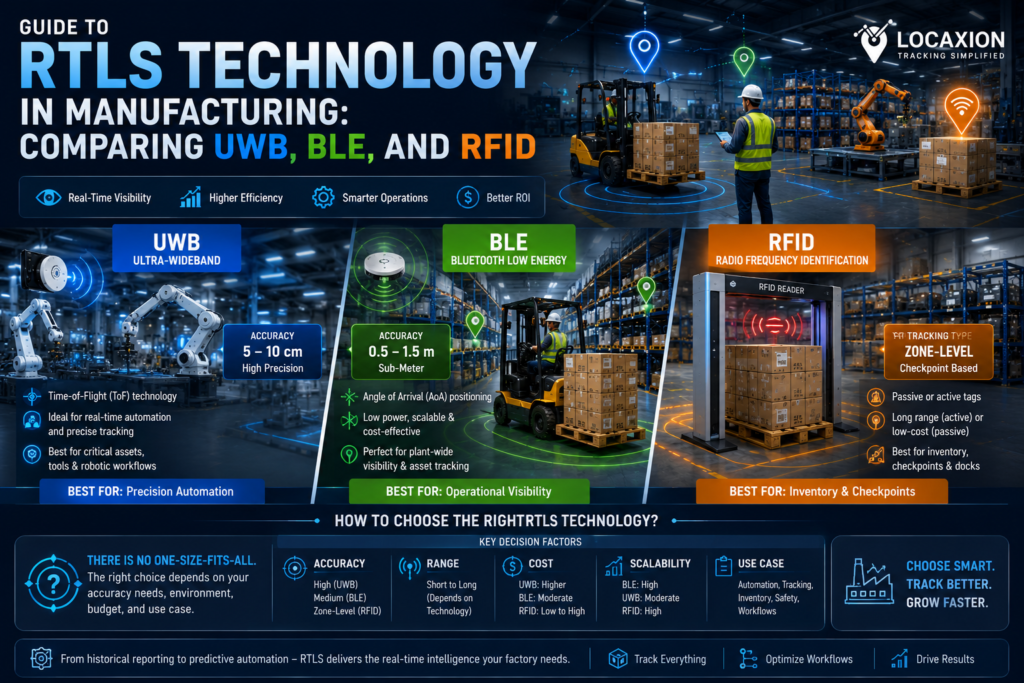
If Wi-Fi took 23 years to reach critical mass, Ultra-Wideband is sprinting on a faster track. Smartphone manufacturers began integrating UWB chips in 2023, just 16 years after the technology's inception. This rapid adoption marks a significant milestone, suggesting an accelerated path towards mainstream acceptance (VentureBeat, 2023). Unlike Wi-Fi, whose primary purpose is wireless data communication, Ultra Wideband technology is designed for precise ranging and location measurement. Using extremely short radio pulses across a wide frequency spectrum, UWB determines the exact distance between devices with remarkable accuracy while maintaining low latency and minimal interference. These characteristics make it particularly suitable for modern RTLS deployments across industrial environments.How UWB Tracking Works
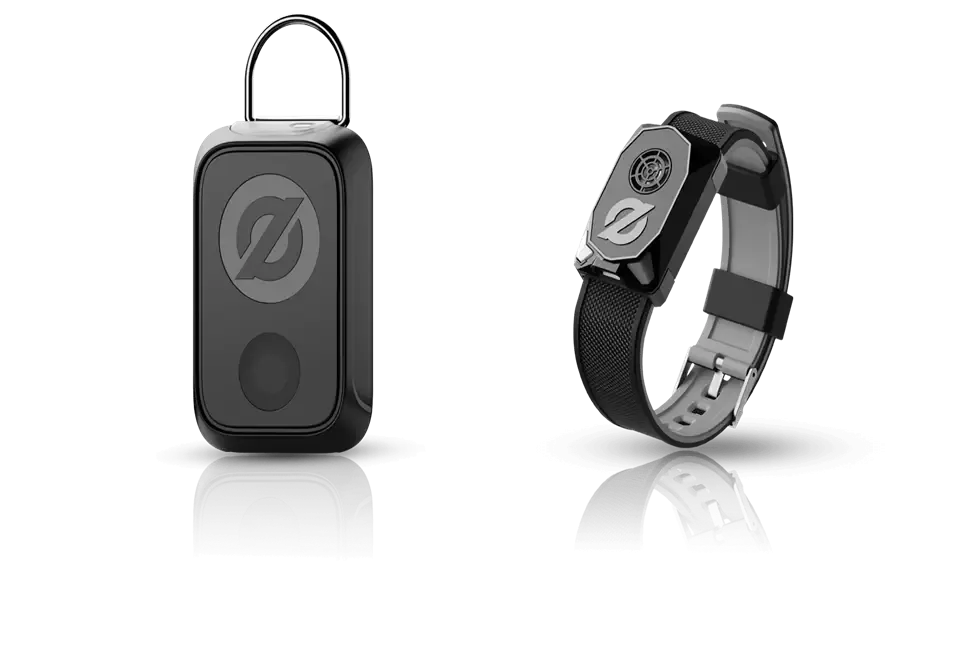
A typical UWB tracking system consists of anchors installed around a facility, wearable or asset-mounted UWB tags, gateways and a centralized RTLS software platform. The anchors continuously communicate with the tags by measuring the time taken for radio signals to travel between devices, a method known as Time of Flight (ToF). This enables the system to calculate highly accurate real-time positions, often within 10–30 centimeters. Unlike conventional wireless technologies that estimate location using signal strength, Ultra Wideband relies on precise timing measurements, making it significantly more reliable in challenging indoor environments.Unlocking New Possibilities Beyond Wi-Fi with UWB
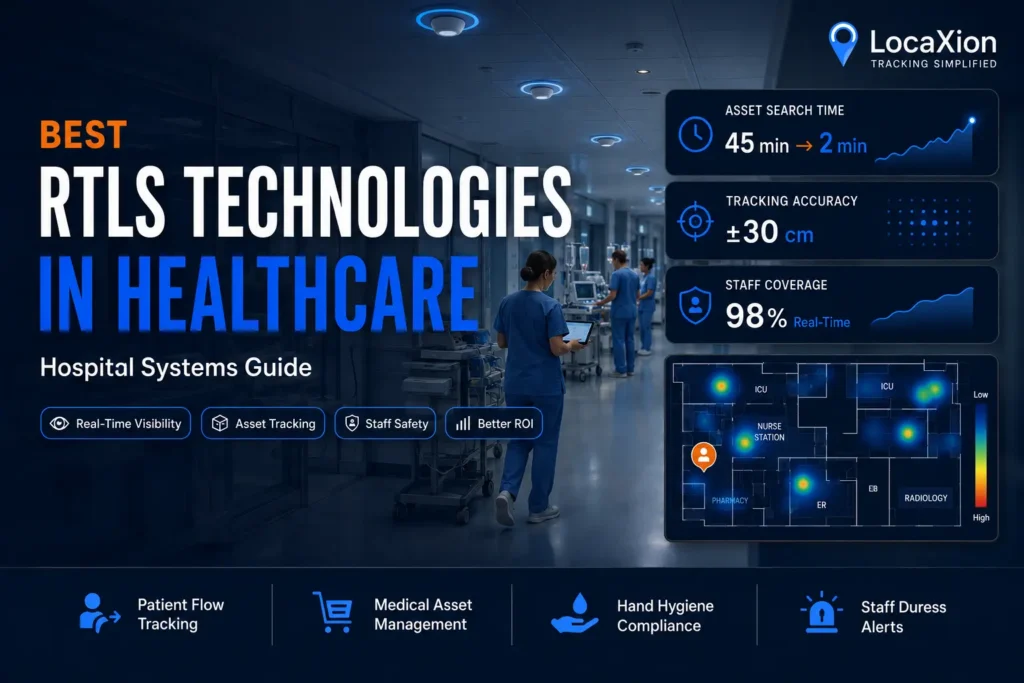
While Wi-Fi revolutionized connectivity, UWB promises to redefine it. Its precision, reaching centimeter-level accuracy, surpasses Wi-Fi's meter-range limitations. This opens doors to practical enterprise applications, from secure proximity authentication to hyper-accurate indoor navigation (ABI Research, 2023). Imagine cars unlocking automatically as you approach, lost luggage pinpointed effortlessly, or factories optimizing production lines with real-time location system (RTLS) based asset tracking. These UWB RTLS solutions are already being deployed across manufacturing plants, warehouses, hospitals and automotive facilities to improve operational visibility and decision-making.Wi-Fi vs. Ultra Wideband: Understanding the Key Differences
|
Feature |
Wi-Fi |
Ultra-Wideband (UWB) |
| Primary Purpose | Wireless internet connectivity and communication | Precise indoor positioning and real-time location tracking |
| Location Accuracy | 5–15 meters | 10–30 centimeters |
| Positioning Method | Signal strength (RSSI)-based estimation | Time of Flight (ToF) ranging for precise distance measurement |
| Best Use Cases | Internet access, file sharing, streaming | RTLS, asset tracking, indoor navigation, worker safety |
| Ideal Environment | Homes, offices, public networks | Manufacturing, healthcare, warehouses, logistics, and smart buildings |