Skip to content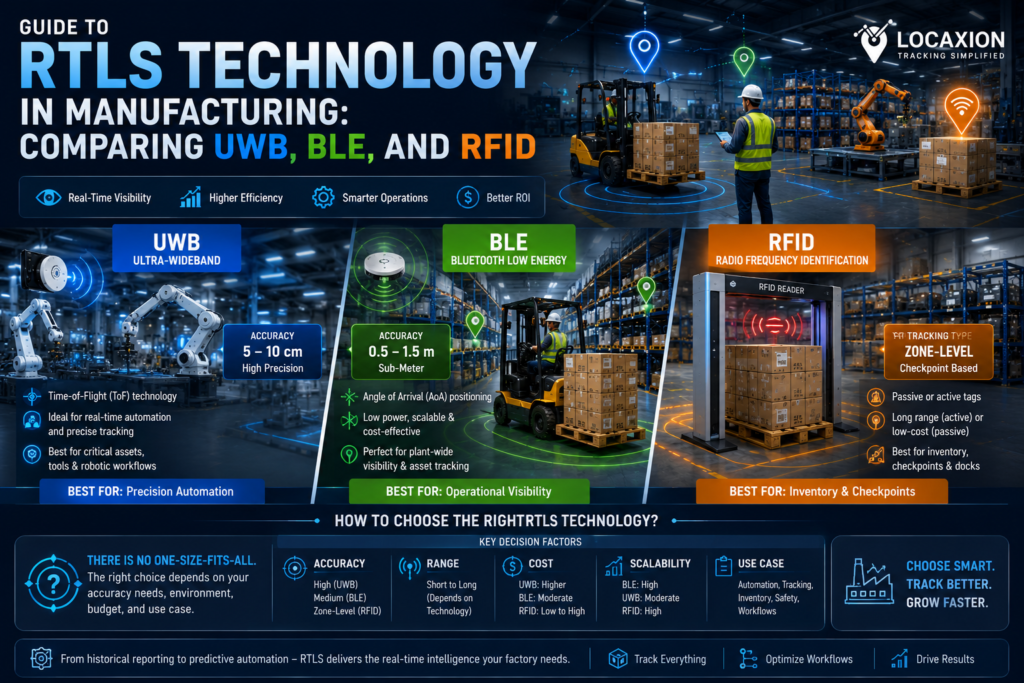
The modern factory floor is a dense, high-velocity ecosystem. Materials move constantly. Forklifts thread tight aisles, and specialized tools pass between operators every shift. To optimize this chaos, you need complete, real-time spatial awareness.
Traditional tracking leans heavily on static data capture points. Your Manufacturing Execution System (MES) excels at logging exactly when an asset hits a specific station. But between those stations? Total blackout. This physical blind spot breeds hidden inefficiencies, misplaced assets, unexpected line pauses, and a bleeding throughput.
Implementing advanced RTLS technology in manufacturing fixes this structural gap. A Real-Time Location System (RTLS) acts as a physical-to-digital bridge, pumping out a continuous stream of spatial intelligence. By deploying the right radio frequency architecture, you move from historical reporting to predictive automation.
Choosing the optimal standard takes a hard technical evaluation so here is an engineering-focused breakdown of the big three industrial tracking standards:
Technical Breakdown: BLE Comparison and Performance Metrics
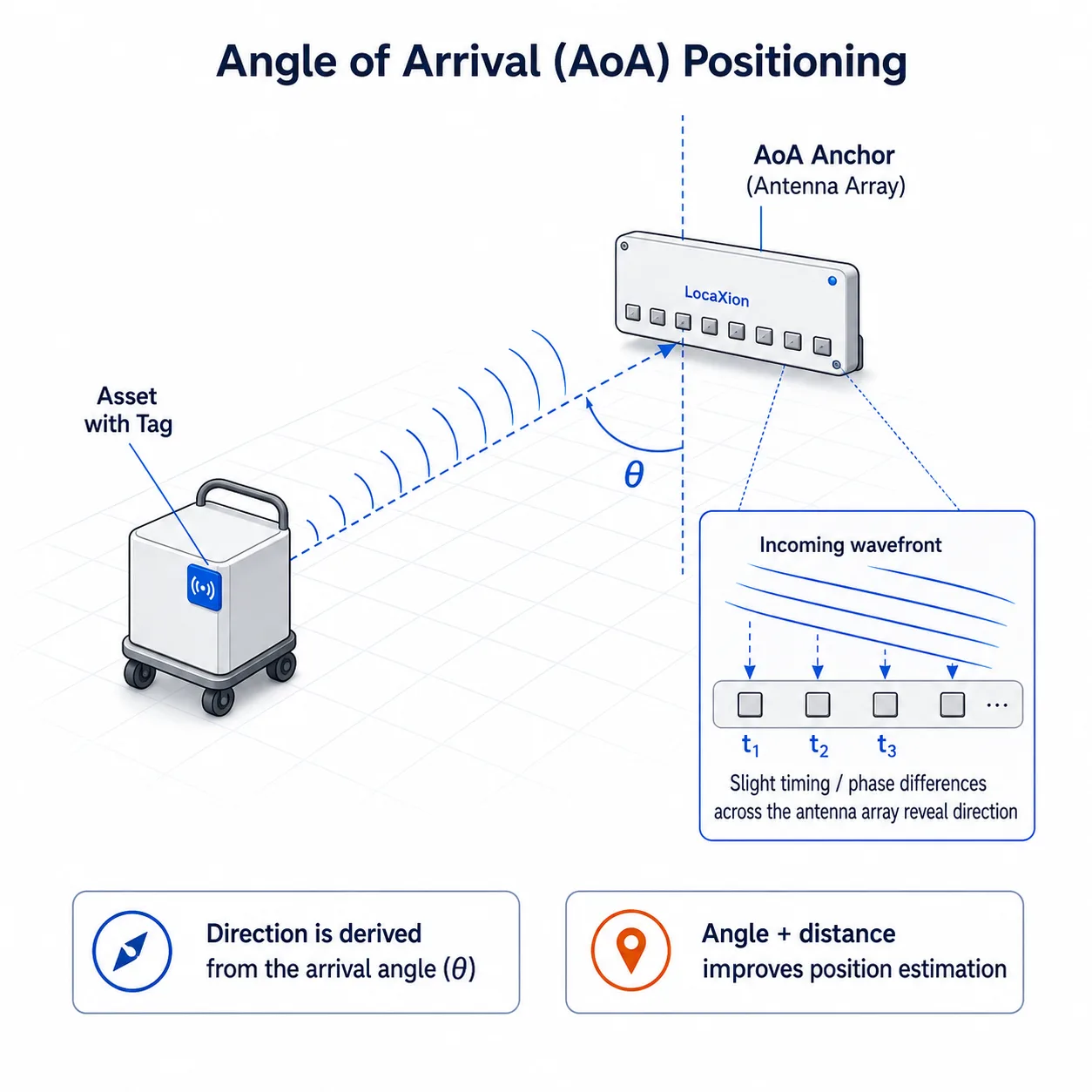
Bluetooth Low Energy (BLE) has proven itself as a highly flexible standard for continuous indoor positioning. Tapping the 2.4 GHz ISM band, modern BLE setups use Angle of Arrival (AoA) phase-difference methodologies to calculate asset coordinates reliably.
BLE Range Comparison in Industrial Environments
- Line-of-Sight Capabilities: Out in an open testing field, standard BLE connects at distances up to 100 meters.
- Industrial Floor Realities: But factory floors aren't test fields. Metal racking, heavy machinery, and concrete pillars cause signal attenuation. Look at a realistic BLE range comparison inside an active plant—you get an effective operational radius of 20 to 30 meters per receiver.
- Signal Penetration: Moderate penetration through non-metallic obstacles. Just watch out for multi-path fading in heavy metallic zones.
BLE Modules Comparison and Component Architecture
- Active Asset Tags: Slap these compact, battery-powered transponders directly onto containers or mobile machinery. They broadcast localized packets at set intervals.
- Fixed Ceiling Locators: Multi-antenna arrays mounted overhead at geometric grid intervals. They intercept tag broadcasts and compute exact arrival vectors.
- Configuration Flexibility: A proper BLE modules comparison shows you can toggle firmware parameters easily. Balance your broadcast frequency (Hz) against battery life to fit the specific use case.
BLE Advantages and Disadvantages
The Upside: BLE architectures hit the absolute sweet spot. You get sub-meter positioning accuracy, exceptionally low power draw, and native compatibility with the industrial tablets your crew already uses. Crucially, seamless RTLS integration is a key factor for growth here, allowing facilities to effortlessly expand their tracking ecosystems and scale operations without overhauling existing IT infrastructure.
The Downside: The 2.4 GHz spectrum is incredibly noisy. It competes directly with standard corporate Wi-Fi, meaning you need precise channel mapping to prevent RF bleed. Severe multi-path reflections will absolutely distort coordinate calculations if you fail to calibrate properly on day one.
BLE Price Dynamics and Use Cases
Infrastructure Economics: The BLE price model scales beautifully. Ceiling locators require a moderate initial capital investment. The individual tag costs? Very low. This crushes the total cost of ownership when you need to track thousands of assets.
Target Logistics Use Cases: Monitor work-in-progress (WIP) sub-assemblies, track forklifts to optimize routing matrices, and manage high-volume inventory buffers.
Engineering Analysis: RFID Comparison and Data Capture Protocols
Radio Frequency Identification is a battle-tested standard for proximity data. Don't expect continuous tracking coordinates. Standard RFID does its best work at zone-level logging and chokepoint verification.
Active and Passive RFID Comparison Matrix Factors
- Energy Mechanics: Any active and passive RFID comparison starts with power. Passive systems use backscatter coupling—the tag wakes up using the electromagnetic field generated by the reader. Active systems rely on an internal lithium battery to drive an independent onboard transmitter.
- Spectrum Allocation: Passive systems sit in the 860 to 960 MHz UHF band. Active systems generally push 433 MHz or 2.4 GHz to grab broader signal propagation.
- Data Transmission Profiles: A detailed RFID comparison exposes a clear split. Passive tags ping minimal data strings (like EPC codes) only when hit by proximity excitation. Active tags? They broadcast telemetry and ID data constantly over massive distances.
Operational Constraints: RFID Advantages and Disadvantages
Passive RFID Layout
Advantages: It is dirt cheap, requires zero battery maintenance over a multi-decade lifespan, and features an ultra-thin form factor. Even at this foundational level, RTLS integration is a key factor for growth, establishing the baseline, automated visibility required to rapidly scale up high-volume logistics and inventory management.
Disadvantages: You get zero real-time tracking between entry and exit portals. The read range is short, and the tags are highly sensitive to nearby liquids and metals, which absorb or reflect UHF energy.
Active RFID Layout
Advantages: You get a massive read range of up to 100 meters alongside continuous data logging for dynamic floors. By combining this wide-area coverage with centralized software, RTLS integration becomes a key factor for growth, enabling the continuous, macro-level asset tracking necessary to expand facility throughput and scale active operational zones.
Disadvantages: The units carry a high cost per asset and a bulky physical footprint. Plus, you are committing your team to long-term maintenance cycles just to swap out dead batteries.
RFID Price Dynamics and Logistics Use Cases
Financial Commitments: The passive RFID price is negligible per unit. Perfect for disposable or high-volume tracking. Conversely, the active RFID price competes directly with BLE, pushing it strictly into the specialized asset category.
Target Warehouse Use Cases: Automated inbound receiving portals at the dock doors. Tool crib check-out stations. Finished vehicle yard management across massive outdoor staging lots.
How Ultra-Wideband or UWB Fares on Centimeter-Precision Mapping
Ultra-Wideband (UWB) is the top tier of spatial tracking performance. Transmitting nanosecond-duration pulses across a wide radio spectrum band (typically 3.1 GHz to 10.6 GHz), UWB calculates coordinates using strict Time of Flight (ToF) or Time Difference of Arrival (TDoA) math.
Technical Metrics: UWB Advantages and Disadvantages
The Upside: Run a strict UWB comparison and you find unmatched positioning accuracy—we are talking an explicit 5 to 10 centimeters. That ultra-short pulse duration makes the signal highly immune to multi-path fading, allowing it to slice right through dense, metallic industrial environments. Because of this extreme precision, deep RTLS integration serves as a key factor for growth, unlocking the advanced automation, robotics coordination, and high-stakes workflow optimizations that drive massive long-term ROI.
The Downside: High free-space path loss is the primary trade-off. Those high-frequency pulses require a much denser installation network of ceiling anchors compared to BLE. Tag power consumption also runs hot, demanding larger battery modules or more frequent charging cycles.
Commercial Realities: UWB Price and Infrastructure Investment
Financial Allocation: The UWB price profile sits at an absolute premium. Advanced circuitry in the tags, combined with a dense anchor network overhead, drives a steep initial capital expenditure.
Advanced UWB Use Cases for Automated Final Assembly
Dynamic Geofencing: Track high-value smart tools inside moving assembly zones. Automatically align torque settings with the incoming vehicle VIN metadata.
Critical Component Verification: Monitor powertrain units or sensitive electronic chassis components. Guarantee perfect assembly sequencing and absolute digital traceability.
Industrial Location Technology Comparison Matrices
Table 1: Physical Layer and Technical Performance Metrics
| Technical Parameter | UWB (Ultra-Wideband) | BLE (Bluetooth Low Energy) | Passive RFID | Active RFID |
|---|---|---|---|---|
| Frequency Band | 3.1 GHz to 10.6 GHz | 2.4 GHz ISM | 860 MHz to 960 MHz (UHF) | 433 MHz / 2.4 GHz |
| Positioning Accuracy | 5 to 10 Centimeters | 0.5 to 1.5 Meters | Proximity Chokepoint Only | 2 to 5 Meters |
| Latency Profile | Ultra-Low (< 10ms) | Low to Moderate (100ms) | Instantaneous at Scan | Moderate (1s to 5s) |
| Multipath Resistance | Excellent (Pulse-Based) | Moderate (Phase-Based) | Poor (Reflective) | Moderate |
| Signal Penetration | High through structures | Moderate through structures | Blocked by metals/liquids | Moderate |
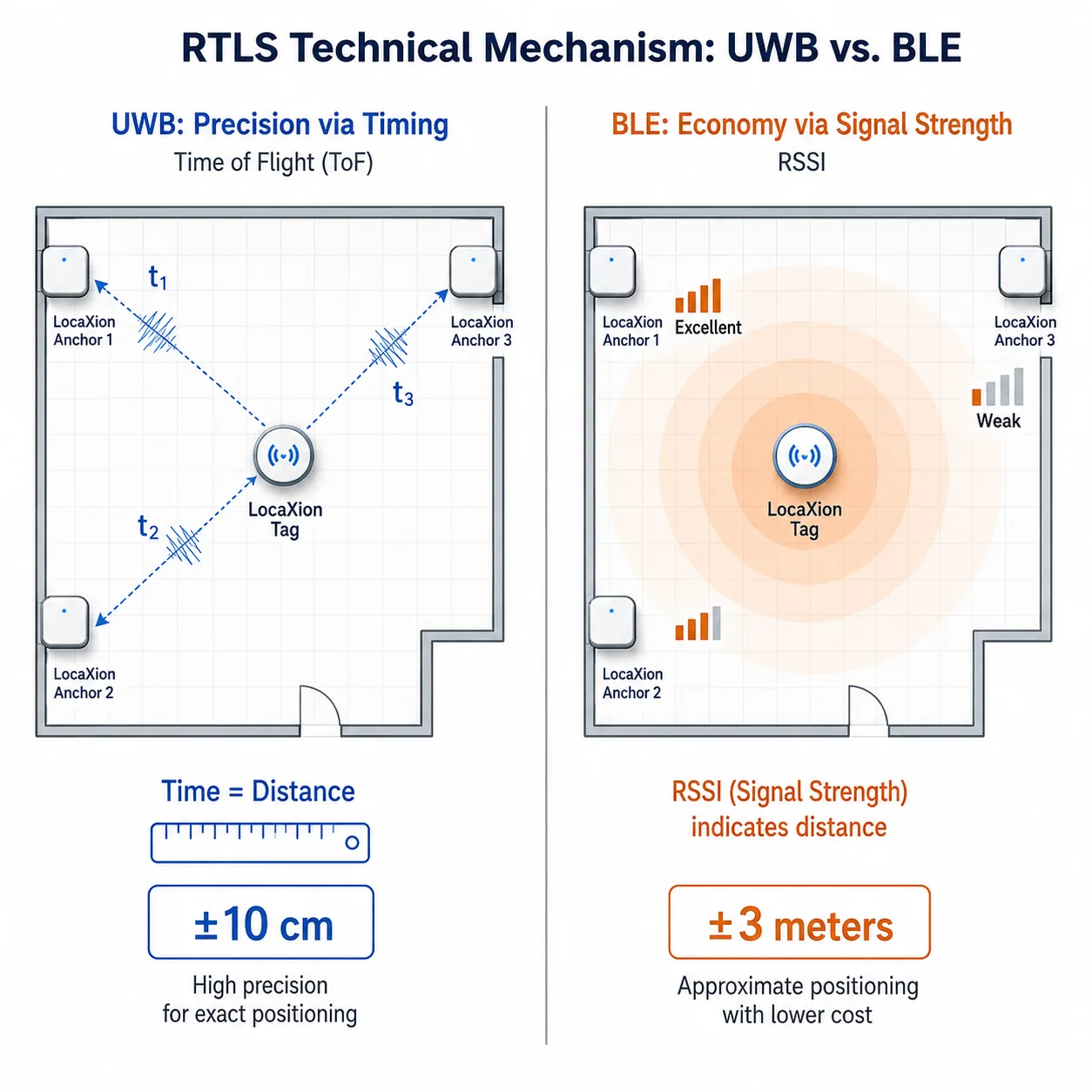
Table 2: Commercial Deployment and Strategic Metrics
| Deployment Parameter | UWB (Ultra-Wideband) | BLE (Bluetooth Low Energy) | Passive RFID | Active RFID |
|---|---|---|---|---|
| Relative Tag Cost | High / Premium | Moderate / Scalable | Low / Disposable | Moderate to High |
| Infrastructure Density | High (Anchor per 10–15m) | Low (Locator per 20–30m) | Portal-Based Only | Minimal (Reader per 50m) |
| Maintenance Profile | Moderate Battery Cycles | Low Battery Cycles (Years) | Zero Maintenance | High Battery Cycles |
| Scalability Constraint | High initial hardware cost | Network channel management | Physical scanner placement | Battery lifecycle tracking |
| Primary Value Metric | Automation & Quality | Material Flow & Visibility | Inventory Count & Speed | Long-Range Asset Audits |
The Integrated Solution: Unbiased Architecture
A common trap in factory digitalization is forcing a single tracking standard onto every operational headache. True optimization demands a technology-agnostic framework. Integrate diverse hardware components into one cohesive software layer.
The Fragmented Problem: Proprietary OEM vendors push facilities into a single hardware box. This locks you into their specific tags, strangles your scalability, and builds isolated data silos that refuse to talk to your MES or SCADA platforms.
The Unified Solution: Take a vendor-neutral approach. Focus entirely on the operational outcome. Operating as a one-stop-shop, an unbiased integration partner architecturally merges UWB, BLE, and RFID into a single digital twin infrastructure. Deploy centimeter-level tracking where precision is mandatory. Use low-cost proximity tracking where volume dominates. Maximize that long-term ROI.
What's the 'Best' Technology Then?
Passive RFID remains the gold standard for high-volume inventory checks at dock doors. Very low unit cost. BLE delivers a highly scalable, cost-effective backbone for widespread warehouse logistics and work-in-progress tracking. Need high-precision process automation on active lines? UWB's centimeter-level accuracy justifies the premium investment. But selecting the right tracking method is not about chasing the “best” technology. It is about matching radio physics to your actual goals.
Stop relying on single-vendor lock-in to eliminate your blind spots. Combine these battle-tested technologies into a single, technology-agnostic digital twin infrastructure. Make physical movement drive predictable, automated digital actions.
FAQs on RTLS Technologies and Asset Tracking Systems for Manufacturing in 2026
What are the top-rated asset tracking systems for manufacturing companies in 2026?
The top-rated asset tracking systems for manufacturing in 2026 are hybrid RTLS platforms—not one-size-fits-all tools. UWB wins for centimeter-level tracking on critical lines, BLE scales well for plant-wide visibility, and RFID remains the most cost-effective choice for checkpoints, inventory, and dock-door flows. The strongest systems connect directly with MES, ERP, WMS, and digital twin workflows. That is where a technology-agnostic partner like LocaXion fits in: it helps manufacturers combine UWB, BLE, and RFID around the actual use case, instead of forcing one technology everywhere.
Which asset tracking technology is best for smart manufacturing: UWB, BLE, or RFID?
UWB is best for precision. BLE is best for scalable real-time visibility. RFID is best for low-cost identification at fixed points. Smart manufacturers rarely choose just one. They build a layered RTLS architecture where each technology handles the job it is best at.
What features should manufacturers look for in a top-rated asset tracking system?
Look for real-time accuracy, rugged industrial tags, long battery life, scalable infrastructure, open APIs, and clean integration with MES, ERP, WMS, CMMS, and SCADA. The system should do more than show dots on a map. It should trigger alerts, verify process steps, reduce search time, prevent asset loss, and improve throughput.
Are UWB asset tracking systems worth the higher price for manufacturing companies?
Yes, when precision directly protects output. UWB justifies its premium when it prevents line stoppages, tool errors, safety incidents, rework, or misplaced high-value WIP. For broader visibility, BLE or RFID may deliver faster payback. The right choice depends on where real-time location data creates measurable operational value.
How do asset tracking systems integrate with MES and ERP in manufacturing?
RTLS platforms connect with MES and ERP through APIs, middleware, event streams, and digital twin layers. A WIP container entering a zone can update MES. A missing tool can trigger CMMS action. Finished goods crossing a dock portal can update ERP or WMS. This is how asset tracking becomes workflow automation.
What is the most cost-effective asset tracking system for a manufacturing plant?
For high-volume inventory, passive RFID usually wins on cost. For continuous plant-wide tracking, BLE is often the best balance of price and performance. For precision-critical workflows, UWB delivers the highest value despite higher infrastructure costs. The most cost-effective setup is usually hybrid.
Can one asset tracking system cover tools, forklifts, WIP, pallets, and finished goods?
Yes, if the platform is built to unify multiple tracking technologies. Tools may need RFID or UWB, forklifts often need BLE or UWB, WIP may need live RTLS visibility, and finished goods may only need portal-based RFID. A unified software layer brings them into one operational view.
How should manufacturers choose the best asset tracking vendor in 2026?
Choose a vendor that understands industrial environments, supports multiple tracking technologies, integrates with existing systems, and can prove ROI before rollout. Avoid vendors that push one proprietary stack for every problem. LocaXion's value lies in helping manufacturers design unbiased RTLS architectures that match technology to outcome.