Skip to content
Introduction: The Real Decision Behind RFID vs NFC
Every operations leader eventually faces the same high-stakes question: should the operation lean into high-volume automation, or is a simpler, tap-based alternative sufficient? When comparing RFID vs NFC tags, the choice often feels like a trade-off between infrastructure and accessibility. On the surface, NFC is attractive, tags are inexpensive and work with existing smartphones. RFID, by contrast, feels like a heavier lift, requiring fixed readers, dock-door gates, and deliberate planning.
However, the real decision behind NFC vs RFID is not about hardware familiarity or entry cost. It is about how data is generated. The core distinction is whether identification depends on intentional human action or happens automatically in the background. In industrial environments, this choice directly impacts labor efficiency. What starts as a low-cost, smartphone-based approach can quickly introduce a manual tax that fails to scale across warehouses or fast-moving production lines.
To choose correctly, teams must look beyond specifications. This blog examines the technical realities and industrial use cases of RFID tag vs NFC tag deployments to explain why the most convenient option is often the most expensive at scale.
How RFID and NFC Tags Generate Data
Before comparing cost, scale, and industrial fit, it is important to understand how RFID and NFC generate identification data. The core difference between these technologies is not branding or popularity, but the way data is captured and how much human involvement is required to keep systems accurate.
What Is RFID?
RFID is designed for automated identification at defined read points. A tag is detected when it enters the radio field of a reader, antenna, or portal, triggering an event that updates the system. This event-based model allows data capture without requiring intentional human interaction.
RFID is well suited for environments where assets move through structured workflows and must be identified at scale. It is widely used for inventory validation, checkpoint tracking, dock-door confirmation, and serialized asset management due to its low passive tag cost and ability to read multiple items simultaneously.
How RFID Works?
RFID operates by registering asset presence at specific detection zones installed across a facility.
- Passive RFID: Tags have no onboard power and are only detected when they enter the signal range of a reader.
- Active or Semi-Passive RFID: Tags include a battery to strengthen signal response, but identification still occurs only when the tag is close to a reader.
Location updates occur only when an asset passes a reader-equipped point such as a dock door, storage zone, or work cell. Movement outside these zones is not captured, meaning the system reflects the most recent detection rather than continuous movement.
This model works best in controlled environments where assets follow predictable paths, and identification must scale across large volumes without manual scanning.
Read More: Active vs Passive RFID: Cost, Range, and Use Cases Compared
Key Characteristics of RFID
| Category | Details |
|---|---|
| Update Model | Point-in-time identification at fixed read points |
| Tag Types | Passive (no battery) and battery-assisted (semi-passive, active) |
| Tag Cost | Low for passive tags |
| Infrastructure | Fixed readers, antennas, portals |
| Pros | Scales well for high volumes, supports bulk reads |
| Cons | No visibility between reads |
| Best Fit | Inventory audits, serialized tracking, dock-door validation |
What Is NFC?
NFC is a short-range identification technology designed for intentional, close-proximity interactions. An NFC tag is detected only when it is brought within a few centimeters of a reader, typically a smartphone or handheld device, initiating a secure data exchange.
NFC is commonly used in scenarios where confirmation of presence or intent is required. Typical use cases include access control, inspections, maintenance checks, and authentication workflows where it is important to verify that a person was physically at a specific location or asset.
How NFC Tag Works?
NFC captures data through deliberate, tap-based interactions.
- Passive NFC tags: Tags contain no onboard power and are activated only when placed very close to a compatible reader.
- Intentional interaction required: Each read requires a user to align the tag and reader, ensuring the interaction is deliberate rather than automatic.
A data update is created only when the tap occurs. Unlike automated identification systems, NFC does not register movement or presence unless a person initiates the interaction.
This model works best in controlled processes where human verification is required, and the number of interactions is limited. In high-volume or fast-moving environments, reliance on manual action can become a constraint as scale increases.
Key Characteristics of NFC Tags
| Category | Details |
|---|---|
| Update Model | Manual, tap-based identification |
| Tag Types | Passive NFC tags (no battery) |
| Tag Cost | Typically, USD 0.20–0.80 per tag, depending on volume and memory |
| Infrastructure | Smartphones or handheld NFC readers |
| Pros | High security, intentional interaction, simple deployment |
| Cons | High labor dependency, very short read range |
| Best Fit | Access control, inspections, maintenance checks, proof of presence |
RFID vs NFC Tags: Key Comparisons
The choice between RFID vs NFC tags often comes down to a practical question: do you need automated identification at scale, or intentional, human-initiated verification? The matrix below highlights how each technology impacts labor, scalability, and operational reliability.
| Factor | RFID | NFC |
|---|---|---|
| Update Method | Event-based detection at fixed read points | Manual, tap-based interaction |
| Operating Frequency | LF (125 kHz), HF (13.56 MHz), UHF (860–960 MHz) | HF only (13.56 MHz) |
| Identification Model | Automated background identification | Intentional human action required |
| Technology Used | Radio frequency identification with fixed readers | Near Field Communication using short-range induction |
| Read Range | 1–10 meters for passive RFID; up to 30+ meters for active RFID | 2–5 centimeters |
| Tag Types | Passive (no battery) and active or semi-passive (battery-assisted) | Passive only (no battery) |
| Typical Tag Cost | Passive: ~USD 0.10–0.50 Active: ~USD 10–50 | ~USD 0.20–0.80 |
| Battery Requirement | Passive: none Active: battery replacement required | None |
| Hardware Involved | Fixed readers, antennas, portals, network backhaul | Smartphones or handheld NFC readers |
| Accuracy Model | Last known location at read points | Confirmed presence at the moment of tap |
| Movement Visibility | Only at detection zones; no visibility between reads | No movement visibility; isolated interactions only |
| Labor Dependency | Low once infrastructure is deployed | High, every update requires human action |
| Fit for Automation | Strong for structured, high-volume workflows | Limited, manual processes do not scale |
| Scalability | Designed for thousands to millions of assets | Constrained by human time and attention |
| Cost Considerations | Higher upfront infrastructure cost; low ongoing labor | Low infrastructure cost; high recurring labor cost |
| Security Model | Identification without user intent | High, intentional interaction reduces false reads |
| Digital Twin Enablement | Supports event-based, historical operational models | Limited due to sparse data points |
| Integration | Native integration with WMS, MES, ERP at checkpoints | Typically app-based with limited system depth |
| Deployment Consideration | Requires reader placement and workflow alignment | Fast to deploy with minimal infrastructure |
Seen together, the NFC vs RFID difference comes down to how identification happens in practice, through deliberate human interaction or automated background detection.
Also Read: RTLS vs RFID: What’s the Difference Between Real Time and Scanning
Cost, Scale, and Deployment Reality
One of the most common pitfalls in RFID vs NFC tags evaluation is focusing solely on the "price per tag." While a standard industrial NFC tag might sit around $0.50 and a passive RFID inlay as low as $0.10, the true cost of ownership is found in the labor required to generate data.
The "Manual Tax" of NFC
NFC often appears cheaper because it leverages the smartphones your team already carries, avoiding the high upfront cost of fixed readers.1 However, NFC introduces a recurring manual tax.
- Labor Cost: If a warehouse worker earns $30/hour and spends just 10 seconds walking to and "tapping" an NFC tag on a crate, that single data point costs you roughly $0.08 in labor.
- The Scale Problem: For 10,000 assets audited weekly, that "inexpensive" NFC system creates over $800 in weekly labor costs that an automated RFID portal would eliminate entirely.
Infrastructure vs. Process Upgrades
- RFID is a Facility Upgrade: It requires a capital investment in fixed readers, antennas, and dock-door portals.2 It is designed to make the facility "smart" enough to track assets without human intervention.
- NFC is a Process Upgrade: It requires no infrastructure but demands rigorous staff training and discipline. It is a tool for documenting human activity, not for automating it.
Security and Authentication Considerations
In 2026, the NFC vs RFID security debate moved beyond simple encryption to the concept of "Verified Intent."
- NFC: The Gold Standard for Proof of Presence
Because NFC only works at a range of 4cm, it provides undeniable proof that a person was physically standing at a specific location. This makes it the superior choice for safety inspections and maintenance logs. You cannot "ghost audit" an NFC tag from across the room.
- RFID: Automated Proof of Passage
RFID is built to secure the supply chain, not individual interaction. While modern tags feature advanced kill-codes and encryption, RFID is designed to confirm that an asset moved through a zone (Proof of Passage) rather than verifying a human "sign-off."
Industrial Use Case Fit of RFID vs NFC
The NFC vs RFID difference becomes most apparent when you map them to the "speed" of your environment.
| Industry | NFC Fit (Intentional) | RFID Fit (Automated) |
|---|---|---|
| Manufacturing | Maintenance Log: Proving a tech checked high-pressure valve. | WIP Tracking: Monitoring 200 parts moving on a high-speed conveyor. |
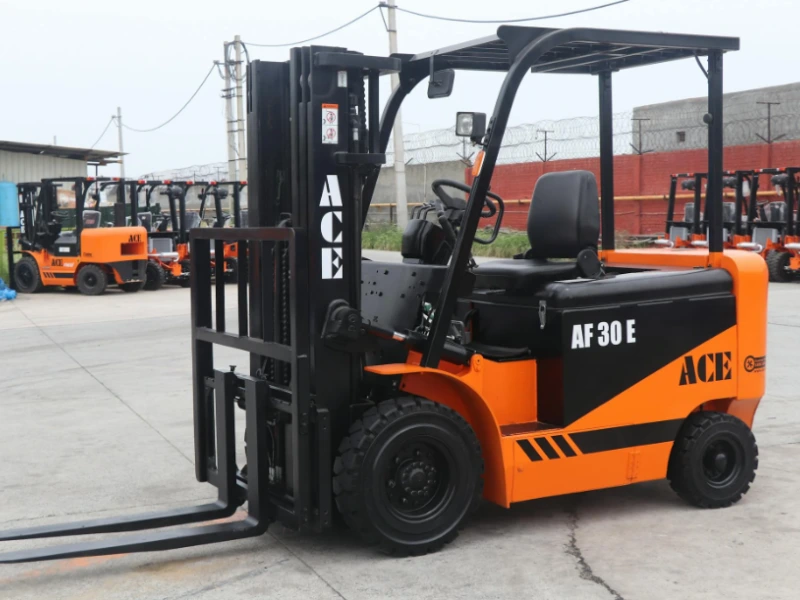
| Warehousing | Equipment Check: Verifying a forklift’s daily safety inspection. | Inventory Audit: Scanning 1,000 items in a rack in under 60 seconds. |
| Healthcare | Patient Vitals: Confirming that a nurse was at the bedside for a check. | Asset Visibility: Locating a missing crash cart across 5 floors. |
| Logistics | Driver ID: Authenticating the driver at a secure terminal. | Dock Confirmation: Validating an entire pallet as it clears the door. |
Common Mistakes When Choosing RFID or NFC
1. Scaling NFC beyond tap-based workflows
NFC works in small, supervised pilots. At scale, missed taps and delayed updates become common under real throughput pressure.
2. Deploying RFID without enforcing movement paths
RFID only works when assets pass defined reader zones. If workflows allow bypassing readers, visibility gaps remain.
3. Relying on people to maintain data accuracy
NFC depends on consistent human action. Over time, taps are skipped to save time, leading to silent data loss.
4. Deciding based on tag price alone
Low NFC tag cost hides ongoing labor effort. RFID’s higher upfront cost often proves more stable at scale.
5. Skipping validation in live environments
Metal, layout density, and traffic patterns affect RFID reads. NFC avoids RF complexity but is constrained by proximity. Systems are not tested in real conditions to degrade after go-live.

LocaXion’s Vendor-Neutral Perspective
At LocaXion, we treat the NFC vs RFID difference as a design decision, not a hardware purchase. We remain technology-agnostic because the right choice depends entirely on your specific environment. Rather than pushing a single frequency, we evaluate your layout to determine where RFID vs NFC tags perform best, often using a hybrid model that applies RFID for automated material movement and NFC for high-integrity safety checkpoints.
Our focus is on long-term data integrity. We help teams manage current systems while adapting as layouts change or volumes increase. For example, in a facility facing data loss near metal-intensive zones, we introduced targeted NFC check-ins to close visibility gaps without an expensive infrastructure overhaul. The objective is to ensure technology serves the workflow and provides reliable signals that support a functional Digital Twin as operations evolve.
Conclusion: When to Use RFID and When NFC Makes Sense
Choosing between RFID vs NFC tags is ultimately a decision about the role of the human in your data loop. In industrial environments, the objective is not simply to track assets, but to capture reliable, high-quality signals that support automation, long-term ROI, and more accurate operational models over time.
When operations demand high-volume throughput and hands-free visibility, RFID is the only technology that can scale without introducing ongoing manual effort. When the priority is intentional for verification such as safety checks, quality signoffs, or secure authentication, the deliberate interaction of an NFC tag provides accountability that automated reads cannot replace.
The most effective facilities in 2026 move beyond the NFC vs RFID difference and adopt a hybrid approach. By aligning RFID with automated movement and NFC with verified human presence, teams create systems that remain stable, scalable, and focused on operational outcomes rather than tag cost alone.
Explore how to align identification technology with your workflows
FAQs on RFID vs NFC Tags
What is better, RFID or NFC?
There is no universal “better” option. The choice between RFID vs NFC tags depends on the workflow. RFID is better for automated, high-volume identification, while NFC is better when intentional human interaction or verification is required.
How can you tell if a tag is NFC or RFID?
Most RFID vs NFC tags look similar, but NFC tags are typically designed to work with smartphones and require very close proximity. RFID tags often require dedicated readers and can be detected from longer distances depending on configuration.
Is Apple Wallet NFC or RFID?
Apple Wallet uses NFC technology. It relies on short-range, secure communication for payments, access control, and identity verification, all of which require intentional user interaction. This design ensures transactions occur only when a device is deliberately presented, rather than being detected automatically from a distance.
Is RFID outdated?
No. Despite perceptions, RFID vs NFC adoption continues to grow in industrial environments. RFID remains essential for inventory tracking, logistics, manufacturing, and automation where scale and hands-free identification matter.
Can RFID and NFC be used together in the same system?
Yes. Many facilities use a hybrid approach where RFID tag vs NFC tag technologies serve different roles. RFID handles automated movement and volume, while NFC supports inspections, safety checks, or proof of presence.
How does NFC vs RFID range impact real-world workflows?
The NFC vs RFID range difference explains why NFC is used for verified presence at a specific point, while RFID supports hands-free identification across moving assets in warehouses, factories, and logistics environments.
How does NFC vs RFID frequency affect performance?
The NFC vs RFID frequency distinction matters because NFC operates at a single, short-range frequency designed for secure interactions, while RFID uses multiple frequency bands optimized for detection over greater distances and higher throughput.
What is the core NFC vs RFID difference in industrial use?
The NFC vs RFID difference lies in how data is captured. NFC requires intentional, close-range interaction, while RFID enables automated identification as assets move through defined zones without human involvement.