Skip to content
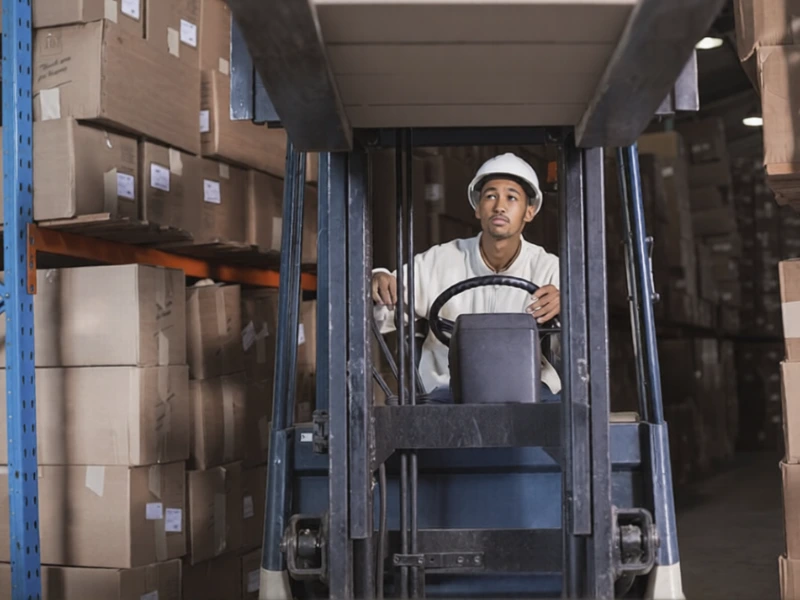
A proper OSHA forklift inspection checklist is the frontline tool for meeting 29 CFR 1910.178 requirements, yet most facilities still rely on pen-and-paper forms that are easy to lose, easy to falsify, and nearly impossible to audit at scale.
OSHA mandates that every powered industrial truck is examined before each shift and proper forklift tracking, but the regulation does not prescribe how that examination must be recorded. That gap creates a clear path to automation.
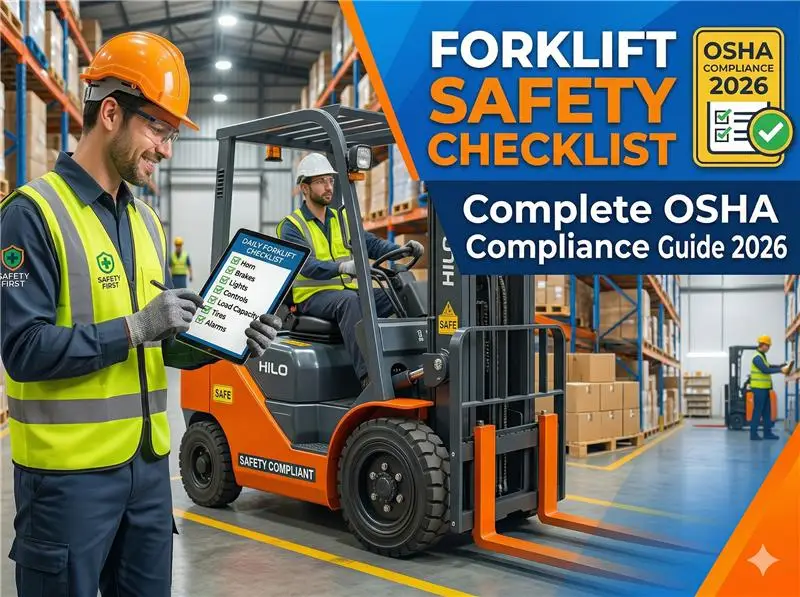
By replacing manual forms with a digital forklift inspection checklist, delivered through forklift-mounted tablets or mobile devices, companies can capture timestamped, operator-identified records the moment a check is completed.
Why Paper-Based Compliance No Longer Works for Forklift Fleets
When that digital checklist is combined with onboard telemetry and real-time location data, the result goes beyond compliance. It becomes an operational system that protects workers, reduces liability, and gives HSE teams full visibility into fleet readiness across every shift.
A facility running ten forklifts on two shifts generates over 7,000 individual inspection forms every year. Each one must be filled out, reviewed, stored, and made retrievable for an OSHA inspector who can arrive without notice.

For medium and large operations—where truck counts reach into the dozens or hundreds—the volume becomes unmanageable. Maintaining a daily forklift inspection checklist on paper for every truck, every shift, diverts time and attention from the work that actually keeps people safe.
The regulation itself has not changed. 29 CFR 1910.178(q)(7) still requires that trucks be examined before service and that defective equipment be removed immediately. What has changed is the technology available to meet those obligations - faster, more reliable, and with a fraction of the overhead. Digital forklift truck inspection checklists completed on tablets or phones produce cloud-synced records the moment an operator finishes, removing the storage and retrieval problem entirely.
Where Manual Forklift Inspection Processes Fail OSHA Audits
Paper inspection forms are fragile by design. They get lost in filing cabinets, damaged by warehouse conditions, and they are easy to falsify. OSHA auditors are trained to recognize the pattern: when forms look uniform, undated, or clearly completed retroactively, they trigger deeper scrutiny rather than satisfy a requirement.
For round-the-clock operations, the exposure grows. OSHA forklift inspection requirements under section (q)(7) mandate examination after each shift when trucks run continuously. Three shifts means three completed inspections per truck per day. A single missing or incomplete record puts the facility out of compliance for every hour that truck operates on that shift.
The Liability Gap: When Untraceable Records Invite Regulatory Action
OSHA does not mandate a specific documentation format. A 2004 interpretation letter from the Directorate of Enforcement Programs confirmed that while no particular checklist is required, the employer must demonstrate that trucks are properly inspected.
The burden of proof falls entirely on record quality. If a company cannot show logged evidence that every truck was examined and found safe, it faces citations, financial penalties, and—after a workplace injury—elevated legal liability.
Many 1910.178 violations surface during post-incident investigations, not routine audits. When an accident occurs and regulators request months of inspection history, disorganized paper logs do not build confidence. An automated, searchable forklift safety inspection checklist does.
The Cost of Cutting Corners: When Superficial Inspections Erode Safety Culture
Powered Industrial Truck violations under 29 CFR 1910.178 ranked among the top ten most frequently cited OSHA standards in fiscal year 2025, with 1,826 citations nationally. The most common causes are insufficient operator training and failure to maintain equipment—both directly tied to pre-shift inspection quality.
When a forklift safety inspection checklist is treated as a formality rather than a safety gate, trucks with worn brakes, leaking hydraulics, or faulty steering stay in service. Powered industrial trucks were the primary cause of 67 workplace fatalities in 2023. The risk is not theoretical.
Industry Shift: The Rise of Digital Forklift Inspection Records
Facilities with growing fleets are replacing clipboard-based processes with digital systems that capture every check in real time, tie each record to a specific operator and truck, and store results in formats that cannot be modified after submission.
For HSE personnel responsible for demonstrating regulatory readiness, the difference between a filing cabinet of paper and a searchable digital archive is the difference between hoping you pass an audit and knowing you will.
Clause-by-Clause: A Digital Forklift Inspection Compliance Framework
The core advantage of a digital OSHA forklift inspection checklist system is structural enforcement. Paper forms depend on perfect human execution across every shift and every entry. Automated systems make compliance non-optional. Combined with a forklift sign-in functionality, the truck cannot be operated until the assigned operator has completed every required check and the system has logged the result. There is no workaround and no ambiguity.
Clause (q)(7): Automating Pre-Shift Mechanical and Safety Verification
A properly configured digital inspection workflow requires the operator to enter identifying credentials, records the start and completion time of the inspection, and can capture photographs of inspected components: tires, forks, mast chains, fluid levels, safety lights. For battery-powered trucks, an electric forklift inspection checklist adds battery condition, cable connections, and electrolyte levels to the workflow. Each photograph is geotagged and timestamped, producing documentation that no paper form can replicate. When an OSHA inspector asks for proof that Truck #14 was inspected at 06:12 on a specific Tuesday three months ago, the answer is immediate and verifiable.
Clause (l): Verifying Operator Competency Through Telemetry Data
Section 1910.178(l) requires that only trained and evaluated operators run powered industrial trucks. Certification is the baseline, but ongoing competency verification is where telemetry closes a real gap.
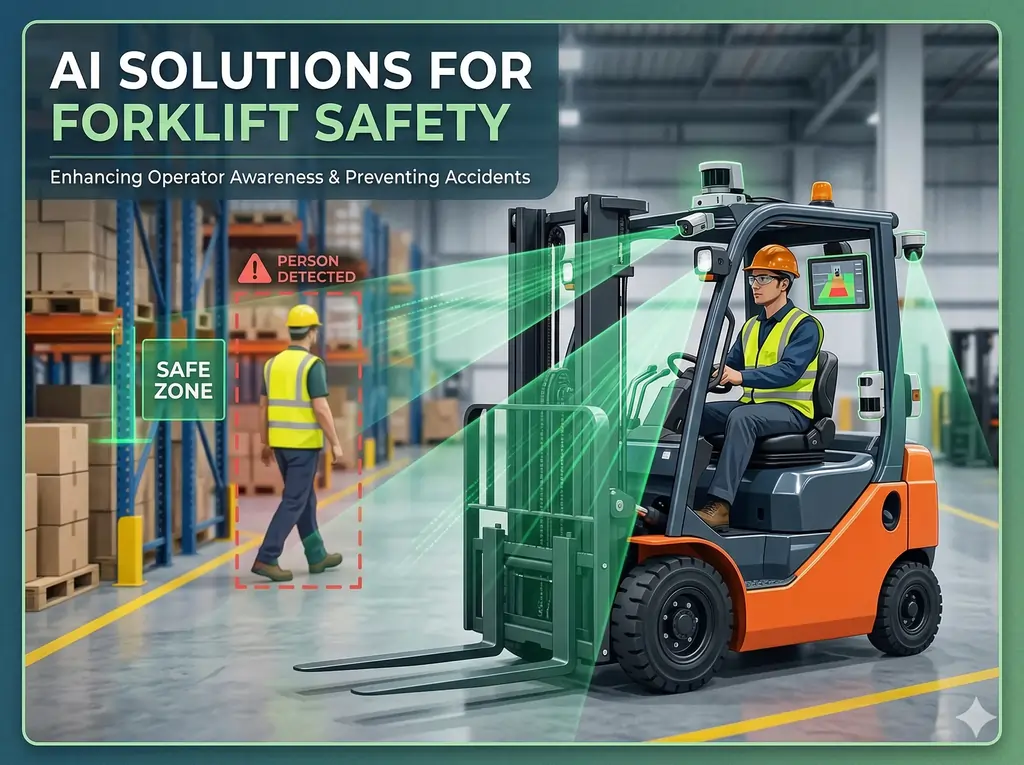
Onboard telematics monitor harsh braking events, sudden acceleration, excessive speed in restricted zones, impact forces, and load weight compliance through integrated load cells. Each data point measures how an operator handles equipment under actual working conditions.
When telemetry flags a pattern of unsafe behavior, it gives supervisors objective data to initiate refresher training, directly supporting the ongoing evaluation requirements in 1910.178(l)(4). This is a systematic approach to ensuring every operator meets the competency standard every shift, not just on certification day.
Real-Time Incident Reporting: Audit-Ready Logs on Demand
Automated reporting consolidates inspection records, operator sign-in data, and telematics alerts into a single system. Facilities can demonstrate that inspections were completed for every truck before each shift, that no defective equipment was placed in service, and that anomalies triggered immediate corrective action.
If telemetry registers an impact event or repeated harsh braking incidents, the system can automatically lock the truck out and escalate a notification to the supervisor. The truck stays offline until the issue is reviewed, documented, and cleared.
The LocaXion Angle: Where Real-Time Location Meets the Forklift Inspection Checklist
What sets LocaXion’s approach apart is the integration layer. Taking the automated OSHA forklift inspection checklist and forklift telemetry as the foundation and adding real-time location intelligence to every record.
The result is not just a log that an impact event occurred, but rather a record of where on the plant floor it happened, which operator was involved, and the exact time.
HSE teams can map recurring incidents to specific intersections, dock areas, or high-traffic zones. Instead of reviewing spreadsheets, they can see that 40% of harsh braking events happen at the same blind corner near Dock 3, and act on it with infrastructure changes, traffic pattern adjustments, or targeted training. Location-enriched telemetry turns compliance data into operational intelligence.
The Digital Interlock: A Failed Inspection Means a Zero-Start Engine
When an operator attempts to start a truck without completing the required digital inspection, the engine interlock holds and the truck does not move. The system can also push a notification to the shift supervisor that an unauthorized start attempt was made, identifying the operator, the truck, and the time. This is not a punitive mechanism. It is a procedural safeguard that ensures no truck enters service without documented clearance, removing the risk of time pressure overriding the inspection requirement.
Cloud-Synced Verification: Your Shield in Post-Incident Litigation
When a serious safety incident occurs, the difference between a comprehensive digital audit trail and a box of paper forms can define the outcome of an OSHA investigation.
A cloud-synced OSHA forklift inspection checklist, combined with operator sign-in histories, telemetry logs, and location data, provides a complete, tamper-resistant narrative of every action taken before the incident. For legal counsel and HSE leadership, this is the most effective tool for demonstrating that the organization met its OSHA forklift inspection requirements in full.
Achieving “Audit-Ready” Status with Automated Forklift Safety Intelligence
Paper-based inspection logs are not just outdated - they are a liability. They create administrative drag for operators, blind spots for supervisors, and vulnerability during audits and legal proceedings.

Replacing manual forms with a digital OSHA forklift inspection checklist, integrated with telemetry and location-aware systems, eliminates each of these weaknesses at once. For operators, completing a digital checklist on a forklift-mounted tablet takes less time than filling out a paper form, and they return to productive work faster.
For HSE personnel, every inspection record, operator action, and telemetry alert is centralized, searchable, and exportable on demand. For the organization, the result is a facility that does not need to prepare for an audit, because it is always audit-ready.
Companies that combine these capabilities with real-time location intelligence are building operational infrastructure that reduces risk, protects their workforce, and delivers measurable competitive advantage. In a landscape where 1910.178 violations remain among the most cited standards in the country, that positioning is strategic.
Frequently Asked Questions
Q: Does OSHA require a specific forklift inspection checklist format?
A: No. OSHA 29 CFR 1910.178(q)(7) requires that trucks be examined before service, but it does not prescribe a specific format. A 2004 OSHA interpretation letter confirmed that while no particular form is mandated, the employer must demonstrate that inspections were properly completed. A digital OSHA forklift inspection checklist satisfies this requirement and produces stronger documentation than paper.
Q: How often must forklifts be inspected under OSHA regulations?
A: Under 29 CFR 1910.178(q)(7), forklifts must be examined at least once daily before being placed in service. For round-the-clock operations, a daily forklift inspection checklist must be completed after each shift. Any truck found to be unsafe must be immediately removed from service until repairs are made.
Q: What items should a forklift safety inspection checklist cover?
A: A forklift safety inspection checklist should cover a pre-start visual check (key off) and an operational check (engine running). Visual items include tires, forks, mast chains, fluid levels, safety lights, and the overhead guard. Operational items include brakes, steering, horn, hoist and lowering controls, tilt mechanisms, and unusual noises. An electric forklift inspection checklist adds battery condition, connectors, and electrolyte levels.
Q: Can a digital checklist replace paper forms for OSHA compliance?
A: Yes. OSHA does not require paper documentation. Digital systems that capture timestamped, operator-identified inspection records fully meet compliance requirements. Automated systems can also enforce completion by locking the truck out of service until the checklist is finished—something paper forms cannot do.
Q: What are the penalties for failing an OSHA forklift inspection audit?
A: In 2025, OSHA increased the maximum civil penalty for a willful or repeat violation to $165,514 per incident. Powered Industrial Truck violations under 1910.178 received 1,826 citations in fiscal year 2025. Beyond fines, inadequate inspection records increase legal liability if a workplace injury or fatality occurs.
Q: Do electric forklifts require a different inspection checklist?
A: Yes. While many items overlap with internal combustion trucks, an electric forklift inspection checklist includes additional battery-specific checks: battery condition, cable connections, electrolyte levels, charger function, and battery restraint integrity. Both OSHA and NIOSH recommend using truck-type-specific checklists to cover all relevant items.