Skip to content
Solving the B Operational Gap with Digital Twins
Hospital operations rely on manual coordination that leaves teams overburdened. Research shows physicians spend up to 33% of their time on documentation and other non clinical tasks, alongside workflow inefficiencies such as searching for equipment or reacting to ER bottlenecks that were building unnoticed. This firefighting is a primary barrier to P4 Medicine (Predictive, Preventive, Personalized, and Participatory). When staff devote a third of their time to logistics instead of patient care, provider burnout increases, and care quality suffers.
At LocaXion, we believe operational precision must match clinical excellence. Overcoming this lag requires more than basic visibility. Our framework transforms real time data into a live execution layer. Unlike traditional systems, a LocaXion Digital Twin synchronizes physical activity with clinical rules in real time, allowing hospitals to stop reacting and start predicting.
How Digital Twins Work in the Healthcare Industry
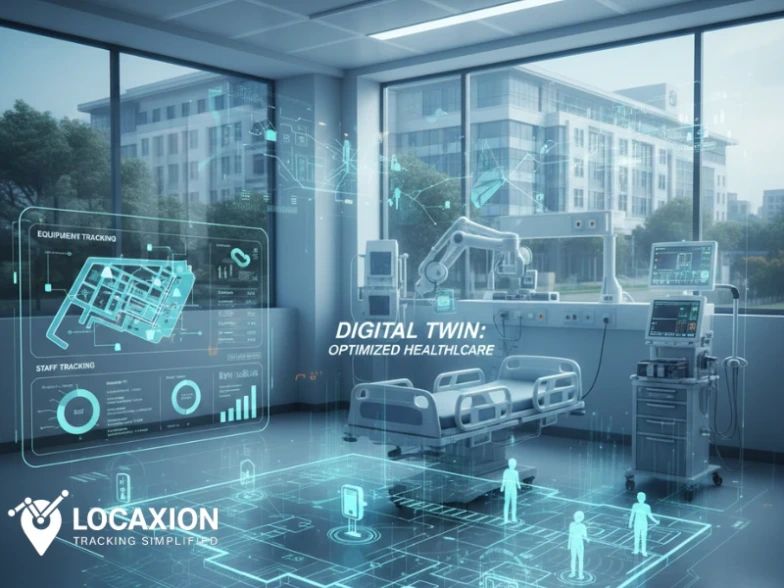
Digital Twins connect the physical healthcare environment to a virtual operational model of the facility. By linking real-time location data with operational logic, hospitals can gain a live view of patient flow, asset readiness, and emerging constraints, allowing teams to act before delays or safety risks impact care delivery.
How the Healthcare Digital Twin operates in practice:
- Capture: Real-time status of patients, staff, and assets across clinical zones.
- Evaluate: Activity is checked against workflow rules and safety policies.
- Simulate: Running "what-if" scenarios to validate capacity and staffing before changes are made.
- Trigger: Automated alerts or door lockdowns the moment a protocol is breached.
- Synchronize: Real-time data sharing across EHR and hospital management systems.
Understanding Digital Twins in Healthcare
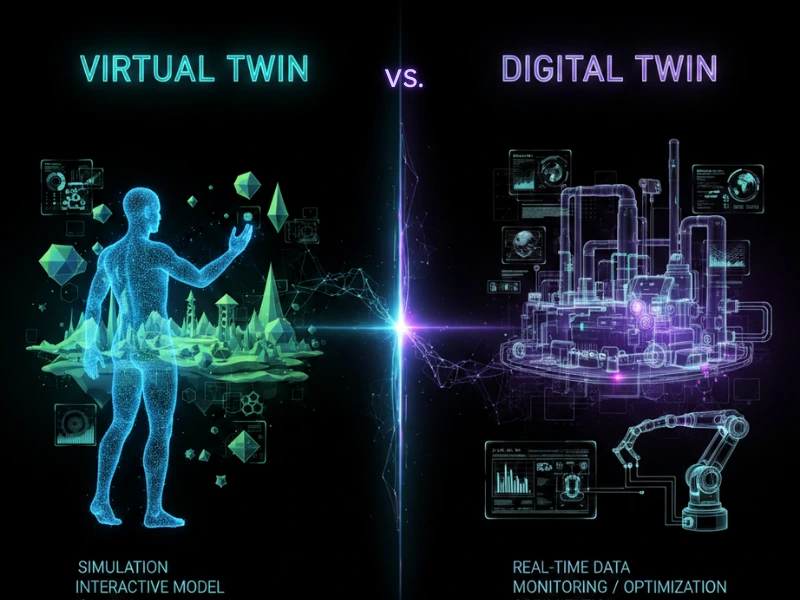
Digital twins in the medical field exist at two distinct levels. Scientists often utilize microscopic models of cells or specific organs to simulate clinical reactions to new drugs or surgical procedures. However, for hospital leadership, the most immediate operational impact comes from a macroscopic Digital Twin that replicates the entire facility ecosystem.
LocaXion focuses on this macroscopic level to address core challenges across the hospital environment. By creating a virtual replica of the entire clinical space, the system shifts the focus from managing individual assets to viewing the facility as a self-optimizing organism. This macroscopic view is the infrastructure required for P4 Medicine, allowing management to synchronize manpower, machinery, and materials across the entire healthcare ecosystem in real-time.
Why Choose Digital Twins in Healthcare?
Adopting a digital twin turns real-time data into an execution layer that actively governs care environments. This shift provides hospitals with sustained control through these strategic wins:
- Eliminate the Search Epidemic with Equipment Tracking: Stop losing 6,000 hours per year to equipment hunting. The system provides timestamped, bay-level location and real-time status so teams know if machinery is clean, in use, or ready for care.
- Protect Your Frontline with Staff Safety: Create an invisible safety net for staff. The system orchestrates instant duress alerts and automates security dispatch to the exact room to reduce the risk of workplace violence.
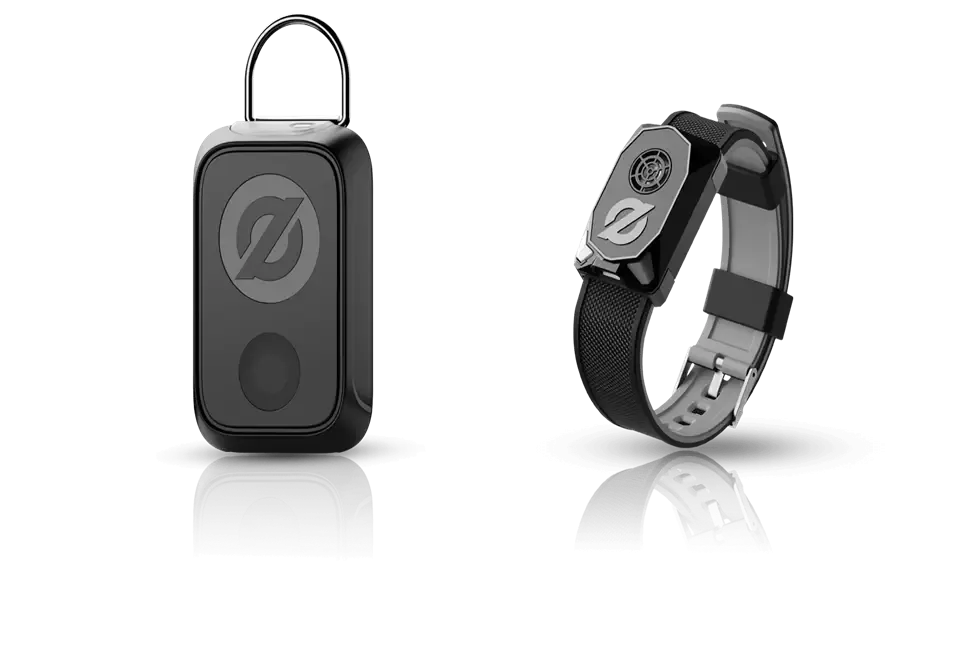
- Secure the Most Vulnerable with Infant Security: Protect maternal units with clinical-grade, tamper-proof wearables. The system provides 24/7 monitoring and triggers instant door lockdowns or elevator deactivations if a security protocol is breached.
- Maximize Throughput and Reduce Medical Costs: Optimize the patient journey from admission to discharge to increase volume without adding operational overhead. Use bottleneck detection and virtual simulation to prevent delays and reduce hospital readmissions by up to 25%, lowering the high costs of redundant care.
- Predictive Control and Simulation: Test "what-if" scenarios for staffing and resource allocation in a virtual space. This allows leaders to validate operational changes with real-world data before implementing them on the clinical floor to ensure success.
- Improve the Care Experience: Give clinicians more time for patients by automating manual documentation and logistics. Removing this friction supports higher staff retention and improves patient satisfaction as care becomes more proactive.
Navigating the Digital Shift: LocaXion’s Role as a Smart Healthcare Partner
For a Digital Twin to be accurate, it needs high-quality data from the physical world. LocaXion acts as a hardware-agnostic Integration Partner, providing the trackers, tags, and sub-meter gateways that serve as the eyes and ears for a live virtual facility. By combining RTLS Consulting with advanced execution logic, we help hospitals move beyond isolated pilot projects and deploy measurable, facility-wide improvements that directly impact Equipment tracking and patient flow management.
LocaXion delivers specialized Healthcare Solutions that translate high-level strategy into execution on the clinical floor. On the patient and staff side, our clinical-grade wearables and Staff Safety systems enable 24/7 monitoring and automated emergency workflows. For hospital assets, the RTLS Digital Twin framework ensures that expensive equipment and Infant Security protocols are tracked at the bay level and maintained in audit-ready conditions. This integrated approach provides the reliable execution layer needed for a controlled, predictable healthcare environment that supports clinical teams without adding operational burden.
Conclusion
Healthcare is entering a phase where operational precision will matter as much as clinical excellence. As care models evolve, patient volumes fluctuate, and regulatory expectations tighten, hospitals can no longer rely on reactive coordination and retrospective documentation. Real-time operational control will become a baseline requirement, not a competitive advantage.
By 2030, the most resilient healthcare organizations will be those that convert live physical activity into governed, predictable workflows to deliver on the promise of P4 Medicine. RTLS-enabled Digital Twins provide the foundation for this shift, enabling the continuous visibility and automated response needed to scale safely. Hospitals that invest in execution-ready infrastructure today will be better positioned to adapt quickly and deliver consistent care.
Eliminate search times, automate staff safety, and maximize patient throughput with a live operational model.
Maximize ROI with Digital Twin Solution NOW!
FAQs on Digital Twins in Healthcare
What is P4 Medicine and how does it relate to hospital operations?
P4 Medicine stands for Predictive, Preventive, Personalized, and Participatory care. While it is often discussed at a clinical level, hospitals cannot deliver P4 outcomes without operational support. Real-time visibility into patient flow, asset readiness, and safety conditions enables hospitals to anticipate constraints and prevent disruptions before they impact care delivery.
How is a facility-level Digital Twin different from a clinical Digital Twin?
Clinical Digital Twins model organs or treatment responses for research and precision medicine. A facility-level Digital Twin focuses on hospital operations, reflecting real-time movement of patients, staff, and assets across departments. It supports workflow control, safety enforcement, and operational planning rather than clinical simulation.
How do Digital Twins help reduce hospital readmissions?
Digital Twins help identify operational bottlenecks, discharge delays, and resource gaps that contribute to extended stays or rushed transitions. By improving throughput and validating workflow changes through scenario testing, hospitals can reduce avoidable readmissions and improve continuity of care.
Can Digital Twins support compliance and regulatory audits?
Yes. A Digital Twin creates continuous, timestamped operational records across safety zones, equipment usage, and maintenance cycles. This reduces reliance on retrospective documentation and strengthens readiness for inspections related to safety, asset tracking, and regulatory standards.
What departments benefit most from RTLS-enabled Digital Twins?
Emergency departments, surgical units, inpatient wards, maternal units, and high-security areas often see immediate value. These environments rely on coordinated movement, rapid response, and controlled access, making real-time operational visibility especially critical.
Is implementing a Digital Twin disruptive to clinical workflows?
When properly planned, implementation is designed to enhance existing workflows rather than interrupt them. Deployment is typically phased, starting with defined departments or use cases such as asset tracking or staff safety. RTLS infrastructure integrates with existing hospital systems, minimizing downtime and avoiding large-scale process changes. The goal is to reduce manual coordination, not add new steps for clinical teams.