Skip to content

Real-Time Locating Systems (RTLS) have become a transformative technology in the healthcare industry. By enabling the precise tracking of assets, patients, beds, wheelchairs, and staff in real-time, facilities are now adopting hospital real time location services to provide critical support for improving operational efficiency, safety, and patient care.
RTLS technology works by using tags, sensors, and communication networks to monitor and record the location of objects or people within a facility. In hospital and clinical settings, real time location systems in healthcare ensure that critical equipment is always accessible, patients’ movements are monitored for safety, and staff productivity is enhanced through optimized workflows. This comprehensive guide will delve into the applications, components, benefits, and future trends of RTLS in the healthcare sector.
Applications of RTLS in Healthcare
RTLS is applied across multiple hospital functions where visibility, timing, and coordination directly influence patient safety and operational performance. The following use cases illustrate how RTLS supports everyday clinical and operational needs across healthcare environments.
1. Asset Tracking
One of the primary applications of RTLS in healthcare is asset tracking. Hospitals often deal with the challenge of locating critical medical equipment like infusion pumps, beds, wheelchairs, or defibrillators in emergencies. Healthcare RTLS tracking provides real-time visibility into the location and status of these assets, ensuring they are available exactly when needed. As a result, staff spend less time searching for equipment and more time focused on patient care.
RTLS also plays a significant role in increasing the utilization of expensive medical devices. Tags attached to high-value assets enable alerts when equipment leaves designated areas, minimizing replacement costs, boosting asset utilization, and ensuring compliance with security and regulatory protocols.
2. Patient and Staff Safety
Patient and staff safety are another key area where RTLS makes a difference. In healthcare facilities, RTLS systems can monitor patient movement to ensure they remain within safe zones, reducing the risk of falls or unauthorized exists. By implementing hospital real time location services, units such as psychiatric wards, rehabilitation centers, and memory care environments can maintain the continuous oversight required for vulnerable populations without being intrusive.
For staff, RTLS enhances security by providing panic buttons or alerts in high-risk zones, such as emergency rooms or psychiatric wards. Real-time location tracking enables swift response in case of incidents, ensuring a safer working environment.
3. Workflow Optimization
RTLS plays a significant role in optimizing hospital operations by providing real-time visibility into the patient's journey. By integrating real time location systems in healthcare, facilities can automatically track a patient’s progress from admission through treatment and discharge. It also provides valuable data for measuring processing times, billable hours, and discharge times. Allowing you to keep validated records of these events.
During emergency situations, RTLS enables real-time updates, allowing staff to streamline response efforts. Whether it’s locating a trauma team or ensuring an operating room is ready, RTLS ensures seamless coordination.
4. Infection Control
Infection control is a critical concern in healthcare, and RTLS can play a important role in managing it. By leveraging RTLS technology in healthcare, hospitals can track the movement of infected individuals or contaminated equipment and use interaction and proximity data to identify potential exposure risks. RTLS data can also help identify areas requiring immediate disinfection, thereby improving overall hygiene standards. With RTLS, it is possible to send notifications to managers or staff themselves to ensure these protocols are met.
Assess RTLS for Your Facility
If you are evaluating hospital real time location services and want to understand how RTLS can support asset visibility, staff safety, and workflow coordination in your unique environment, we are here to help.
Technological Components of RTLS in Healthcare
1. Hardware
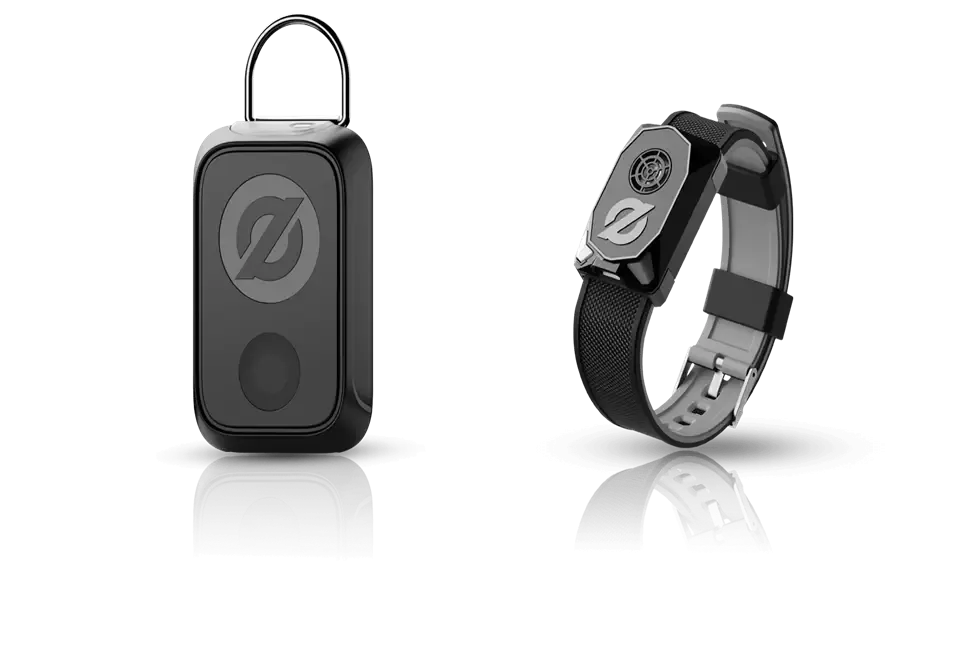
The hardware components of RTLS include tags, sensors, and transceivers. Tags are attached to assets, patients, or staff to enable tracking, while sensors and transceivers communicate location data to centralized systems. Depending on the use case, tags can be active (battery-powered) or passive (powered by external signals).
2. Software
RTLS platforms act as the backbone of these systems, integrating data from hardware components with hospital information systems (HIS). Advanced RTLS Healthcare software provides intuitive dashboards, real-time alerts, and analytics, enabling actionable insights for hospital administrators and staff.
3. Connectivity Options
RTLS systems in healthcare rely on various connectivity options such as Wi-Fi, Bluetooth Low Energy (BLE), RFID, and Ultra-Wideband (UWB). Wi-Fi-based systems leverage existing hospital networks for broad coverage, while UWB offers highly precise tracking suitable for critical areas, it is usually not cost effective. BLE, Wi-Fi, and RFID provide cost-effective solutions for specific applications like asset tracking or patient monitoring.
Benefits of RTLS in Healthcare
Improved Patient Care
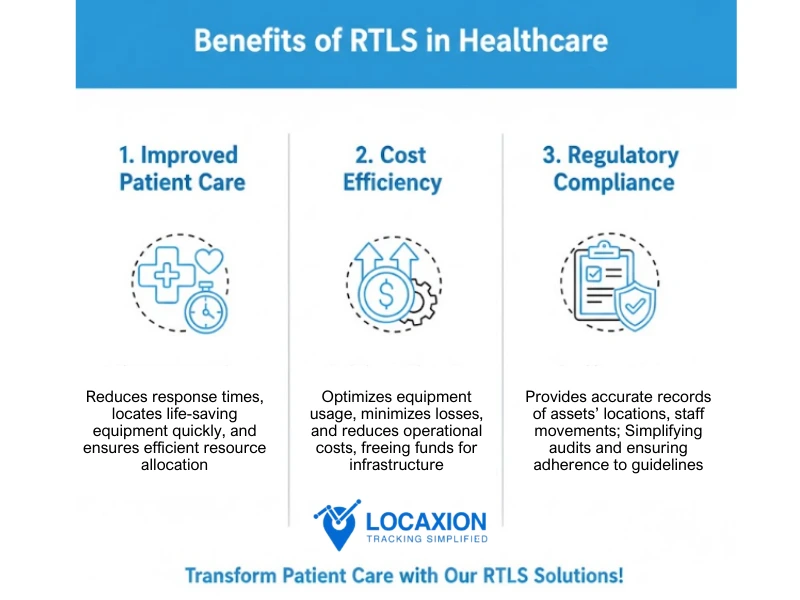
RTLS directly impacts patient care by reducing response times and ensuring resources are allocated efficiently. As part of healthcare real time location services, RTLS helps care teams locate life-saving equipment quickly during emergencies, which can make the difference between timely intervention and delayed treatment.
2. Cost Efficiency
By optimizing equipment usage and minimizing losses, RTLS helps healthcare facilities reduce operational costs. Hospitals can invest these savings in improving infrastructure or patient care services.
3. Regulatory Compliance
Healthcare facilities must adhere to stringent safety and operational guidelines. RTLS systems simplify compliance by providing accurate records of asset locations, staff movements, and incident responses, ensuring audit readiness.
Challenges in RTLS Implementation
1. Integration with Legacy Systems
Integrating RTLS with existing hospital systems can be complex and time-consuming. Compatibility issues may arise, requiring customized solutions and extended timelines.
2. Initial Costs of Deployment
The upfront cost of implementing RTLS technology in healthcare,, including hardware, software, and installation, can be significant. While the long-term benefits outweigh these costs, initial budget constraints may pose a challenge for some facilities.
3. Patient Data Privacy and Security
RTLS systems collect sensitive data, raising concerns around privacy and security. Ensuring compliance with regulations like HIPAA and implementing robust encryption measures is critical to mitigate these concerns.
Opportunities and Solutions for RTLS in Healthcare
Opportunities and Solutions
1. Seamless Integration
Strategies like choosing interoperable RTLS platforms and phased rollouts can ensure smooth integration with legacy systems. Collaborating with an experienced RTLS provider for healthcare can also ease the transition, helping your team avoid common technical pitfalls during the initial setup.
2. Expanding RTLS to Developing Markets
The rtls for healthcare market is rapidly expanding into developing regions, presenting significant opportunities for global adoption. By offering scalable and cost-effective solutions, providers can tap into these regions to enhance healthcare delivery.
3. Addressing Privacy Concerns
Implementing strict data governance policies and transparent communication with patients about how healthcare real time location services are utilized can alleviate privacy concerns. Advanced security features like encryption and access controls further safeguard sensitive information.
RTLS Market Trends and Future Outlook
Market Growth
The RTLS for healthcare market is experiencing rapid growth, driven by increasing demand for operational efficiency and patient safety. Region real-time North America and Europe are leading adoption, while Asia-Pacific shows strong potential. According to Grandview research, the RTLS healthcare market is currently valued at about $2 billion but will grow to over $9 billion by 2030. This goes to show that RTLS will become a necessary technology in healthcare settings and location data will provide deeper insights to hospitals regarding safety, patient care, and operational efficiency.
Innovations
Emerging technologies like AI and machine learning are enhancing RTLS capabilities, enabling predictive analytics and advanced automation. Companies like Stanley Healthcare RTLS continue to lead the way in innovation. More firms are developing custom platforms that fuse location and HIS data to provide managers and staff with real-time visibility, eliminate manual time sheet reports, and increase quality of patient care and satisfaction.
Long-term ROI of RTLS in Healthcare
Cost-Benefit Analysis
Implementing RTLS delivers long-term value by turning location data into measurable operational improvements. As part of the RTLS for healthcare market, organizations increasingly evaluate ROI beyond initial deployment costs, focusing on sustained gains in efficiency, safety, and compliance.
Hospitals can quantify returns by tracking KPIs such as equipment utilization rates, time spent searching for assets, patient throughput, and staff response times. Over time, these insights help reduce unnecessary equipment purchases, lower operational waste, and improve care delivery without increasing staffing levels. The ability to rely on objective, time-stamped data also strengthens audit readiness and reduces the burden of manual reporting.
Rather than a one-time efficiency gain, RTLS supports continuous improvement by revealing patterns in how resources are used across departments and shifts.
Conclusion
From improving patient safety and infection control to optimizing workflows and resource allocation, real time location systems in healthcare enable hospitals to move from reactive decision-making to data-informed operations.
As RTLS technology continues to evolve, its role in supporting safer, more efficient, and more resilient healthcare environments will only expand. Organizations that approach RTLS with clear objectives and realistic deployment strategies are better positioned to deliver consistent outcomes for both patients and staff.
From improving patient safety to optimizing workflows, RTLS offers a comprehensive solution to the challenges faced by hospitals and clinics. As technology continues to advance, the potential for RTLS to further enhance healthcare systems worldwide remains immense. By embracing these innovations, healthcare providers can ensure better outcomes for patients and staff alike.
Transform Patient Care with Our RTLS Solutions!
Let us help you streamline your operations and take patient care to the next level. Reach out for a free consultation and discover how our RTLS solutions can revolutionize your healthcare environment.
Frequently Asked Questions (FAQ)
How does RTLS work in healthcare?
Real time location systems in healthcare use a network of fixed readers or sensors placed throughout a facility to track the location of tags attached to equipment, patients, or staff. The system continuously updates location data, enabling real-time monitoring and operational visibility.
What are the benefits of RTLS in healthcare?
Version 1: Healthcare real time location services support multiple operational benefits, including improved asset availability, enhanced patient safety, and better workflow coordination. By reducing manual tracking and delays, hospitals can operate more efficiently and respond faster to clinical needs.
Version 2:
Healthcare real time location services support multiple operational benefits, including:
-
- Improved Asset Management: Effective tracking of medical equipment reduces loss and improves accessibility.
-
- Enhanced Patient Safety: RTLS helps ensure that patients are monitored, and their movements are trackable, reducing the risk of incidents.
-
- Operational Efficiency: Streamlining workflows and reducing wait times improve overall efficiency within the facility.
What can be tracked using RTLS in healthcare?
Healthcare RTLS tracking can track a variety of items, including:
-
- Medical devices and equipment.
-
- Hospital beds and wheelchairs.
-
- Staff members and patients.
-
- Pharmaceuticals and supplies.
How does RTLS improve patient care?
By providing real time tracking of patients, RTLS enhances communication between staff, reduces wait times for treatments, and ensures timely delivery of care, thereby improving overall patient satisfaction and outcomes.
What technologies are commonly used in RTLS for healthcare?
Version 1: RTLS technology in healthcare commonly includes
-
- RFID: for tagging assets and tracking their movements.
-
- Ultrawide Band: for precise location tracking in enclosed spaces.
-
- WiFi: leveraging existing infrastructure for location tracking.
Version 2:
RTLS technology in healthcare commonly includes RFID, Bluetooth Low Energy (BLE), Wi-Fi, and Ultra-Wideband (UWB). Hospitals often use a combination of these technologies depending on accuracy needs, coverage areas, and operational requirements.
How can RTLS help with regulatory compliance?
RTLS systems support compliance by automatically capturing time-stamped location data for assets, staff movement, and key events. Healthcare RTLS software helps maintain accurate records that support audits, safety standards, and regulatory reporting without relying on manual documentation.
How do I choose the right RTLS solution for my healthcare facility?
When selecting an RTLS solution, hospitals typically Consider factors such as the size of your facility, the types of assets you need to track, existing infrastructure, budget, and your organization’s specific goals. Consulting with RTLS provider for healthcare like LocaXion can help you identify the best solution.