Skip to content
Warehouse management in the automotive industry is tightly linked to production performance. When materials are delayed, misplaced, or out of sequence, the impact is immediate: line disruptions, manual workarounds, and rising buffer inventory.
While automotive inventory management systems provide visibility into stock and planned movements, they often struggle to reflect what is actually happening on the shop floor in real time.
As materials move continuously across docks, storage areas, and line-side locations, these execution gaps become harder to manage with traditional automotive inventory management software alone.
Here we will explore how RTLS impacts warehouse management in the automotive industry by closing the gap between system records and physical reality, helping teams improve material flow, inventory confidence, and production continuity.
The Critical Role of Warehouse Management in the Automotive Industry
The Critical Role of Warehouse Management in the Automotive Industry
Automotive warehouses directly affect whether production keeps moving or stalls. Automotive warehouses are built around flow and sequencing, not storage. Materials are staged, kitted, and delivered to the line in a strict order, with little tolerance for delay or misplacement.
Automotive inventory management systems define what should move and when, but execution happens on the floor. As materials move through docks, buffers, tugger routes, and line-side lanes, control depends on accurate handoffs and disciplined movement.
In automotive environments, effective warehouse management supports production by enabling:
- Reliable line-side replenishment aligned to track time and sequencing requirements
- Controlled material staging and kitting to prevent wrong-part or wrong-order deliveries
- Predictable material flow across docks, buffers, and line-side zones
- Faster response to disruptions without stopping the line
- Higher confidence in inventory status as materials move closer to production
When these fundamentals fail, even the most advanced automotive inventory management software cannot prevent throughput loss. Warehouse management in the automotive industry succeeds only when planning systems and physical execution stay tightly aligned, ensuring materials arrive where and when production needs them.
How Automotive Warehouse Management Has Traditionally Been Designed
Traditional workflows are transaction-driven. A material handler receives an instruction, completes a move, and confirms it through a barcode scan or system update. Automotive inventory management software captures the intent of the move, but it does not verify what happens between scan points. As a result, visibility is based on the last recorded event, not the current physical state.
| Aspect | Traditional System Behavior | RTLS + Digital Twin |
|---|---|---|
| Visibility | Based on last confirmed scan | Continuous, live coordinates |
| Data Capture | Manual / Event-driven | Automated / Hands-free |
| Verification | Assumed correct | Continuously validated |
| Error Detection | Reactive (at line-side) | Proactive (instant alerts) |
These automotive inventory solutions perform well where control and consistency are required. They support financial audits through accurate quantity-on-hand records, enable demand planning by translating production schedules into material requirements, and establish standardized workflows for receiving, storage, and shipping.
However, in fast-moving automotive environments, these systems behave like a rear-view mirror. They confirm where a part was last recorded, not where it is now, creating blind spots as materials move continuously between docks, buffers, and line-side locations.
Where Execution Gaps Appear on the Shop Floor
Execution gaps in automotive warehouses typically appear at points where physical movement outpaces system updates. Common failure points include:
- Material repositioning outside planned paths, such as racks moved to temporary buffers or alternate lanes
- Missed or delayed scans during handoffs between shifts, zones, or handlers
- Line-side staging errors, where parts are placed near the line but not in the correct sequence or location
- Shared assets and containers being reused without updated system confirmation
- Last-minute production changes that are not reflected in warehouse task updates
Why Inventory Accuracy Breaks Down in Practice
In a high-velocity plant, inventory drift isn't usually caused by major errors; it’s the result of hundreds of small, unrecorded movements. Most automotive inventory management systems rely on "event-driven" data, which creates a permanent lag between the floor and the office.
This breakdown is driven by three specific structural limitations:
- The "Last-Scan" Obsolescence:
Traditional automotive inventory management software assumes a part remains at its last scanned location. In reality, racks are frequently moved to clear paths or manage overflows, making that data obsolete within minutes. - The Chain of Custody Gap:
Between the dock and the line, materials are touched multiple times. If even one manual scan is missed during a production surge, the digital trail is broken, creating lost inventory. - Operational Priority vs. Data Entry:
When a line-side buffer runs low, handlers prioritize delivery over documentation. Manual scans are the first task skipped during a crisis, causing system accuracy to plummet exactly when it is needed most.

RTLS as an Execution Layer in Automotive Warehouse Management
To bridge the gap between planning and reality, facilities are adding a dedicated execution layer. By integrating RTLS and Digital Twin technology, warehouses gain continuous physical evidence that manual scans cannot provide.
What RTLS Provides at the Physical Layer
Unlike traditional automotive inventory management software, RTLS acts as the eyes on the floor. It replaces scan-based assumptions with verified location data:
- Continuous Location Evidence:
Provides a live coordinate for every high-value asset, rack, and WIP component, eliminating the guesswork of "last known" positions. - Automatic Transaction Triggers:
Uses geofencing to detect when a rack enters or leaves a specific zone, automatically updating the status in your automotive inventory management systems. - Flow Monitoring:
Tracks how long an item has been stationary, helping identify bottlenecks before they stall the line. - Digital Twin Synchronization:
Feeds live coordinates into a 3D model, allowing managers to see the entire plant's material flow in one view.
Aligning Digital States with Physical Movement
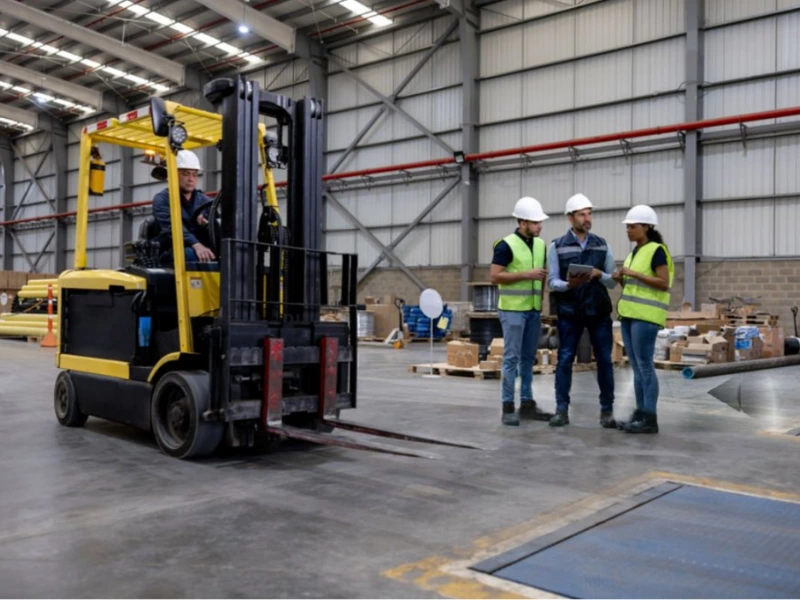
This execution layer ensures that your automotive inventory solutions reflect reality at all times. When a forklift moves a sequence-critical rack, the RTLS sees the movement and verifies the destination. If that rack is placed in the wrong buffer lane or out of sequence, the system sends an immediate alert.
By using RTLS as the source of truth, the facility moves from searching and correcting to directing and confirming. This shift ensures that production isn't compromised by hidden inventory gaps or misplaced parts.
RTLS’s Operational Impact on Automotive Inventory and Production Flow
Transitioning from manual scans to an automated execution layer directly affects the balance sheet. By providing a deterministic view of every asset, LocaXion’s automotive inventory solution eliminates the hidden costs of traditional warehousing.
Measurable Results on the Floor
By removing the guesswork from warehouse management in the automotive industry, facilities see immediate improvements in these key metrics:
- 95% Reduction in Search Time:
Drivers no longer spend nearly 40 minutes per shift hunting for misplaced racks. They are directed to the exact coordinate, reclaiming lost labor hours for actual material movement. - 73% Fewer Production Stoppages:
Automated geofencing verifies sequence integrity, virtually eliminating the wrong-part-to-line errors that cause unplanned downtime. - 20% Reduction in Safety Stock:
High-confidence visibility allows managers to lean out buffers. When you know exactly where every part is, you stop over-ordering "just in case" a rack goes missing. - 15% Better Fleet Utilization:
Tracking forklift and tugger movement identifies bottlenecks and eliminates "empty miles," often allowing for a smaller, more efficient fleet. - Zero Quality Failures from Expired Tools:
For critical torque tools managed in the warehouse, the system alerts the team before calibration expires, preventing expensive teardowns and rework.
Read More: How to Evaluate RTLS for Automotive Manufacturing
How RTLS Works Alongside Existing Automotive Systems
A common concern for operations leaders is whether adding new technology requires a rip-and-replace of their current infrastructure. In reality, RTLS is a supporting evidence layer. It does not replace your ERP or WMS; it feeds them the high-fidelity data they need to function correctly.
Strengthening Your Core Platforms
LocaXion integrates directly with your tech stack to automate data entry and verify physical tasks:
- WMS & ERP Sync:
Geofencing triggers transactions automatically when a rack enters a zone. This eliminates the need for manual barcode scans and ensures your financial records match physical inventory. - MES Interoperability:
Location data tells the MES which vehicle VIN is at a specific station, allowing it to automatically push the correct torque programs to tools based on their proximity to the car. - Move Verification:
While your automotive inventory solutions provide the "plan," RTLS provides the "proof." If a move doesn't match the production schedule, the system flags the error before it causes a line-stop. - Seamless Data Flow:
Using standard APIs, RTLS pushes live coordinates to the dashboards your team already uses. You get better data without changing your established workflows.
By acting as a live feed, RTLS turns static record-keeping into a dynamic management tool that keeps pace with the speed of your assembly line.
Optimizing Floor Execution and Productivity with Location Intelligence
In high-turnover automotive environments, lost time is rarely caused by a lack of effort. It comes from manual friction and correcting avoidable errors. By introducing LocaXion’s automotive inventory solutions, you simplify the workflow for your team while maintaining 100% data integrity in your automotive inventory management systems.
RTLS removes the administrative burden and supports a safer, more predictable floor:
- Hands-free data capture:
Moves are recorded automatically as material flows. Drivers stay "on the seat" without stopping to scan, increasing productive time per shift. - Faster onboarding:
Visual, map-based guidance directs new or temporary staff to exact locations, reducing dependence on tribal knowledge. - Built-in error prevention:
If a rack is picked out of sequence, the system alerts the operator immediately, stopping the error before it hits the assembly line. - Improved worker safety:
Instant alerts for proximity events or unsafe zone entry allow teams to respond to potential mishaps faster than manual supervision. - Digital Twin validation:
Live data feeds a virtual model, allowing you to test layout changes or staffing scenarios virtually before applying them to the physical floor.
Conclusion
In an industry where a misplaced rack can halt a multi-million dollar assembly line, relying on manual scans is no longer enough. Moving toward RTLS-driven warehouse management ensures that the records in your automotive inventory management systems finally match the speed of the physical floor. By transitioning from a reactive "last-scan" model to a proactive, real-time material flow, you eliminate the "search-time tax" and ensure production continuity. When your data reflects reality, the warehouse stops being a source of disruption and becomes a reliable engine for production excellence.
Interested in optimizing your floor execution? Connect with us to learn how LocaXion’s RTLS+Digital Twin technology can secure your material flow and inventory accuracy.
[Review Your Warehouse Execution Gaps]
FAQs on Automotive Warehouse Management
What do you mean by warehouse management?
Warehouse management refers to the coordination of receiving, storing, moving, and issuing materials so production and shipping are not disrupted. In the warehouse management of the automotive industry, this also includes sequencing, line-side replenishment, and tight timing aligned to production schedules.
What are the 5 essential warehouse management processes?
The five essential processes are receiving, putaway, storage, picking, and dispatch. Effective automotive inventory management depends on executing these steps accurately under high velocity and frequent material movement.
What are the four types of WMS?
The four common types are standalone WMS, ERP-integrated WMS, cloud-based WMS, and supply chain execution platforms. Most automotive plants rely on automotive inventory management systems embedded within ERP environments to manage planned material flows.
What is the duty of warehouse management?
The duty of warehouse management is to ensure materials are available at the right place, time, and sequence without interrupting production. Modern automotive inventory management software supports this by coordinating tasks, confirmations, and inventory records across the facility.
What do you mean by the automotive industry?
The automotive industry includes vehicle manufacturing, assembly, and supply chain operations that support production. These environments rely heavily on automotive inventory solutions to manage high-volume, sequence-sensitive material flow.
How does RTLS support automotive inventory management?
RTLS strengthens automotive inventory management solutions by providing real-time location evidence, reducing reliance on manual scans and improving execution accuracy on the shop floor.
Can RTLS integrate with existing automotive management systems?
Yes. RTLS integrates with existing WMS, ERP, and MES platforms without replacing them. It provides real-time location evidence that validates physical movement and keeps system records aligned with the shop floor.