Skip to content

Warehouses and distribution centers are in a constant battle of achieving aggressive performance targets and keeping the workers safe. AI-based forklift tracking and safety systems are altering that equation. The combination of AI cameras, Real-Time Location Systems (RTLS) and Digital Twins has made it possible to detect hazards, automatically decelerate forklifts, and prevent safety incidents before they happen without affecting throughput and order fulfillment rates.
Such proactive safety at this level seemed to be a questionable concept only a few years ago. The legacy systems were highly constrained and focused on safety alone; they were siloed and had no connection to the operational workflows. Today, AI cameras, accurate location tracking, and Digital Twins are coming together to provide contextual and spatially aware safety interventions in real-time. These integrated systems are not simply constrained to hazard detection: they look at incident patterns, propose process enhancements and help HSE departments to mitigate risk throughout the whole operation in a methodical way.
Where Warehouses Stand Today
The existing warehouses operate at full capacity with exponentially increased labor force. In the U.S., warehousing employment has nearly tripled between 749,000 in 2014 and 1.9 million in 2024. Forklifts navigate busy aisles and intersections, while workers fill the orders at fastest possible rate to meet aggressive KPIs. This motivation of efficiency entails great risks: forklifts are the most common cause of warehouse accidents; they result in about one-quarter of injuries and nearly one-hundred fatalities every year in the United States alone.
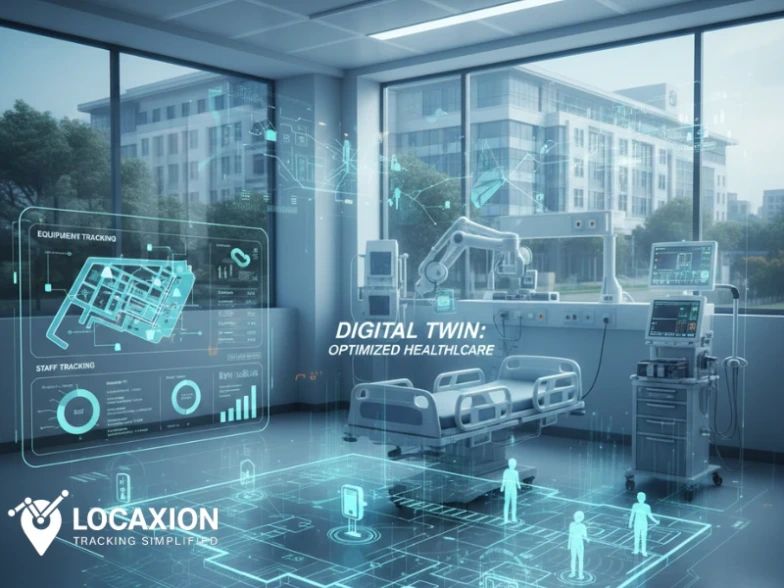
The real issue is how to balance the safety requirements and the key performance indicators such as the order fulfillment rates and the turnaround times. Proactive safety notifications and automated speed modifications are possible with AI-based forklift systems that integrate Real-Time Location System or RTLS to track assets with high accuracy and camera-based object detection to provide not only hazard alerts but also preventive measures. These systems, combined with Digital Twins (virtual replicas of real-world environments), measure the incidents and utilize this information to optimize traffic flows in the high-risk regions.
This is a move towards monitoring and data-driven decision making that enhances the protection of workers and efficiency in operations.
Why Operators NEED AI Solutions for Forklift Safety!
Warehouse operators have to cope with complex operations in high-paced environments where they have only a few seconds to make decisions. Lack of visibility combined with fatigue during long shifts affects their judgment, while conventional safety devices like convex mirrors, horns, warning signals and safety lights are not sufficient in congested environments where visibility is obscured and traffic remains high.
Reaction Time, Blind Spots, and Fatigue
Operator fatigue gradually diminishes reaction times, increasing risk in long shifts and increasing hazards in blind spots. Blind spots are frequent in aisles that are narrow and loaded with pallets, even with design enhancements. According to OSHA data, as many as 70 percent of the injuries that occur each year involving forklifts could be avoided through better situational awareness.
This gap is filled with advanced RTLS and AI camera systems that continuously monitor the positions of forklifts and pedestrians and identify objects in real time to provide early warnings to operators. When the distance is too short to allow human response in time, these systems automatically decelerate the vehicle and potential safety incidents are avoided before they take place.
Agentic AI Hits the Warehouse Floor in 2026
The use of agentic AI forklift systems that can perceive, reason and act independently is rapidly taking root in the manufacturing sector in 2026. The Deloitte’s 2025 Manufacturing Outlook estimated adoption to rise from 6% in 2025 to 24% in 2026 of such systems. This trend is driving AI-based safety innovations, moving toward data analytics and real-time safety interventions, like automated speed control.
From Alerts to Automated Braking Using Latest AI Technology
Passive safety systems like warning lights or horns only alert. Active systems control the speed of vehicles or braking. The AI cameras detect the presence of pedestrians at 30-60 frames per second and calculate the likelihood of a collision within milliseconds, controlling slowdowns more reliably and quickly than any human operator.
According to OSHA statistics, pedestrians are involved in about 20 percent of forklift accidents, from which 36 percent result in fatalities. This highlights the importance of AI-based forklift interventions that can respond to the conditions in less time than humans can.
The Cooperation of Pedestrian Detection and Speed Throttling
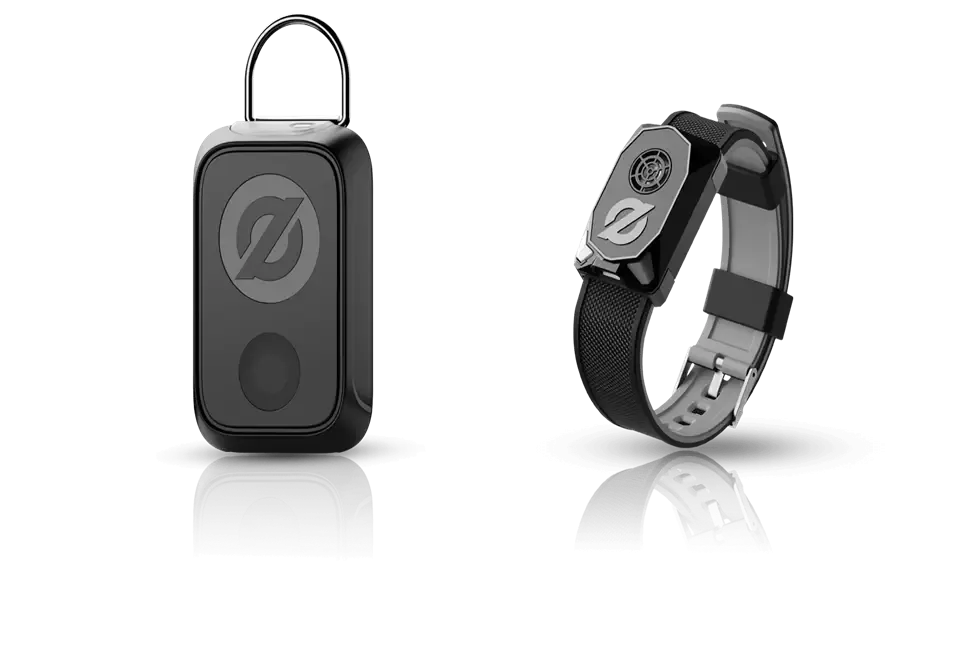
Take an example of a high-volume warehouse or distribution center: an AI and RTLS-equipped forklift is nearing one end of a forklift aisle. Its camera distinctly recognizes a pedestrian amid pallets 10 meters away across the shelving despite obstructions. In case the person is in a specific area protected by safety barriers, such as pedestrian walkways, the Digital Twin can offer the contextual awareness of the facility layout, avoiding unnecessary braking and false alerts. RTLS wearable tags on employees can also increase reliability, as they can track personnel even behind tall stacks or shelving where the cameras cannot see.
The system will slow the speed down gradually, by first warning the driver, then decelerating the forklift automatically when the proximity becomes narrower and finally stopping the forklift altogether when necessary. This graded response avoids disruptive false positives that would hinder efficiency and interventions are tuned to the severity of each circumstance.
What LocaXion’s Platform Does Differently
After the incident, RTLS and AI camera data are inputted into the vendor-neutral Digital Twin platform of LocaXion. The platform is capable of processing thousands of position updates a minute for larger fleets and analyzing patterns and point locations where the highest number of safety incidents are occurring. This analytics engine will then propose specific operational adjustments, such as dynamic speed limits in high-risk areas, rerouted workflows or changed shift patterns, to minimize recurrence but keep throughput high.
This AI solution for forklift safety tracking provides a facility-wide perspective, allowing the movement patterns to be predicted and thus the potential near-miss cases to be identified before they arise, which promotes ongoing enhancement in the safety performance.
Reducing False Positives Without Reducing Productivity
The Digital Twin offers accurate contextual awareness of the warehouse which includes barriers, designated walkways, and operational areas. Alerts are activated when pedestrians are put under actual threat, e.g., when they accidentally get into active forklift zones. The system eliminates the false positives to the workers who are safely behind physical safety barriers where there is no collision risk even though they are physically close to vehicle tracks.
This accuracy creates confidence in operators who may otherwise disregard frequent false alarms and avoids unwarranted operation stoppages in dense locations where forklifts and employees are forced to regularly contact each other to achieve productivity goals.
What AI Forklift Means for Your Facility
The cameras equipped with AI close the gap in the blind spots and reaction time that cannot be filled by human vision. RTLS provides the accuracy of real-time location information to put forklift positions into perspective, which combined with AI-based cameras gives situational awareness and automated reactions across the facility. Digital Twins combines these inputs into a holistic perspective, providing detailed contextual awareness and sophisticated safety recommendations and process optimization.
This is an integrated, closed-loop architecture that balances increasing safety requirements with ever-increasing productivity. Forklift safety AI solutions keep the workers safe without interfering with the working pace, placing progressive facilities on the forefront of the automated, AI-driven industrial world.
Frequently Asked Questions
How can forklift safety be solved using AI solutions for tracking?
The solutions are utilizing a combination of AI-powered cameras, RTLS and Digital Twins, which are used to identify hazards, issue alerts, and automatically slow or stop forklifts before safety incidents happen without interfering with the productivity of the warehouse.
How does the AI forklift technology reduce false alerts?
Digital Twin models of the facility layout are used in AI forklift systems to interpret the context of each alert. They differentiate a worker behind a barrier that has walked into an active forklift area, which triggers interventions only in the case of real danger.
Are AI solutions for forklift safety compatible with the current equipment used in warehouses?
Yes. Integration with a current forklift fleet can be done by using platforms such as the vendor-agnostic Digital Twin of LocaXion, which is compatible with multiple RTLS hardware and AI-based camera systems.
What is the latest forklift safety AI news for 2026?
In 2026, the largest forklift safety AI news will revolve around agentic AI implementation in manufacturing. This facilitates real-time intervention measures like automated speed adjustments, as opposed to mere alerts.
How do these systems handle blind spots?
The AI cameras can see pedestrians and obstacles as they appear in real time, and RTLS wearables can be utilized to track employees even behind high shelves or stacks that cameras cannot view. They jointly eradicate the blind spots that are the most dangerous.
What ROI can facilities expect from AI-powered forklift safety?
Facilities usually experience lower rates of incidents, less operational interference caused by false alarms, and enhanced throughput due to increased optimization of their traffic flows, representing quantifiable paybacks in terms of safety and productivity.