 Skip to content
Forklift Tracking System
for Smarter Fleet Management
Track. Manage. Optimize.
Real-time forklift visibility, anti-collision alerts, OSHA compliance automation,
and fleet optimization through RTLS-powered digital twin technology.
Why Basic Forklift Tracking Misses 40% of Safety Incidents
Tap to explore the critical gaps in traditional forklift management systems
Traditional forklift tracking systems only capture location, not behavior, not context, not risk. GPS and badge-based systems can't detect near-misses, can't predict collisions, and can't enforce safety zones in real time. Without sub-meter accuracy and behavioral analytics, you're managing blind spots, not preventing incidents.
- Location Without Context — Knowing where a forklift is doesn't tell you if it's speeding, overloaded, or approaching pedestrians.
- No Behavioral Intelligence — GPS can't detect harsh braking, sudden turns, or unsafe operating patterns.
- Reactive, Not Predictive — Systems alert after incidents occur, not before collisions happen.
- Poor Indoor Accuracy — 5–10 meter GPS accuracy can't enforce aisle-level safety zones or detect near-misses.
The RTLS Forklift Tracking Advantage
LocaXion's RTLS-powered forklift tracking delivers:
Core Forklift Tracking Capabilities
Real-time visibility, safety automation, and fleet optimization powered by RTLS digital twin technology.
Real-time Forklift Visibility and Monitoring
Track every forklift with sub-meter accuracy using UWB and BLE RTLS technology. Monitor location, speed, direction, load status, and operator identity in real-time on a live digital twin map.
Learn more →Real-time Forklift Visibility and Monitoring
Know where every forklift is, in real-time, with sub-meter accuracy.
LocaXion’s RTLS forklift tracking solution leverages UWB (Ultra-Wideband) and BLE (Bluetooth Low Energy) technology to deliver 30 cm to 1 m positioning accuracy indoors. Gain real-time visibility into location, movement, load status, and operator identity within a live digital twin map of your facility.
What We Track
- Real-time Location: Sub-meter accuracy with 1-second update rates.
- Speed & Direction: Monitor velocity and heading for safety compliance.
- Load Status: Track loaded vs. empty movement for utilization insights.
- Operator Identity: Link forklift activity to specific operators for accountability.
- Zone Occupancy: View forklift presence across zones in real time.
- Historical Playback: Review past movement patterns for incident or efficiency analysis.
Business Impact
A 500K sq. ft. distribution center reduced forklift search time by 85% (from 12 minutes to 2 minutes average) after implementing RTLS tracking—saving 15 operator-hours per day across 40 operators. Fleet utilization improved by 23% by identifying idle equipment and optimizing deployment.
Forklift Anti-Collision System
Prevent collisions before they happen with predictive proximity alerts.
LocaXion’s RTLS-powered Forklift Anti-Collision System continuously tracks forklifts, pedestrians, and fixed assets to prevent collisions in real time. Using predictive trajectory analysis, the system provides visual, audible, and haptic alerts 3–5 seconds before a potential impact, ensuring proactive safety intervention.
How It Works
- Proximity Detection: Continuously monitor distance between forklifts, pedestrians, and infrastructure.
- Predictive Alerts: Calculate collision risk using real-time speed, direction, and trajectory data.
- Multi-Modal Warnings: Deliver visual (lights), audible (alarms), and haptic (vibration) alerts for maximum awareness.
- Blind Spot Detection: Warn operators of pedestrians or forklifts in obscured visibility areas.
- Intersection Management: Alert operators approaching high-risk intersections to prevent cross-traffic incidents.
- Incident Recording: Automatically log near-misses and collisions for root cause and trend analysis.
Safety Impact
A manufacturing facility reduced forklift-pedestrian incidents by 78% and forklift-forklift collisions by 65% within six months of implementing RTLS-based anti-collision technology. Near-miss reporting increased 3×, enabling proactive safety measures. Workers’ compensation claims dropped 42%, saving approximately $380K annually.
Automate OSHA Compliance and Access Control
Enforce safety rules automatically — no manual monitoring required.
LocaXion’s RTLS solutions automate OSHA compliance by enforcing speed limits, restricted zones, and operator certifications in real time. The system prevents unauthorized operators from using equipment, dynamically enforces safety zones, and generates audit-ready reports for OSHA inspections.
Automated Compliance Features
- Speed Limit Enforcement: Automatically alert or slow forklifts exceeding zone-specific speed limits.
- Restricted Zone Access: Prevent forklifts from entering unauthorized or high-risk areas such as pedestrian or hazmat zones.
- Operator Certification: Verify operator credentials and training before equipment activation.
- Pre-Shift Inspection: Require and document pre-shift safety checks before operation begins.
- Audit Trail: Automatically log all safety events, violations, and corrective actions for compliance verification.
- Compliance Reporting: Generate OSHA-ready audit reports instantly for inspections and regulatory reviews.
Compliance Impact
A food distribution center eliminated 94% of speed limit violations and 100% of unauthorized operator incidents after implementing LocaXion’s automated OSHA compliance system. During an OSHA inspection, they provided full documentation in 15 minutes (vs. 2 days previously), received zero citations, and reduced insurance premiums by 18% due to an improved safety record.
Use Data to Maximize Fleet Efficiency
Right-size your fleet and maximize utilization with data-driven insights.
LocaXion’s RTLS forklift tracking delivers complete visibility into fleet performance, enabling intelligent right-sizing and optimized deployment. By analyzing real-time utilization, travel distance, load activity, and operator efficiency, facilities can eliminate waste, improve throughput, and reduce operational costs.
Fleet Analytics
- Utilization Rates: Track active time, idle time, and utilization by forklift and operator.
- Travel Distance: Measure total distance traveled and identify inefficient or redundant routes.
- Load Analysis: Monitor loaded vs. empty travel to optimize task sequencing and reduce empty runs.
- Operator Performance: Compare productivity, safety, and efficiency across individual operators.
- Fleet Right-Sizing: Determine the optimal fleet size based on actual usage and demand patterns.
- Cost Per Move: Calculate true cost per pallet move, including labor, equipment, and energy factors.
Efficiency Impact
A 3PL warehouse increased forklift utilization from 58% to 81% after deploying LocaXion’s fleet analytics. The facility eliminated eight underutilized forklifts, saving $240K in annual lease costs. Travel distance per pallet move decreased by 18%, while operator productivity rose by 15% through optimized task assignment and balanced workload distribution.
Forklift Navigation and Route Optimization
Guide operators to optimal routes and reduce unnecessary travel.
LocaXion’s RTLS-powered navigation and route optimization system transforms material movement efficiency. By analyzing historical travel patterns and real-time traffic data, the system provides turn-by-turn guidance, reroutes forklifts around congestion, and enforces one-way traffic flow to minimize travel time and improve operational throughput.
Route Optimization Features
- Turn-by-Turn Navigation: Guide operators to destinations using the shortest and safest paths.
- Real-Time Traffic: Dynamically reroute forklifts around congestion, blocked aisles, or active maintenance zones.
- Multi-Stop Optimization: Sequence multiple pick and drop tasks for minimum travel distance and maximum efficiency.
- Historical Analysis: Identify inefficient routes, recurring delays, and congestion hotspots for layout improvement.
- One-Way Aisle Enforcement: Prevent wrong-way travel and improve safety compliance in designated aisles.
- Travel Time Prediction: Estimate task completion time based on live traffic and route conditions.
Efficiency Gains
A beverage distributor reduced average travel distance per task by 22% after implementing LocaXion’s route optimization system. Congestion at high-traffic intersections decreased 35%, task completion time improved 18%, and total annual savings exceeded $180K in labor and equipment efficiency gains.
Manage Congestion Across All Vehicles
Eliminate traffic bottlenecks and improve flow with congestion analytics.
LocaXion’s RTLS platform continuously tracks all material handling vehicles—forklifts, pallet jacks, tuggers, and AGVs—in real time to uncover traffic congestion, bottlenecks, and inefficiencies. The system generates live congestion heatmaps, alerts supervisors before gridlocks occur, and provides actionable recommendations to optimize traffic flow and layout design.
Congestion Management Features
- Congestion Heatmaps: Visualize traffic density in real time to pinpoint bottleneck locations and high-traffic zones.
- Real-Time Alerts: Notify supervisors automatically when congestion exceeds defined thresholds.
- Traffic Flow Analysis: Measure throughput and dwell time across intersections and critical routes.
- Peak Time Identification: Identify when and where congestion most frequently occurs to optimize scheduling.
- Layout Optimization: Recommend aisle widening, one-way routing, or zone reconfiguration to improve flow.
- Multi-Vehicle Coordination: Manage forklifts, pallet jacks, tuggers, and AGVs within one unified traffic control system.
Throughput Impact
An automotive parts warehouse eliminated three major congestion bottlenecks after deploying LocaXion’s congestion analytics. Throughput increased by 28% without additional equipment, and average intersection dwell time dropped from 45 seconds to 12 seconds. Operators reported 40% less frustration and smoother traffic flow throughout the facility.
Forklift Anti-Collision System
Prevent collisions with real-time proximity alerts for operators and pedestrians. Predictive warnings 3–5 seconds before impacting visual, audible, and haptic alerts.
Learn more →Automate OSHA Compliance and Access Control
Enforce safety rules automatically with audit-ready documentation. Speed limits, restricted zones, and operator certifications verified in real-time.
Learn more →Use Data to Maximize Fleet Efficiency
Optimize fleet size, utilization, and deployment with real-time analytics. Track utilization rates, travel distance, load analysis, and operator performance.
Learn more →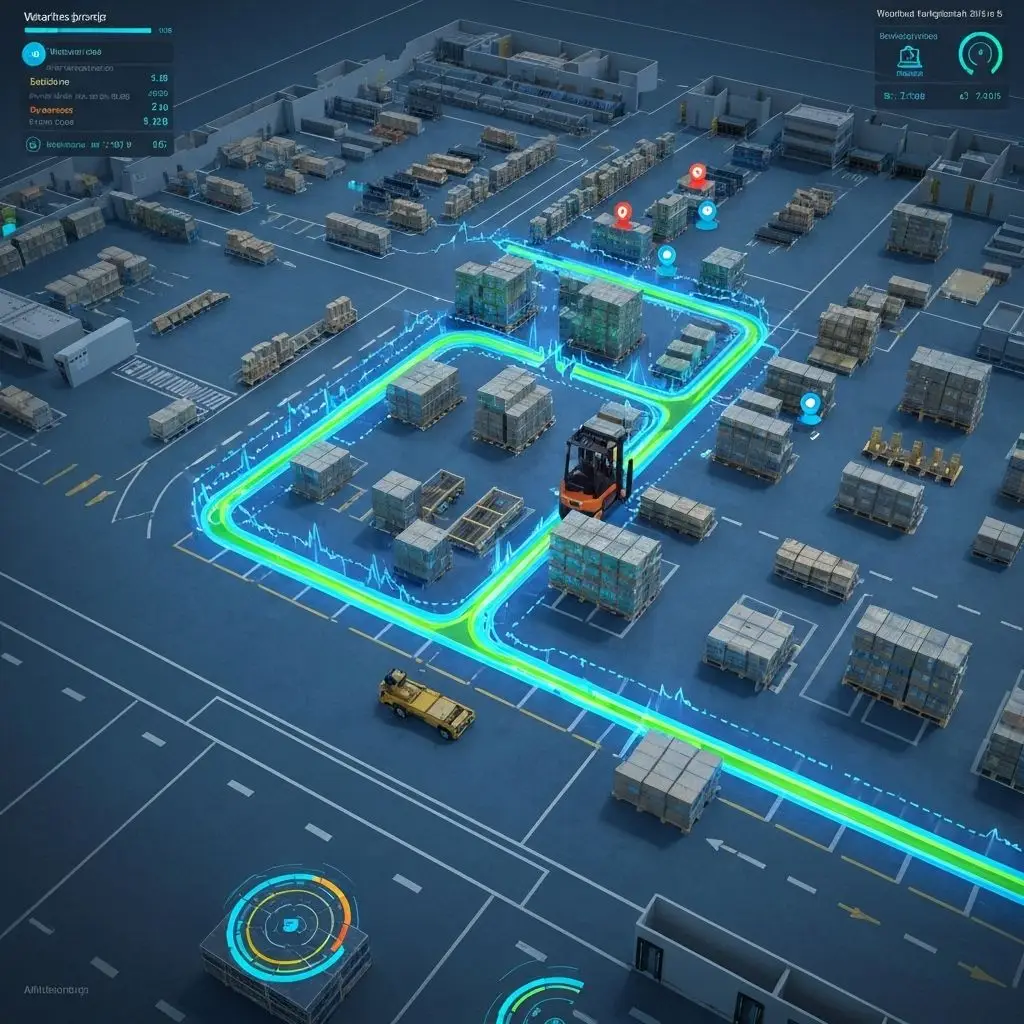
Forklift Navigation and Route Optimization
Reduce travel time and congestion with optimized routing and navigation. Turn-by-turn guidance with real-time traffic awareness.
Learn more →Manage Congestion Across All Vehicles
Identify and eliminate traffic bottlenecks with real-time congestion analytics. Heatmaps and alerts for proactive traffic management.
Learn more →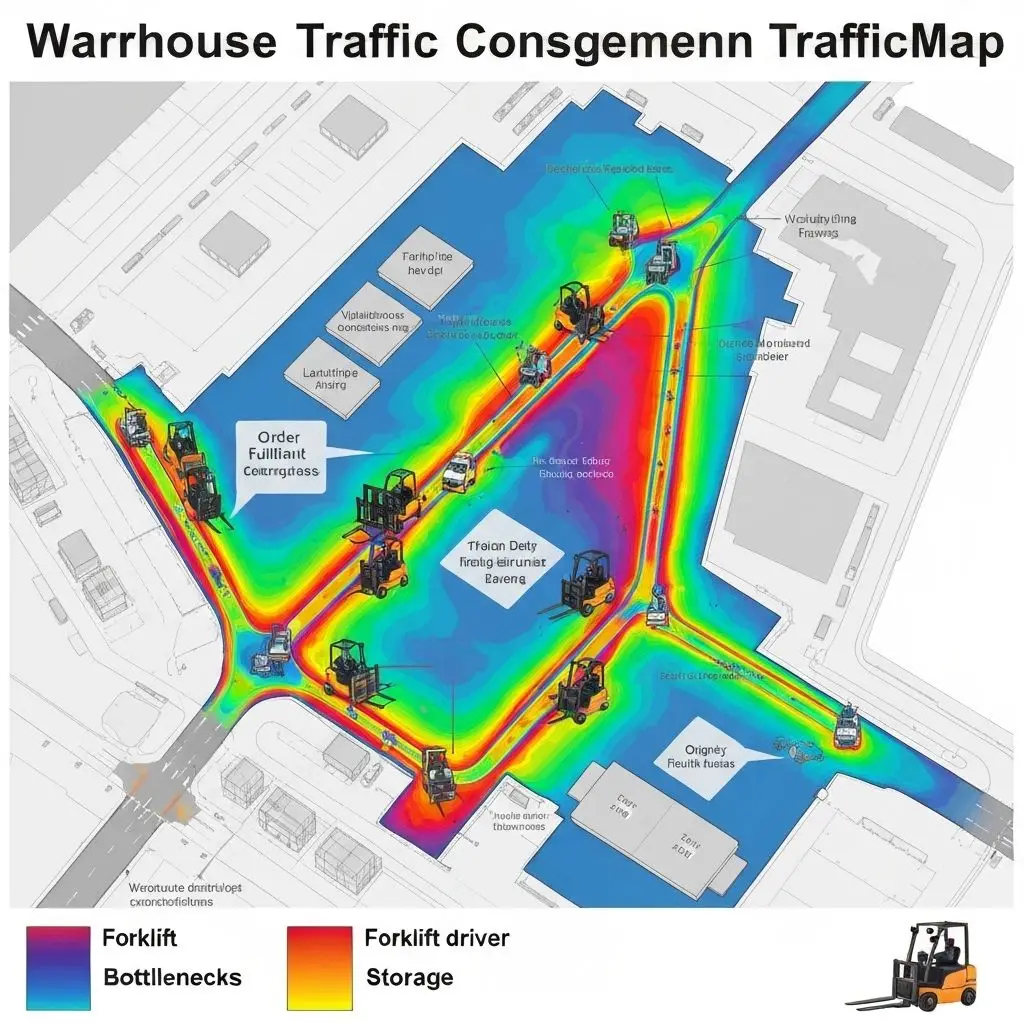
Why LocaXion
Industry-leading RTLS expertise and proven track record in forklift fleet management.
100+ Location Intelligence Projects
Proven expertise across manufacturing, logistics, healthcare, and retail industries.
15+ Years of Experience in RTLS
Deep technical expertise in UWB, BLE, and hybrid RTLS architectures.
Strong Network of Top RTLS
Vendor-agnostic approach with partnerships across leading RTLS technology providers.
Why You Should Adopt RTLS Forklift Tracking
Transform forklift operations with real-time visibility, automated safety, and data-driven optimization.
Smart Tracking & Safety Alerts
Real-time forklift tracking with sub-meter accuracy, predictive collision warnings, and automated safety zone enforcement to prevent incidents before they happen.
OSHA Compliance
Automate speed limit enforcement, restricted zone access, and operator certification verification with audit-ready documentation for OSHA inspections.
Seamless System Integration
Integrate with WMS, MES, ERP, and telematics systems to create a unified digital twin of your entire operation for maximum visibility and control.
Track & Monitor is just the beginning. Now let's explore how RTLS + Digital Twin integration transforms forklift data into predictive intelligence that prevents collisions, optimizes fleet utilization, and automates safety compliance across your entire operation.
Why Your Forklift System Can Track Location But Can't Prevent Collisions
Most facilities say "we know where forklifts are, but not what they're doing." Predictive safety needs:
1. Sub-Meter Accuracy – GPS provides 5-10m accuracy; collision prevention requires 30cm-1m precision.
2. Real-Time Updates – 1-second updates provide 3 to 5 seconds of advance collision warning.
3. Behavioral Context – Track speed, direction, acceleration, and load status, not just location.
4. Multi-Asset Tracking – Monitor forklifts, pedestrians, and infrastructure together for complete situational awareness.
Why GPS and Badge Systems Fail:
GPS accuracy drops to 5–10 meters indoors, making it unreliable for aisle-level safety. Badge systems only track entry and exit, missing movement and behavior inside zones, and can’t detect near-misses or predict collisions.
LocaXion's RTLS Advantage:
LocaXion's hybrid UWB + BLE RTLS architecture delivers 30cm-1m accuracy with 1-second updates, tracking forklifts, pedestrians, and infrastructure. Predictive collision algorithms analyze speed, trajectory, and proximity to warn operators 3 to 5 seconds before impact, enabling true collision prevention, not just incident reporting.
Advanced Forklift Fleet Applications
Digital Twin technology transforms forklift tracking from reactive monitoring
into predictive intelligence. Prevent collisions, optimize fleet utilization,
and automate safety compliance with AI-powered analytics.
AI-Powered Collision Risk Prediction
Predict and prevent collisions 3-5 seconds before they occur.
Learn more →Automated OSHA Compliance & Reporting
Enforce safety rules automatically with audit-ready documentation.
Learn more →Dynamic Pedestrian Safety Zones
Create automatic safety zones around pedestrians in real-time.
Learn more →Real-Time Congestion Management
Identify and eliminate traffic bottlenecks automatically.
Learn more →Battery & Energy Optimization
Optimize battery usage and charging schedules for maximum uptime.
Learn more →Multi-Fleet Coordination
Coordinate forklifts, pallet jacks, tuggers, and AGVs together.
Learn more →AI-Powered Collision Risk Prediction
Predict and prevent collisions before they happen with AI-powered trajectory analysis.
LocaXion’s AI-driven collision prediction engine continuously analyzes forklift, pedestrian, and equipment movement patterns in real time. By combining RTLS data with machine learning, it forecasts high-risk interactions 3–5 seconds before they occur and automatically triggers multi-channel warnings or slowdowns to prevent accidents before impact.
What We Capture
- Real-time position, speed, and direction of all forklifts and pedestrians.
- Historical movement patterns and near-miss data for contextual risk assessment.
- Load status, visibility conditions, and operator behavior metrics.
- Intersection approach speeds and blind-spot occupancy.
What It Enables
- Trajectory-based collision prediction 3–5 seconds in advance.
- Multi-modal warnings (visual, audible, haptic) to operators and pedestrians.
- Automatic speed reduction in high-risk or congested zones.
- Near-miss detection and root cause analysis for proactive improvement.
Safety Outcomes
- 65–78% reduction in forklift–pedestrian incidents.
- 70–85% reduction in forklift–forklift collisions.
- 3× increase in near-miss reporting for proactive safety improvements.
- 40–50% reduction in workers’ compensation claims.
Automated OSHA Compliance & Reporting
Automate safety rule enforcement and generate OSHA-ready reports instantly.
Automate safety rule enforcement and generate OSHA-ready reports instantly.
What We Automate
- Speed limit enforcement by zone with automatic alerts and logging
- Restricted zone access control based on operator certification
- Pre-shift inspection verification and documentation
- Operator certification validation before equipment use
- Incident and near-miss reporting with complete context
What It Enables
- Zero-touch OSHA compliance documentation
- Instant audit report generation (15 minutes vs. 2 days)
- Complete audit trail of all safety events and violations
- Automated corrective action tracking and verification
Compliance Outcomes
- 94% reduction in speed limit violations
- 100% elimination of unauthorized operator incidents
- Zero OSHA citations during inspections
- 18% reduction in insurance premiums
Dynamic Pedestrian Safety Zones
Protect pedestrians with automatic safety zones that move with them.
Protect pedestrians with automatic safety zones that move with them.
How It Works
- Track pedestrians with wearable RTLS tags or vision systems
- Create 3-5 meter safety zones around each pedestrian automatically
- Alert forklift operators when entering pedestrian safety zones
- Automatically reduce forklift speed near pedestrians
- Alert pedestrians when forklifts approach from blind spots
Advanced Features
- Larger safety zones for faster-moving forklifts
- Intersection priority for pedestrians
- Blind spot detection and warnings
- Pedestrian traffic heatmaps for layout optimization
Safety Impact
- 82% reduction in forklift-pedestrian near-misses
- 90% reduction in blind spot incidents
- Improved pedestrian confidence and reduced anxiety
- Measurable reduction in pedestrian-related incidents
Fleet Utilization Analytics
Right-size your fleet and eliminate underutilized equipment.
Right-size your fleet and eliminate underutilized equipment.
What We Measure
- Active time, idle time, and utilization rate by forklift
- Loaded vs. empty travel distance and time
- Moves per hour and cost per move
- Peak demand periods and capacity constraints
- Operator productivity and efficiency comparisons
What It Enables
- Identify underutilized forklifts for elimination or redeployment
- Optimize fleet size based on actual demand patterns
- Balance workload across operators and equipment
- Justify fleet expansion with data-driven analysis
Efficiency Outcomes
- 23% increase in average fleet utilization
- 15–20% reduction in fleet size without impacting throughput
- $180K–$300K annual savings from eliminated equipment
- 18% reduction in travel distance per pallet move
Predictive Maintenance Scheduling
Schedule maintenance based on actual usage, not arbitrary intervals.
Schedule maintenance based on actual usage, not arbitrary intervals.
What We Track
- Operating hours, distance traveled, and load cycles
- Harsh braking, acceleration, and impact events
- Battery charge cycles and energy consumption
- Historical maintenance records and failure patterns
What It Enables
- Usage-based maintenance scheduling vs. time-based
- Early warning of potential failures before breakdowns
- Optimized maintenance intervals to reduce costs
- Automated work order generation for CMMS integration
Maintenance Outcomes
- 35% reduction in unplanned downtime
- 25% reduction in maintenance costs
- 20% longer equipment lifespan
- Improved parts inventory management
Intelligent Route Optimization
Guide operators to optimal routes and minimize unnecessary travel.
Guide operators to optimal routes and minimize unnecessary travel.
What We Analyze
- Historical travel patterns and route efficiency
- Real-time traffic congestion and blocked aisles
- Multi-stop task sequences and pick/drop locations
- One-way aisle compliance and intersection delays
What It Enables
- Turn-by-turn navigation to optimal routes
- Dynamic rerouting around congestion and obstacles
- Multi-stop sequence optimization for minimum distance
- Travel time prediction for task planning
Efficiency Gains
- 18–22% reduction in travel distance per task
- 15% improvement in task completion time
- 35% reduction in congestion at key intersections
- $150K–$200K annual savings from reduced travel
Real-Time Congestion Management
Eliminate traffic bottlenecks and improve flow with congestion analytics.
Eliminate traffic bottlenecks and improve flow with congestion analytics.
What We Monitor
- Traffic density and vehicle count by zone
- Dwell time and throughput at key intersections
- Peak congestion times and recurring bottlenecks
- Multi-vehicle coordination and conflict points
What It Enables
- Congestion heatmaps showing bottleneck locations
- Real-time alerts when congestion exceeds thresholds
- Automatic rerouting around congested areas
- Layout optimization recommendations (aisle widening, one-way flows)
Throughput Impact
- 28% increase in throughput without adding equipment
- 70% reduction in average dwell time at intersections
- 40% reduction in operator frustration with traffic delays
- Measurable improvement in on-time shipment performance
Battery & Energy Optimization
Maximize battery life and minimize charging downtime.
Maximize battery life and minimize charging downtime.
What We Track
- Battery state of charge and discharge rates
- Charge cycles, battery health, and degradation
- Energy consumption by forklift and task type
- Charging station utilization and wait times
What It Enables
- Predictive battery swap alerts before depletion
- Optimized charging schedules to minimize downtime
- Battery health monitoring and replacement planning
- Energy cost analysis and reduction opportunities
Energy Outcomes
- 15% reduction in energy consumption per move
- 25% longer battery lifespan through optimized charging
- 40% reduction in mid-shift battery swaps
- $50K–$80K annual savings in energy and battery costs
Multi-Fleet Coordination
Manage all material handling equipment types in a unified system.
Manage all material handling equipment types in a unified system.
What We Coordinate
- Forklifts, pallet jacks, order pickers, and reach trucks
- Tuggers, tow tractors, and yard trucks
- AGVs, AMRs, and autonomous forklifts
- Pedestrians and manual material handling
What It Enables
- Unified traffic management across all vehicle types
- Cross-fleet collision avoidance and safety zones
- Optimized task assignment based on equipment capabilities
- Complete visibility into all material handling activity
Coordination Benefits
- Single pane of glass for all material handling equipment
- Improved safety through comprehensive situational awareness
- Better resource utilization across mixed fleets
- Foundation for future automation integration
Key Performance Statistics
Measurable improvements from RTLS forklift tracking implementation
Forklift System Integrations
Seamlessly integrate RTLS forklift tracking with your existing warehouse and
fleet management systems.
WMS Integration
Integrate with Manhattan, Blue Yonder, SAP EWM for task assignment and performance tracking.
Learn MoreMES Integration
Connect with manufacturing execution systems for production-aware material handling.
Learn MoreForklift Telematics Integration
Combine RTLS location data with forklift telematics for complete fleet intelligence.
Learn MoreWMS Integration
Integrate RTLS forklift tracking with your WMS to optimize task assignment, track performance, and improve warehouse efficiency.
Integration Capabilities
- Intelligent Task Assignment: Assign tasks to the nearest available forklift based on real-time location.
- Performance Tracking: Measure actual vs. expected task completion times for precise productivity benchmarking.
- Travel Time Accuracy: Improve labor standards with verified real travel time data.
- Exception Management: Automatically alert supervisors to delayed or stuck tasks.
- Operator Productivity: Compare operator performance, identify skill gaps, and prioritize training needs.
Supported Platforms
Manhattan WMOS, Blue Yonder (JDA), SAP EWM, Oracle WMS, Infor WMS, HighJump, Körber, and custom WMS platforms via REST APIs and database integration.
WIP Location Intelligence
Know where critical WIP is and route around congestion.
Gain full visibility into work-in-progress (WIP) movement with RTLS-enabled tracking. Identify material flow inefficiencies, prevent bottlenecks, and ensure smooth production by optimizing WIP placement and routing in real time.
What We Capture
- Real-time WIP location tracking through RTLS tags on containers or pallets.
- Production zone congestion levels and bottleneck identification.
- Material flow patterns and staging area utilization.
- Historical traffic data around production areas.
What It Enables
- Automatic routing around congested production zones.
- Identification of WIP staging bottlenecks before they impact flow.
- Optimized material placement based on production consumption patterns.
- Predictive alerts when WIP accumulates in the wrong locations.
Operational Outcomes
- 25–35% reduction in material handling time through optimized routing.
- 40–50% decrease in WIP search time and misplaced materials.
- Improved production flow with fewer staging bottlenecks.
Forklift Telematics Integration
Combine RTLS location tracking with forklift telematics data for comprehensive fleet management and predictive maintenance.
Integrating RTLS with forklift telematics systems unlocks unified visibility across your entire fleet — combining precise location data with performance metrics, safety analytics, and energy efficiency insights for smarter operations.
Combined Intelligence
- Location + Telematics: Correlate real-time location with engine hours, impacts, and operator behavior.
- Predictive Maintenance: Anticipate failures based on usage patterns and movement history.
- Safety Analytics: Identify high-risk locations, routes, and unsafe operator behaviors.
- Energy Optimization: Analyze battery or fuel consumption by zone, distance, and task type.
- Complete Fleet View: Access a unified dashboard combining RTLS tracking and telematics intelligence.
Supported Systems
Crown InfoLink, Yale Vision, Raymond iWAREHOUSE, Toyota T-Matics, Jungheinrich FEM, Hyster Tracker, and other OEM telematics systems via API integration.
Ready to Transform
Forklift Fleet Management?
Discover how LocaXion's RTLS forklift tracking delivers measurable ROI through improved safety,
fleet optimization, and automated compliance.
Explore Related Logistics Solutions
Frequently Asked Questions
Everything you need to know about Forklift Tracking Solutions.
Real-time forklift tracker is very important. It helps make labor more productive and improves overall equipment effectiveness (OEE). This is done by showing the location, use, and risks of forklifts right away. With this information, people can make better choices, reduce downtime, and improve workplace safety.
Forklift tracking systems help make workplaces safer. They do this by allowing only authorized operators to use the forklifts. These systems also keep an eye on how operators are using them. They give real-time visibility of the fleet, showing where each forklift is located. This helps you to act quickly when needed, lowers the risk of accidents, and creates a safer workplace.
Yes, a modern forklift tracking and monitoring system is designed to integrate seamlessly with existing Warehouse Management Systems (WMS). This connection enables real-time data exchange, helping to streamline workflows, improve inventory accuracy, and provide a central platform for data-driven decisions.
Investing in a forklift tracking system gives good returns by boosting labor productivity and overall efficiency. It helps us use the equipment better and improves OEE. You will see fewer accidents and less downtime. With smarter use of resources, you can save a lot and increase profits.
The 3-foot rule is a safety guideline stating that pedestrians must stay at least three feet (or about one meter) away from an operating forklift. This safety buffer helps prevent collisions and injuries, protecting both operators and floor personnel.
A forklift tagging system is the hardware tracker attached to each vehicle. This "tag" uses technologies like UWB or BLE to transmit the forklift's real-time location, movement, and status data, which enables fleet visibility and optimization.
A forklift telemetry system remotely collects and transmits a wide range of operational data from the vehicle. Often managed by a forklift computer system, it captures deep diagnostics beyond just location, including engine hours, battery status, speed, impacts, and operator ID for complete performance and maintenance management.