Skip to content
Every Operations Manager knows the sinking feeling of a location discrepancy. Your system shows a WIP assembly at Station 4, yet the team can’t find it. A forklift moves a pallet without passing the RFID gate, leaving the WMS with an outdated last known location. AGVs reroute in congested aisles while dashboards still show their original path. In hospitals, high-value equipment appears available despite being relocated.
All of these issues stem from the same limitation: static, scan-based visibility from Radio Frequency Identification (RFID), which updates only at scan points and creates blind spots whenever assets move between checkpoints.
This brings operations teams to a core decision: Automation vs Manual Processes. Many facilities are now evaluating Real-Time Location Systems (RTLS), which use active signals for continuous, automated tracking. This guide compares rtls vs rfid to clarify where scan-based visibility is enough and where real-time automation becomes essential.
How RFID and RTLS Generate Location Data
Before comparing operational outcomes, it’s important to understand the fundamentals behind the two technologies most facilities rely on for location data.
What is RFID?
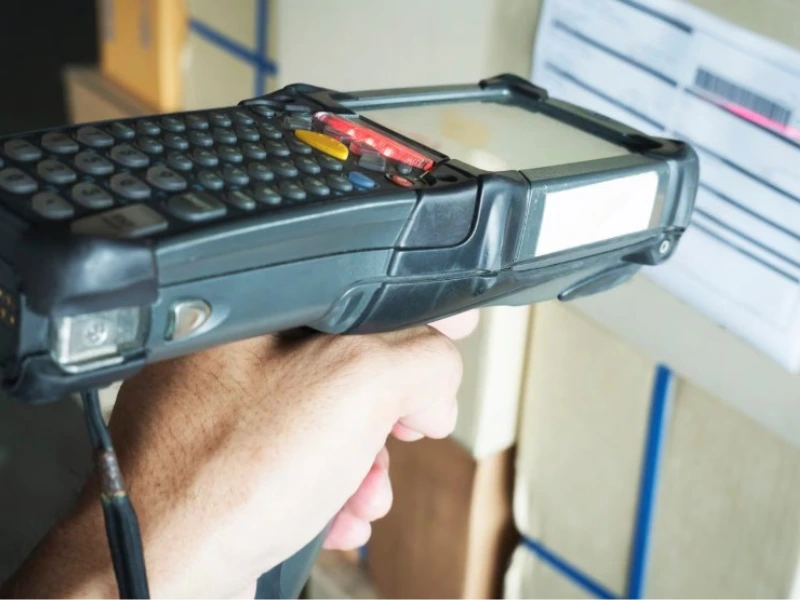
RFID provides location updates only when a tag is detected by a reader. It remains widely used for checkpoints, audits, and access workflows due to its low passive tag cost, mature global standards, and ability to capture multiple items in a single scan.
How RFID Works
RFID relies on event-driven updates at defined read points.
- Passive RFID: No battery; tag activates when energized by a reader’s RF field (LF, HF, UHF).
- Active/Semi-Passive RFID: Battery-assisted tags that still depend on reader proximity.
When a tag crosses a gate, portal, or workstation antenna, that moment becomes the recorded event. Movement between read points remains invisible, meaning the system always reflects the last known location rather than the tag’s real-time position.
RFID supports bulk reads and performs well in structured workflows where assets reliably pass through predefined zones.
Key Characteristics of RFID
| Category | Details |
|---|---|
| Update Model | Point-in-time scans at defined checkpoints |
| Tag Types | Passive (LF/HF/UHF), Semi-Passive, Active |
| Infrastructure | Fixed readers, antennas, portals |
| Pros | Low tag cost, scalable for high volumes, longer passive read distances (1–10 m), effective at structured checkpoints |
| Cons | No visibility between reads, dependent on workflow discipline, missed scans create data gaps |
| Best Fit | Inventory audits, serialized item tracking, warehouses, dock door validation, tool crib workflows |
What is RTLS?
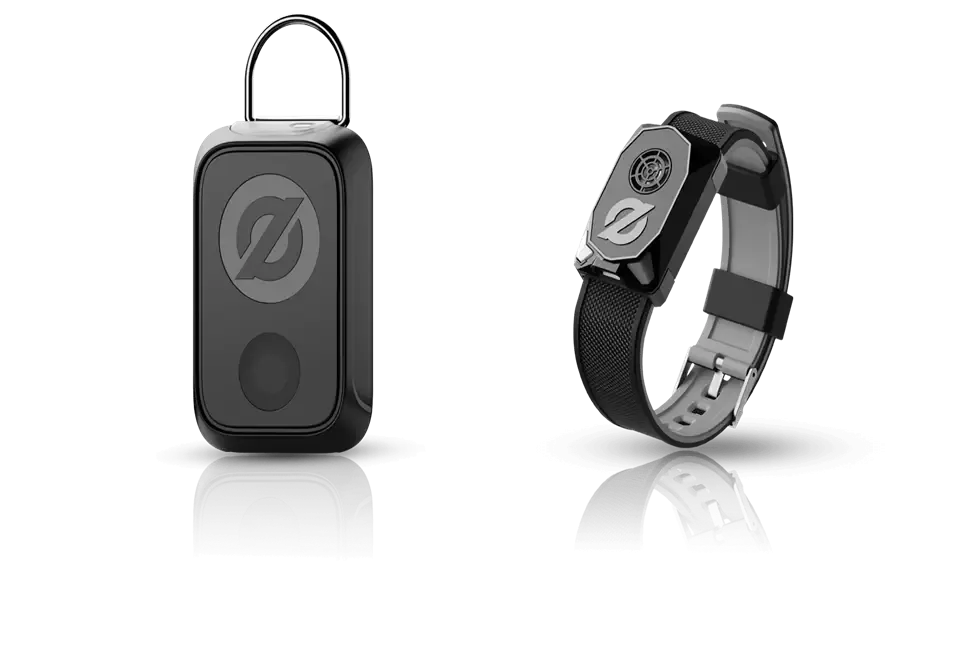
RTLS uses active tags, fixed anchors or gateways, and a positioning engine to deliver continuous real time location data. RTLS is used in environments where operations need live visibility of assets, vehicles, tools, WIP assemblies, or personnel. The system commonly uses technologies such as UWB, BLE, and Wi Fi based positioning to achieve different accuracy levels depending on the use case.
How RTLS Works
RTLS works by using tags attached to assets, equipment, vehicles, or worn by people, which send signals to sensors placed around the facility. The system determines each location using technologies such as Ultra-Wideband (UWB), Bluetooth Low Energy (BLE), and Wi-Fi based positioning, with accuracy levels adjusted to the needs of the use case. This enables precise, real-time visibility across the entire environment.
Core components:
- Active tags: Battery powered tags that broadcast signals continuously or at set intervals
- Anchors or gateways: Fixed receivers placed across the facility to capture tag signals
Because updates occur automatically, the system provides a live location stream rather than relying on checkpoints or manual scans.
RTLS is used in operations where accuracy, movement visibility, safety workflows, and automated decision making require current location data instead of last known positions.
Key Characteristics of RTLS
| Category | Details |
|---|---|
| Update Model | Continuous, automated location updates |
| Tag Types | Active tags using UWB, BLE, Wi-Fi, proprietary RF |
| Infrastructure | Anchors, gateways, power/network backhaul, positioning engine |
| Accuracy Range | Centimeter-level (UWB) to zone-level (BLE/Wi-Fi) |
| Pros | Real-time visibility, independent of operator behavior, full movement history, supports automation and safety workflows |
| Cons | Higher upfront infrastructure effort; requires site surveys and careful RF design |
| Best Fit | WIP tracking, forklift/AGV visibility, high-value tool tracking, personnel safety, digital twin data streams |
RFID vs RTLS: Key Comparisons
The choice between RTLS vs RFID often comes down to a simple question: do you only need location updates at specific scan points, or do you need continuous visibility into where an asset is and how it moves throughout the process? The matrix below highlights how each option impacts automation and manual workflows.
| Factor | RFID | RTLS |
|---|---|---|
| Update Method | Manual scan / Event-based trigger | Automated / Continuous signal |
| Technology Used | Low, High, and Ultra High Frequency bands | UWB, Wi-Fi, BLE, GPS |
| Frequency Range | Limited (few centimeters to 10 meters) | Wide (up to 100 meters or more) |
| Hardware Involved | Readers, antennas, portals, passive or active tags | Anchors, gateways, active tags (BLE or UWB) |
| Accuracy | Event-based (last known location) | Continuous (real-time position) |
| Movement Visibility | Only at scan points; blind spots in between | Full journey trail; captures dwell time and path |
| Labor Dependency | High (relies on operator compliance) | Low (automated data capture) |
| Fit for Automation | Limited (creates data latency) | Strong (enables flow optimization) |
| Flexibility | Works in highly structured, sequential scan workflows | Adapts to fast-moving, mixed, and dynamic workflows |
| Cost Considerations | Low tag cost; moderate reader and infrastructure cost | Higher setup cost designed for automated, high-value operations |
| Digital Twin Support | Provides periodic data at scan points for basic, historical models | Supports continuous, live data for actionable digital twin models |
| Integration | Simple check-in and check-out updates | Deeper, bidirectional integration with ERP, MES, and WMS |
| Deployment Consideration | Faster to deploy in structured workflows; minimal calibration | Requires site survey, anchor placement, and calibration; higher deployment effort |
The Operational Impact
Labor Dependency and Fit for Automation are the two factors that create the clearest operational gap between RFID and RTLS. Manual scanning ties system performance to operator workload, while automated capture removes that dependency. RTLS cuts search time from minutes to seconds, with many teams seeing 30-50% faster retrieval once scans are eliminated. Data quality also shifts from isolated events with RFID to a continuous stream with RTLS.
This flow enables a predictive digital twin, allowing teams to anticipate tool demand, support pre-positioning, and trigger timely maintenance alerts.
Industry-Specific Fit
Choosing between RFID and RTLS depends on how assets move, how frequently updates are needed, and whether manual scanning can reliably support the workflow. RFID is suitable when checkpoint-based visibility is enough, while RTLS is preferred for continuous movement and real time accuracy.
Industry context makes the distinction clearer:
- Manufacturing: RTLS supports continuous tracking of work-in-progress and mobile tools on fast-moving production lines, whereas RFID works well for inventory validation and supply chain checkpoints.
- Healthcare: RTLS improves visibility of equipment, patient flow, and staff movement in real time, while RFID remains effective for medication tracking and periodic asset identification.
- Warehousing and Logistics: RTLS provides live visibility for goods and forklifts across dynamic workflows, while RFID excels at inventory counts, dock-door scanning, and shipment verification.
Mitigating Implementation Risks for Guaranteed Performance
The transition from a RFID to RTLS is a process upgrade, not just a technology purchase. Many projects fail not because of the technology itself, but because of common pitfalls in planning and deployment.
For operations leaders evaluating an investment in RTLS, avoiding these risks is critical to realizing the intended ROI.
Common Pitfalls in Location System Deployment:
- Assuming Scan Accuracy Holds: The belief that operators will maintain 100% scanning compliance under high-pressure, real-world conditions is the most common flaw in RFID planning.
- Ignoring Interference and Layout Constraints: Radio frequency technologies, whether UHF RFID or UWB, are sensitive to metal, water, and existing wireless infrastructure. Deploying without a detailed site assessment often results in unreliable coverage or blind zones.
- Deploying RFID Without Correcting Process Gaps: Simply tagging assets doesn’t fix a broken workflow. If a process allows items to bypass a gate, adding an RFID gate merely confirms the existing process gap.
- Expecting Passive RFID to Support Real-Time Automation: The specification sheet for a passive tag must not be confused with the requirement for continuous, automated data. The technologies serve fundamentally different use cases.
- Choosing Technology from a Spec Sheet Instead of a Live Pilot: Every facility is unique. What works in a test lab rarely performs the same way on a live, noisy production floor.
LocaXion’s Approach to Mitigating Risk
LocaXion follows a vendor neutral, technology agnostic approach that evaluates how different tracking methods fit real operational workflows.
The focus is on asset movement patterns, accuracy needs, and how much manual scanning a process can reliably support. This helps teams understand where RFID is sufficient, where real time RTLS adds meaningful value, and how each option aligns with their environment. In many facilities, hybrid models provide a practical balance. RFID continues to serve high-volume inventory and checkpoint verification, while RTLS adds continuous visibility for assets that move frequently or carry higher operational impact. Pilot data from these systems can inform early Digital Twin simulations, offering a low-risk way to examine flow, congestion, and resource utilization before scaling.
The goal is simply to help teams evaluate what level of automation aligns with their environment, without committing to a single technology path prematurely.
How RFID vs RTLS Behave in Real Operations
The contrast between RFID and RTLS becomes clear when examining how each performs under normal operational conditions. In fast moving assembly environments, RFID works well at defined checkpoints, but occasional missed scans can still lead to incorrect station updates or dwell time inconsistencies. When one manufacturer shifted from gate-based scanning to continuous visibility, the time spent troubleshooting misidentified stations decreased, and overall flow became more stable. This reflects common industry findings where replacing manual scans helps reduce avoidable delays by 10 to 20 percent.
Warehousing workflows highlight the same pattern. A 3PL operation that depended on manual shelf scanning for cycle counts adopted RTLS supported zone awareness and moved from scanning every location to verifying against continuous data. The reconciliation window shortened hours to a brief review cycle, and cycle count effort dropped in line with industry benchmarks of 15 to 30 percent improvement.
With live visibility, inventory accuracy becomes easier to maintain, and day-to-day operations rely less on manual verification.
Conclusion: When to Scan and When to Automate
The choice between RTLS and RFID is not a competition between technologies, but a decision about the required data granularity and the acceptable level of manual dependency.
RFID remains effective for validating static inventory at checkpoints, but relying on scans for fast moving workflows often introduces blind spots that limit performance.
RTLS resolves this by providing continuous, automated visibility when movement is fast, frequent, or operationally critical. If missed scans, inventory drift, or MES discrepancies are creating inefficiencies, real time automation becomes the next step toward stable processes, flow optimization, and Digital Twin readiness.
If you want to understand whether RFID or RTLS is the better fit for your environment, LocaXion can help you evaluate your workflow and determine the visibility level that aligns with your operational goals.
FAQ’s on RTLS vs RFID
Can RTLS replace RFID completely?
Not in most environments. RFID remains cost efficient for high volume or low value items, while RTLS is used when continuous visibility and fast updates are required for automated workflows.
When is RFID enough for a factory or warehouse?
RFID works well for static inventory, dock door validation, asset issue and return, and other checkpoint-based processes where the item remains stationary between scans.
Is RFID real time tracking?
No. RFID provides data only when a tag is scanned or passes by a reader. It does not provide continuous movement visibility the way RTLS does.
What is the maximum range of RFID?
LF typically reads within 10 centimeters. HF generally reaches up to 1 meter. UHF offers the longest range, often between 3 and 12 meters depending on the tag type, antenna design, and surrounding environment.
Do warehouses or plants need real time tracking?
It depends on asset movement and process speed. Static storage does not require real time data, but mobile equipment, high value tools, forklifts, and fast moving WIP benefit significantly from RTLS.
Can RTLS and RFID be used together?
Yes. Many facilities use a hybrid design where RFID handles low-cost boundary checks, and RTLS provides continuous tracking for assets that move frequently or impact operational flow.
What is an RTLS enabled Digital Twin?
It is a live virtual model that updates continuously from RTLS data. This helps teams observe real time movement, predict bottlenecks, and test scenarios such as congestion or tool pre-positioning before scaling operations.