Skip to content
Forklift Speed vs. Safety in Modern Logistics
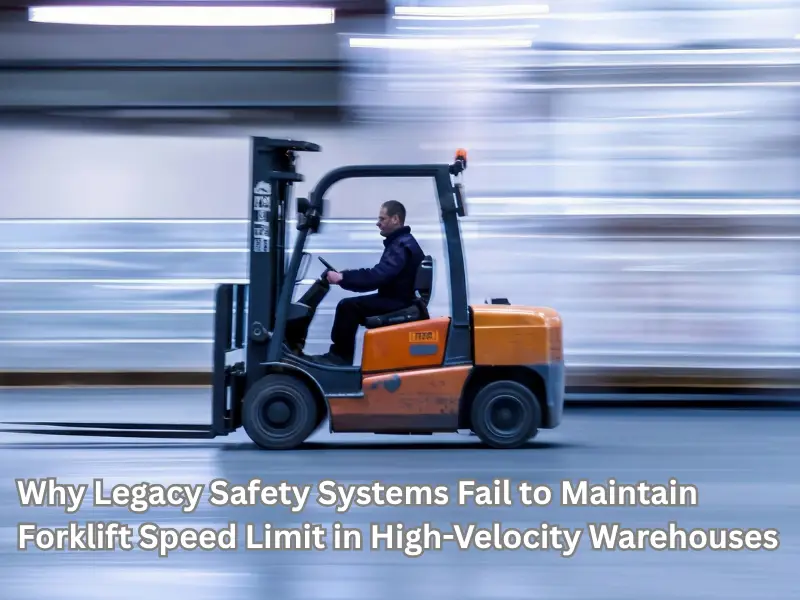
Every operations manager, safety manager, and logistics director are running a modern warehouse knows the tension intimately: the pressure to move fast relentlessly along with safety is non-negotiable. The forklift speed limit in warehouse environments is at the intersection of these two requirements and in 2026, the tools available to manage that intersection have outpaced the policies most facilities are still relying on.
Speed governs throughput but unchecked speed can kill. The challenge is not about choosing between the two, but to build an environment with intelligent real-time forklift tracking system that can manage both simultaneously.
Most facilities have not cracked that yet. And the gap between where they are and where technology can take them is costing them significantly which eventually shows up long after the incident report is filed.
Pain Point: Static Forklift Speed Limits Are Inadequate
Any typical warehouse comes with familiar safety infrastructure: painted floor markings, speed limit signs at zone entries, and a posted maximum speed for warehouse operations, somewhere between 5mph and 12mph depending on the facility and the layout.
These measures have a fundamental flaw: they are static, passive, and entirely dependent on human compliance in environments specifically designed to stretch human attention to its limits.
For example, a pick rate target doesn't pause because a driver crosses a yellow line. A tight despatch window doesn't care what the speed limit sign says. And a pedestrian who steps out from behind a racking aisle doesn't have the luxury of checking whether the approaching forklift is doing 8mph or 12mph.
OSHA's position on truck speed limits is deliberate and measured. Under 29 CFR 1910.178, employers are required to set safe speeds for powered industrial truck operations and ensure those speeds are appropriate for the conditions — but the standard does not prescribe a universal figure.
The burden of defining and enforcing the right speed limit OSHA considers appropriate rests entirely with the employer. Which comes with both flexibility and liability, simultaneously. Read more on OSHA forklift inspection here.
Static signs and floor markings address the first part defining the limit. However, enforcement is a big challenge.
Forklift Speed: Stopping Distance Challenges at 8mph vs. 12mph
The difference between 8mph and 12mph may sound trivial on paper. In physics, it's the difference between a near-miss and a fatality.
At 8mph, a fully loaded 5,000lb counterbalance forklift requires approximately 7–9 feet to come to a complete stop under normal braking conditions. At 12mph just four miles per hour faster that stopping distance extends to 15–18 feet or more. Double the velocity doesn't double the risk. Due to the kinetic energy relationship (energy scales with the square of velocity), it roughly quadruples the impact force.
In a facility where pedestrians and forklifts share aisles at any meaningful density, 3–4 feet of additional stopping distance is often the entire margin between safe and catastrophic. A driver operating at the upper end of the posted forklift speed limit in warehouse isn't necessarily being reckless they may simply have a different moment-to-moment calculation of the risk than the physics actually supports.
This is precisely why there has been a shift in thinking. Not more prominent speed limit signs , rather a smarter speed governance with precision-based forklift tracking tech.
Industry Trend: Adaptive Speed Control and Automated Governing for Forklifts
The most significant shift in forklift fleet management over the past three years has been the move toward adaptive, context-aware speed control. Moving away from practice of posting a fixed maximum speed for warehouse operations and hoping for compliance, leading facilities are deploying systems that automatically adjust a vehicle's allowable speed based on where it is, what's around it, and what conditions currently exist.
This is enabled by three converging developments: the maturation of real-time location system (RTLS) technology, the falling cost of onboard vehicle telematics, and the integration of pedestrian detection hardware into a unified control layer.
The forklift automatic speed reducer is no longer an ideal concept but deployable, scalable infrastructure that modern warehouse operators can integrate into existing fleets with relatively low disruption. For operations and safety managers is no longer the question of whether this technology works, but their approach can it keep pace with the risk profile of their facility without it.
Ideal Solution: Geo-Fencing and Auto Forklift Speed Limiting
The foundational architecture supporting modern adaptive speed control is geo-fencing: virtual boundaries within a facility which can trigger automated vehicle responses when entered or exited.
Geo-fenced zones are dynamic and can be calibrated and adjusted in software without a crew with paint rollers with ability to respond to shift activity levels. Critically, when a forklift crosses a geo-fenced boundary into a defined high-risk zone, the speed governor can directly communicate and enforce a speed cap to the vehicle's onboard controller.
This removes the single largest point of failure in traditional speed management: human judgement under operational pressure.
Implementing Variable Speed Zones: High-Traffic vs. Low-Traffic Areas
Risks vary with each zone within different areas of a warehouse, and a well-designed speed governance system can reflects that reality based on documented risk profiles.
Dock approaches, cross-aisle intersections, charging stations, despatch staging areas, and any zone where pedestrian density is elevated are designated high-restriction zones, with capping at at 3–5mph with the forklift automatic speed reducer enforcing hard limits.
Open travel aisles with low pedestrian presence can be configured to permit higher speeds, maintaining throughput where the risk profile genuinely allows for it.
For a logistics director, this is the critical point: intelligent zoning doesn't reduce average throughput. It concentrates speed reduction where it statistically matters, and preserves velocity everywhere else. That is a fundamentally different proposition to a blanket truck speed limit applied uniformly across an entire facility.
Integrating Forklift Speed Governance with Real-Time Pedestrian Detection
Speed zones defined by static geography are a significant improvement over painted markings. But the most advanced deployments go further integrating live pedestrian detection directly into the speed governance logic.
Using Ultra-Wideband (UWB) positioning technology, pedestrian-worn tags broadcast real-time location data to the system. When a tagged worker enters or approaches a defined proximity radius around an operating forklift, the system can dynamically tighten the vehicle's speed cap in real time regardless of which static zone the forklift happens to be in.
This means that a pedestrian who steps unexpectedly into an open aisle triggers an automatic speed reduction in approaching vehicles within seconds, not after a driver perceives and reacts to them. A real-time forklift and pedestrian safety visibility system closes the gap that human reaction time leaves open.
Dynamic Forklift Speed Management Without Sacrificing Throughput
At LocaXion, our approach to forklift speed limit in warehouse management is built on one core principle: safety and productivity are not competing variables. When speed governance is implemented intelligently with real-time location data, dynamic zone logic, and live pedestrian integration facilities find that their overall throughput improves, because the disruption caused by incidents, near-misses, and operational pauses disappears from the equation.
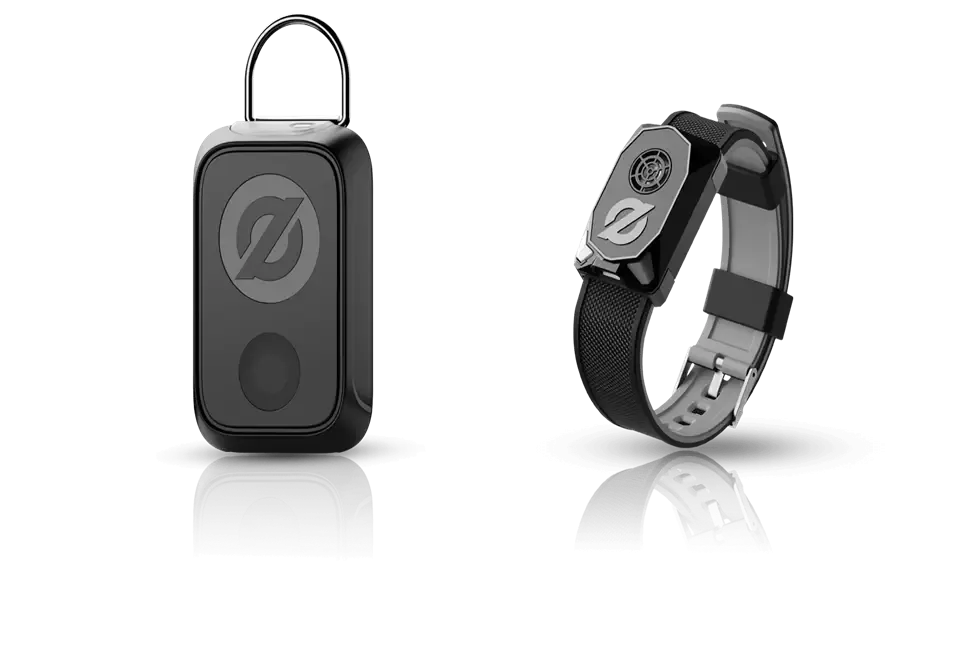
Our platform integrates UWB-based positioning for both vehicles and pedestrians, onboard telematics for fleet-wide speed monitoring and enforcement, and a centralised management interface that gives safety managers full visibility and control without requiring a third-party vendor visit every time a zone configuration needs updating.
How LocaXion Automates Speed Reduction in "Danger Zones" Automatically
LocaXion's geo-fencing engine enables safety managers to define, modify, and deploy speed restriction zones directly from a web-based dashboard. When a forklift enters a designated danger zone a dock approach, a blind intersection, a high-pedestrian staging area the system communicates directly with the vehicle's speed governor to enforce the configured limit. No driver action required. No reliance on a sign being noticed.
When the vehicle exits the zone, full operational speed is automatically restored. The entire sequence is logged, timestamped, and exportable giving operations managers the data they need for compliance reporting, insurance documentation, and continuous safety improvement reviews.
For safety managers facing OSHA General Duty Clause scrutiny, this represents something genuinely valuable: not just a policy that says the right speed limit OSHA requires but a verified, auditable record that proves it was enforced.
Balancing Velocity and Real-Time Visibility for a Safer Floor
The modern warehouse moves fast. The expectations placed on operations managers, safety managers, and logistics directors to maintain both throughput and a safe working environment are only intensifying.
Static speed limit signs and painted floor markings were the right answer for a different era. In a facility running multiple shifts, high forklift density, and pedestrian populations navigating the same floor in real time, passive compliance measures introduce a structural vulnerability that no amount of training or signage can fully close.
The forklift automatic speed reducer, geo-fenced variable zones, and UWB-integrated pedestrian detection represent the practical, deployable answer to that vulnerability available today, at scale, across new and existing fleets.
The question isn't whether to update your approach to speed governance. The physics settled that question.
Ready to Rethink Speed Management in Your Facility?
LocaXion works with operations and safety teams to design, deploy, and optimise dynamic speed governance solutions tailored to your facility's layout, traffic density, and compliance requirements.
Whether you're dealing with a recent incident, preparing for an OSHA review, or simply looking to future-proof your fleet, our team will map your current exposure and show you exactly where intelligent speed control delivers the greatest impact.