Skip to content
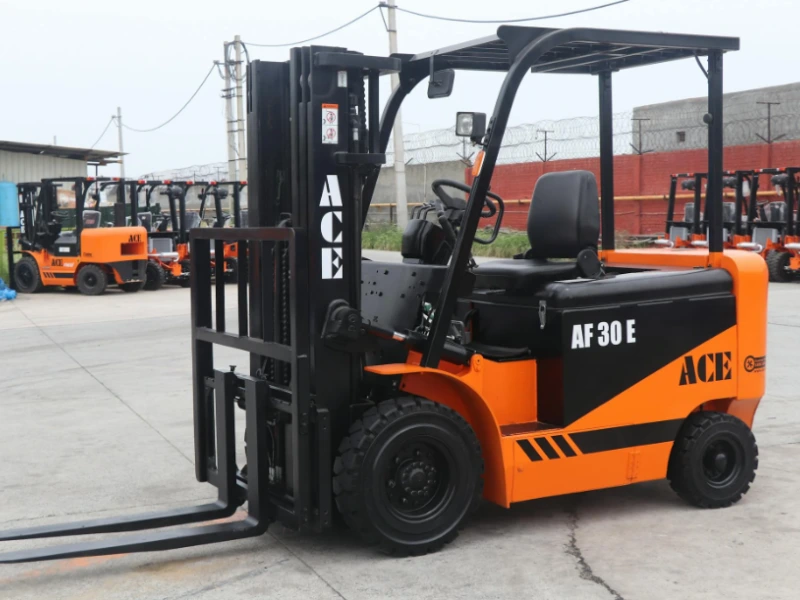
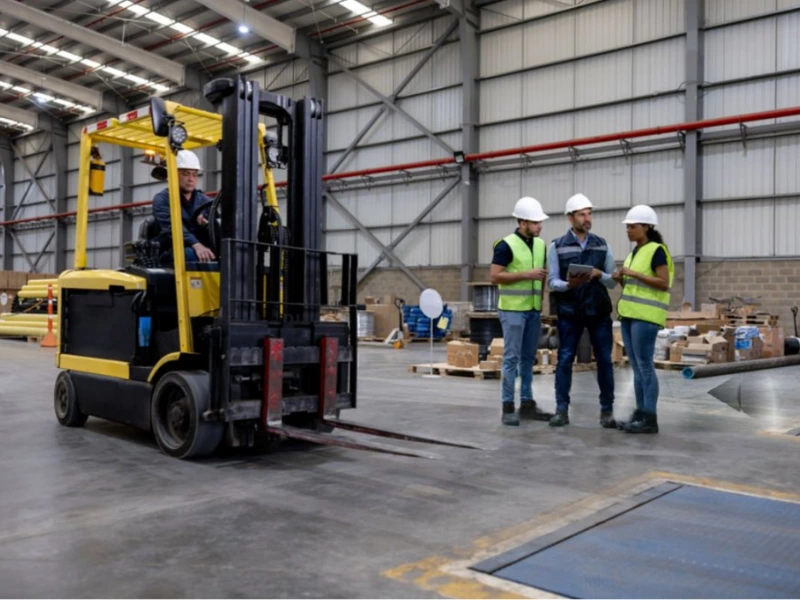
In a high-velocity distribution center, the window between peak throughput and a catastrophic collision is often less than two seconds. When double-stacked pallets block sightlines and pickers are focused on hitting their rates, forklift safety and awareness becomes the primary defense. At this pace, the density of the floor simply outruns human reaction time.
This is how most warehouse incidents actually begin. Not with recklessness, but with two people doing their jobs in the same space at the same time. In high-volume operations, forklift safety rules in warehouse environments depend heavily on awareness. But at LocaXion, we’ve seen that in busy zones, pace and density often outrun human reaction time.
To close this execution gap, we must look at why passive systems fail, identify high-risk hotspots, and move toward On-Fork Safety.
Warehouse Forklift Safety Starts Where Traffic Collides
Every facility has forklift safety rules in the warehouse handbook. Speed limits, painted lanes, stop-and-go procedures at intersections. The inductions have been run. The signage is posted.
And the near misses continue.
The problem is not the rules. The problem is that rules do not apply brakes. Here is the reality of warehouse forklift safety on a high-velocity floor:
- Signs vs Physics: A laminated slow sign cannot physically reduce the speed of a 9,000lb machine.
- The Latency Trap: Traditional RTLS is designed for tracking, not safety. Cloud-based alerts often have a 2,000ms+ lag. By the time a server pings a driver, the forklift has already traveled three meters.
- Awareness vs Fatigue: During peak dispatch, the Rate wins. You cannot train a human to see through a double stacked pallet or react faster than biology allows.
- The Execution Gap: Safety lives on paper while the risk lives in the three second window where a pedestrian and a vehicle share a blind intersection.
Knowing the rules is not the same as enforcing them. When throughput pressure rises, the gap between the handbook and the floor is where incidents occur.
Why Awareness Alone Cannot Keep Busy Warehouses Safe
Traditional safety programs assume that if operators are trained and pedestrians stay alert, the floor stays safe. In high-volume environments, that assumption fails. Attention drops with fatigue. Noise masks warnings. Throughput pressure narrows focus.
On a busy floor, the difference between awareness-based safety and active control is simple: awareness suggests behavior while enforcement physically governs it.
| Feature | Passive Awareness (Training & Signs) | Active Enforcement (Automation) |
|---|---|---|
| Reaction Time | Relies on 1.5s of human response. | Instantaneous system-level intervention. |
| Intersections | Driver should stop or slow down. | Vehicles are governed to a stop or slow down. |
| Blind Spots | Depends on mirrors and honking. | Sensors detect presence and engage in brakes. |
| Crowded Zones | Pedestrians are told to stay in the lanes. | Forklift speed is capped in high-density areas. |
| System Speed | Cloud-based alerts (200ms+ lag). | Edge-based logic (0ms round-trip lag). |
| Outcome | Safety as a mindset. | Safety as a physical constant. |
Where Forklift Safety in Warehouse Environments Breaks First
Incidents cluster in the same locations every shift. Not because of negligence, but because the layout makes awareness physically insufficient.
If you are auditing forklift safety rules in warehouse operations, start here:
1. Blind Cross-Aisle Intersections
The risk here is habituation. Drivers check mirrors hundreds of times per shift and see nothing, leading the brain to anticipate an empty aisle rather than verify it. Rules like "slow down and honk" are discretionary and cannot overcome blind geometry.
2. Dock Plates and Trailer Exits
When a forklift reverses out of a trailer, the lifting frame and load block the driver’s view. The trailer walls narrow visibility, and engine noise reduces the impact of warning sounds.
A pedestrian walking along the dock line often cannot be seen until they are already in the forklift’s path.
3. High-Density Picking Zones
Pickers cross forklift travel lanes mid-task with attention on scanners, not traffic. In areas like case-pick tunnels, consolidation lanes, and pack-station feeders, staged pallets compress the aisle width. Interaction is constant, not occasional. At this proximity and frequency, a 1.5-second reaction delay is not a recoverable margin.
4. Speed Transition Zones
Most facilities define speed limits. Few physically enforce them. Where forklifts move from open travel lanes into pedestrian-heavy areas, momentum carries forward. A small speed differential significantly increases stopping distance and closes the reaction window.
From Awareness to Active Control: What Enforced Forklift Safety Actually Means
To bridge the execution gap, LocaXion delivers turnkey forklift safety solutions. Unlike traditional RTLS, our system is built for real-time intervention and seamless ecosystem connectivity.
This technology is already proven in high-velocity environments like Amazon fulfillment centers, DHL parcel hubs, and FedEx sortation facilities, integrating directly with the vehicle’s CANbus to enforce safety rules automatically.
The Mechanics of Active Enforcement
- Zero Latency Edge Logic: Safety cannot depend on a Wi-Fi signal. LocaXion runs logic on-device to react in under 10ms, applying physical control before a human can move their foot to the brake.
- B1 Pedestrian Forklift Separation: A digital coordinate boundary that automatically caps speed or triggers a full stop in pedestrian zones. Co-occupancy triggers a physical response, not just a warning.
- Mandatory Intersection Stop Logic: Turn your warehouse handbook into machine code. Coordinate based triggering engages the brakes the moment a forklift reaches a defined stop line. The operator cannot roll the stop; it is a physical condition of movement.
- Zone Based Speed Governance: Forklifts travel at full speed in long run aisles, then automatically decelerate when entering high-density packing zones. Speed limits are enforced by the vehicle, not left to operator judgment.
- Fleet and WMS Integration: The system is brand-agnostic, integrating with your existing fleet (Toyota, Linde, Crown, etc.) and syncing with your Warehouse Management System (WMS) to correlate safety events with high-traffic volume and operational peaks.
- Collision Warnings and Right of Way Arbitration: The system provides directional cabin alerts for blind corner threats. In vehicle-to-vehicle encounters, it acts as a digital traffic cop to determine priority and automatically govern the secondary vehicle to a stop.
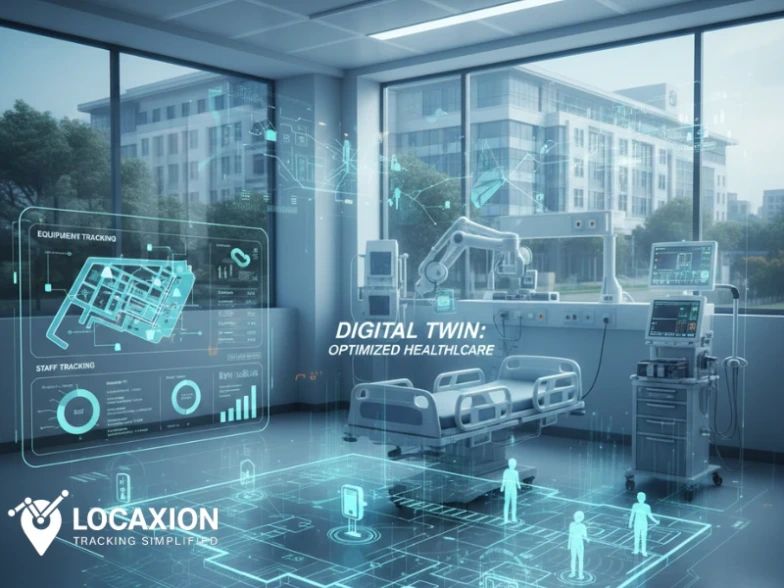
Operational Intelligence through Digital Twins
By integrating RTLS with a Digital Twin, the system creates a live audit trail that moves safety from reactive to proactive:
- Harsh Braking Telemetry: Every sharp deceleration is logged as a saved accident. Mapping these reveals where your layout is failing before an injury occurs.
- Near Miss Analytics: Track exactly where pedestrians and forklifts are getting too close. If a specific intersection generates five proximity alerts in a shift, you can fix the structural problem before the dispatch window even opens.
- Zero Touch Compliance: Impact documentation and speed logs are recorded with time-stamped telemetry, providing the objective evidence needed for automated OSHA-ready reporting.
Explore the LocaXion Forklift Safety Solution
What This Data Changes for EHS Teams
For EHS leaders, vehicle level data changes what is possible on both sides of an incident: before it happens and after.
- Time-stamped Audit Trails: When an investigation opens, the sequence of events is recoverable. What speed was the vehicle traveling? Where exactly was it? These questions have documented answers before anyone asks them, improving the quality of both internal reviews and OSHA recordkeeping.
- Real-Time Safety Analytics: EHS teams gain visibility into current conditions, not just historical summaries. You can see which zones are generating the most interaction events this week or whether harsh braking rates are higher on a specific shift.
- Leading vs Lagging Indicators: Most safety reporting tracks what already happened. Structured telemetry shifts the focus. When EHS teams see where risk is concentrating in real time, the conversation moves from incident review to prevention.
Forklift Safety Rules in Warehouse: A Self Check for Leaders
Five direct questions worth answering honestly about your current setup:
- Are forklift safety rules in warehouse handbooks enforced in the vehicle, or just posted on walls?
- What physically happens at your highest risk intersection when no supervisor is on the floor?
- Are speed limits in pedestrian zones actively governed, or do they rely on operators’ self-regulating under throughput pressure?
- If an incident occurred today, could you reconstruct it with time-stamped data, or would you be working on memory and witness accounts?
- Do you know which zones and operators are generating the most repeated near-miss events?
If several of these do not have a clear answer, the gaps are structural. They will not close through additional training or revised signage.
Read More: Improve Forklift and Pedestrian Safety in Warehouse 4.0
A Practical Starting Point for Warehouse Forklift Safety
The risk of collision is not a theoretical problem. Your near-miss log already confirms exactly where your facility is vulnerable. The question is no longer whether you have rules, but whether those rules have the power to stop a 9,000lb forklift when a human cannot.
Start with a walk. Mark where paths converge dock exits, cross-aisles, and staging areas. Cross-reference those spots against your incident reports. This overlap is your priority list for On-Fork Safety.
If your safety strategy relies on operator judgment while the dispatch clock is running, you are operating with a structural gap. LocaXion bridges this divide by turning your safety policy into a physical constant. By processing logic on-device with near-zero latency, we remove the human variable from your highest-risk zones.
Stop managing safety on paper and start enforcing it on the floor. If you are ready to turn your high-risk hotspots into zero-incident zones, we are ready to show you how.
Schedule a Forklift Safety Risk Review
FAQs on Forklift Safety Rules in Warehouses
Why are forklift safety rules in warehouse handbooks not enough?
Forklift safety rules depend on human awareness and reaction time, which averages about 1.5 seconds. In high velocity environments, a forklift can travel several meters in that window. A handbook sets expectations but cannot physically apply brakes. Active forklift safety solutions are required to enforce rules in real time.
Which safety precaution applies to forklifts at blind intersections?
Standard precautions include slowing down, honking, and using mirrors. In high density warehouses, the more effective precaution is automated for stopping enforcement. Coordinate based control forces the vehicle to stop at a defined line, removing reliance on operator judgment.
How does Fork Control improve forklift safety in warehouse zones?
On Fork systems, process safety logic directly on the vehicle rather than through cloud servers. This allows for near-step intervention. In warehouse forklift safety applications, the system can detect pedestrian proximity and apply braking within milliseconds.
What are the most common high-risk areas for warehouse forklift safety?
Incidents most often occur at blind cross aisles, dock plates, trailer exits, high density picking zones, and speed transition areas. These locations combine restricted visibility, frequent pedestrian crossover, and compressed maneuvering space. Risk increases where vehicle speed and interaction density overlap.
Can forklift safety rules be enforced across different forklift brands?
Yes. LocaXion forklift safety solutions integrate with a vehicle CANbus system. This allows consistent enforcement of speed limits, stop zones, and pedestrian separation across mixed fleets regardless of manufacturer.
How does a Digital Twin support forklift safety in warehouse operations?
A Digital Twin provides a real time map of vehicle movement and interaction events. It logs to harsh braking, speed real-times, and proximity alerts. This data helps identify recurring risk zones and strengthen forklift safety rules before incidents occur.