Skip to content
Introduction: The Roadmap to a Safer Facility
Every safety transformation has a moment of reckoning the point at which a decision made in a boardroom or a procurement meeting must translate into lasting behaviour change on the warehouse floor who have their own habits, pressures, and instincts about how the job gets done.
The first 90 days of a forklift operation safety implementation are that moment, and how those 90 days are managed determines whether your investment in a forklift tracking system delivers lasting change or fades from view in a busy facility.
This article is a transparent walkthrough of exactly what a LocaXion deployment looks like across those three months what we do, what you should expect, and why the structure we follow produces measurably different outcomes than a standard hardware rollout. This timeline matters to operations, EHS, logistics and IT leaders evaluating safety rollouts, seeking ROI evidence.
Pain Point: Operator Pushback During Rollout
Any Safety Manager or Site Manager who has led a technology implementation on a live floor will share the same story, almost regardless of the vendor or the product.
The hardware setup gets completed as scheduled, the project manager runs a handover session, a training video gets played in the break room, and then, within a few weeks, the gap between how the system was designed to work and how it actually gets used starts to widen.
When implementation focuses on deploying technology instead of changing behaviour, operators and supervisors who weren't involved in the selection process and were promised a seamless rollout don't trust the new system.
The IT Manager is troubleshooting integration issues that weren't mentioned in the proposal. And the Operations Manager is fielding questions about why throughput dipped during the transition period.
This is not exceptional it is the default outcome of implementations that treat forklift operation safety technology as a product to be deployed rather than a behaviour to be changed.
The Procurement Analyst who negotiated didn't budget for the extra three months of firefighting after a poor rollout and the Logistics Director who approved the business case is now being asked to justify a timeline that's slipped and a team that's disengaged.
The issue isn't the tech it's missing change management clear training, phased rollouts, and operator involvement.
Technical Solution: Phased Implementation and Baseline Data Collection
Safe operation of forklift technology produces its best results when deployment is structured as a learning system, not a switchover event. LocaXion's 90-day rollout is built on two distinct phases, each with specific objectives and measurable outputs.
Week 1–4: Baseline Monitoring and Identifying High-Risk Behaviours
The first month of a LocaXion deployment is not primarily about alerts. It's about building an accurate picture of what is actually happening on your floor my collecting and measuring data before any active intervention changes behaviour.
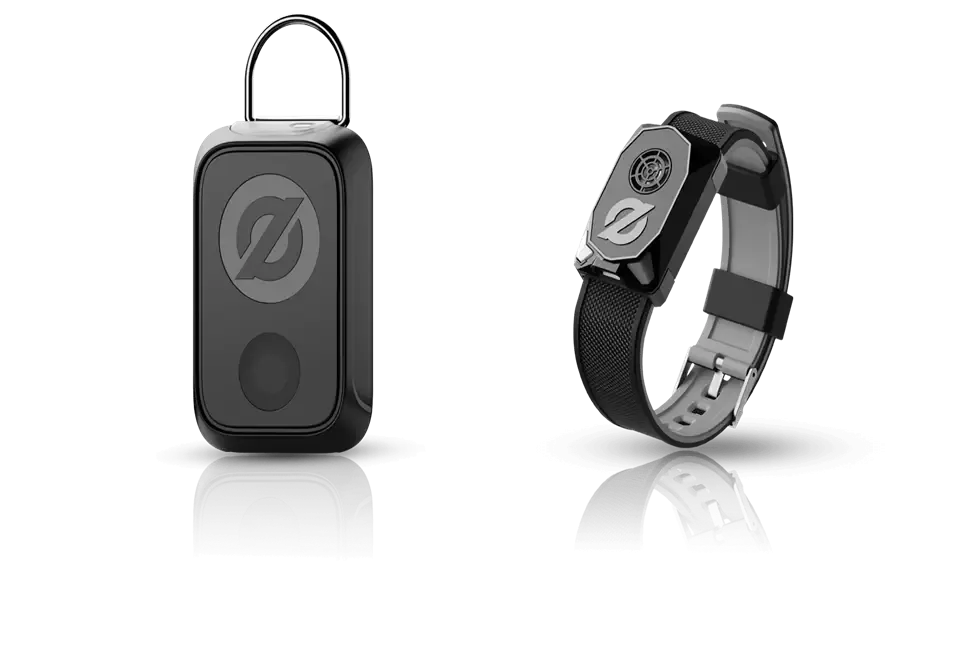
In weeks 1–4, UWB sensors and forklift telematics collect baseline data in observation mode; no alerts are issued while behaviours are recorded.
The system captures speed and proximity data and informs operators without interrupting forklift operators. This matters for two reasons.
Firstly, it establishes an honest baseline. Facilities that skip this step often find that their first weeks of active intervention generate alerts that overwhelm supervisors and generate operator resentment, because the thresholds were calibrated against assumed behaviour rather than observed behaviour. Starting with observation that produces calibration data which reflects the real operating environment.
Secondly, it builds trust with operators.
For the Site Manager and Operations Manager should show the floor team that the system is designed to improve safety for forklift operation and not to punish and should treat the first month as a learning phase, and that early engagement is directly correlated with long-term adoption.
Within four weeks the team compiles the Baseline Safety Profile: analysis of high-risk zones, behaviour patterns, near misses, and forklift safety procedures needing improvement. This report is the basis for phase
Weeks 5–12: Transition the system into the active intervention phase
With a calibrated baseline in place, weeks 5 through 12 shift the system into active intervention mode. Speed governance thresholds go live in high-risk zones. Proximity alerts are activated for pedestrian-forklift interactions. Zone-specific warnings begin reaching operators in real time.
The key missing piece is the feedback loop between alert data and operational teams' responses. If you want the aside, make it short: "Most shippers skip this step
Raw alert volume is not a safety metric. What matters is whether the right alerts are reaching the right people, whether supervisors are responding in ways that reinforce safe operation of forklift practices, and whether the operator experience is leading to behaviour change or yielding actionable insights.
During weeks 5–12, LocaXion's implementation team holds biweekly check-ins with site, EHS and operations leads to review alerts, tweak thresholds and address operator friction; IT/OT stress-tests WMS integrations and resolves network edge cases.
By the end of week 12, the system is fully calibrated, adopted, and generating actionable safety intelligence not just data.
Current Industry Trend: Human-Centric Design in Industrial Safety Technology
The most significant shift in how leading safety technology providers approach forklift safety procedures isn't in the hardware it's in the philosophy behind the rollout.
Suppliers often assumed installing systems would make workers comply; in practice it rarely did. Speed governors, proximity sensors and cameras were common, but systems alone failed because they didn't address training or incentives
What the industry has learned, and what the most effective implementations now reflect, is that forklift operator safety is as much a cultural outcome as a technical one. The operators who follow forklift safety procedures consistently aren't
Motivation in this group stems from understanding the system's importance, having helped introduce it, and receiving useful feedback rather than mere failure reports.
Human-centric design in safety technology means the rollout is built around adoption, not just installation. It means the first weeks of deployment are dedicated to listening and learning not just counting alerts. And it means structured feedback to support the safety responsibilities of forklift operators on the floor, not just managers' reporting needs.
This is the implementation philosophy LocaXion is built on.
The LocaXion Angle: Success Metrics and Quarterly Business Reviews
After the 90-day rollout we move into ongoing performance management." Replace long noun strings like "initial rollout period" with "90-day rollout" and "performance management phase" with "ongoing performance management.
For LocaXion client the QBR agenda focuses on the metrics each stakeholder cares about EHS: incident reduction and OSHA compliance; Operations: throughput and zone performance and metrics that matter to each stakeholder in the room. The EHS Manager sees incident reduction rates and OSHA-relevant compliance data. The Operations Manager sees throughput impact and zone performance.
The Logistics Director sees ROI tracking against the original business case. The Head of Digital Transformation sees platform usage, data quality, and integration performance.
The QBR turns safety data into a shared language that every persona in the room can engage with.
Tracking the Reduction of Near-Miss Events via the LocaXion Dashboard
The LocaXion Dashboard gives safety managers and operations leaders a real-time and historical view of the facility's safety performance from live proximity alerts to trend analysis of near-miss events across zones, shifts, and vehicle types.
Near-miss reduction is the leading indicator that predicts incident reduction. It is also, critically, the metric that appears before injuries do making it the most actionable signal available to a forklift operator safety programme. Facilities that track near-miss data systematically and respond to it operationally consistently reduce their recordable incident rates faster than those that wait for injuries to drive change.
The Dashboard's exportable reporting timestamped, zone-specific, and formatted for OSHA recordkeeping compatibility gives EHS Managers the documentation they need for regulatory purposes and gives Procurement Analysts and Logistics Directors the evidence they need to validate the original investment decision.
Why the First 90 Days Define Your Long-Term Safety Success
Concluding the initial phase of the journey, the trajectory of a forklift operation safety programme is largely set within this timeline, i.e., the first 90 days. The facilities that achieve sustained incident reduction, lasting operator adoption, and genuine compliance culture are the ones that invested in a structured, human-aware implementation not a fast hardware deployment followed by a hope that behaviour would change on its own.
The first 90 days aren't just an onboarding period. They set the standard for daily safety checks, compliance logs, and steps that prevent near-misses from becoming injuries.
Forklift operator safety responsibilities don't sit with the operator alone. Managers, directors, and technology partners share responsibility for operator safety.
Ready to See What Your Forklift Tracking First 90 Days Could Look Like?
LocaXion provides end-to-end forklift operation safety implementation from pre-deployment site assessment and baseline monitoring through to active intervention, operator training, dashboard configuration, and ongoing QBR support.
We work with Operations Managers, EHS teams, Logistics Directors, IT leaders, and Site Managers to deliver rollouts that are structured, adopted, and built to compound over time.
Tell us about your facility, your current safety infrastructure, and your 90-day goals. We'll bring a roadmap to the first conversation.