

- RTLS and Yard Management Automation
- Key Capabilities of RTLS in Yard Management Automation:
- How RTLS Supports Logistics Yard Management
- Implementing RTLS in the Yard Management Supply Chain
- Choose the Right RTLS Technology Mix
- How to Choose the Best Dock & Yard Management Solution
- Find the Right RTLS Solution for Your Yard Operations
- FAQs About RTLS in Supply Chain Operations
Effective yard management is critical in a modern RTLS supply chain, where delays and visibility gaps directly impact lead times and overall inventory turnover. Real-Time Location Systems (RTLS) play a central role in improving control across yard and dock operations.
Using technologies such as Ultra-Wideband (UWB), RFID, Bluetooth Low Energy (BLE), and GPS, RTLS enables continuous tracking of vehicles, equipment, and personnel throughout the yard. This real-time visibility helps teams reduce congestion, improve asset utilization, and respond faster to exceptions.
This guide explains how RTLS supports yard operations, outlines the core technologies behind an RTLS supply chain, and shares practical ways to improve site visibility and daily workflows.
**RTLS and Yard Management Automation **
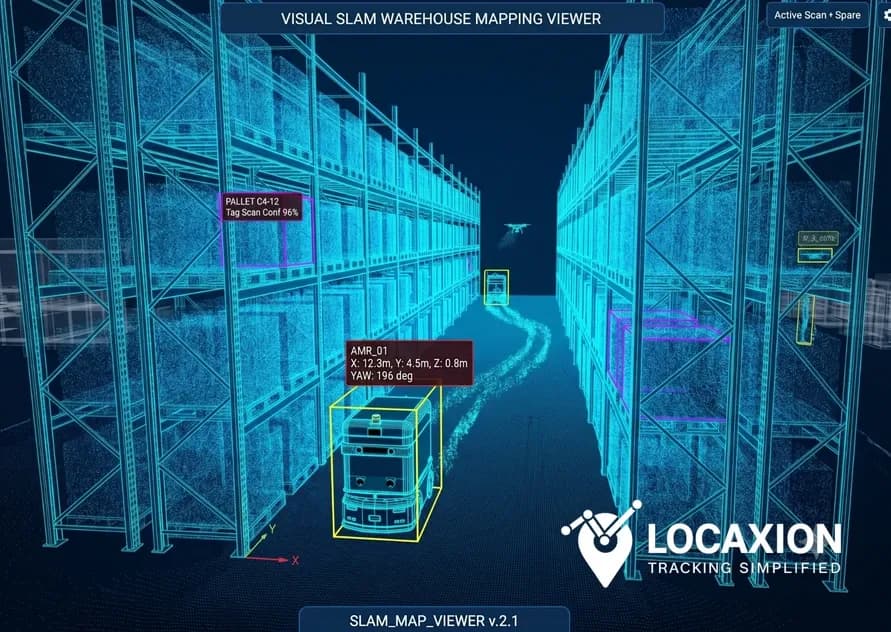
RTLS plays a critical role in yard management automation by providing real-time visibility of trailers, trucks, forklifts, containers, and other assets within logistics hubs.
By replacing manual methods such as paper logs and barcode scans, RTLS reduces inefficiencies, minimizes asset misplacement, and helps teams optimize yard operations through continuous, automated monitoring.
Key Capabilities of RTLS in Yard Management Automation:
| Capability | Operational Function | Strategic Logistics Value |
|---|---|---|
| Real-Time Asset Tracking | Instantly locates trailers, trucks, and yard equipment. | Cuts non-value-added search times and speeds up inventory turnover. |
| Automated Dock Scheduling | Assigns incoming trailers to docks based on live status. | Reduces yard congestion and accelerates turnaround. |
| System Integration | Syncs location data natively with TMS and WMS platforms. | Provides end-to-end RTLS solutions for comprehensive coordination. |
| Proactive Alerts | Triggers notifications for idle assets, dwell times, and delays. | Maintains fluid operational flow and cost-responsiveness. |
**How RTLS Supports Logistics Yard Management **
Integrating enterprise RTLS solutions into logistics delivers measurable gains in operational efficiency. In practice, RTLS for logistics improves performance across these five key operational areas
1. Dock Utilization and Turnaround:
RTLS helps teams manage dock capacity more effectively by aligning trailer movement with real-time availability.
- Automated Assignments: RTLS assigns trailers to available docks based on real-time status, reducing congestion and wait times.
- Lower Idle Times: Continuous monitoring of dock usage enables faster turnarounds and better resource allocation.
2. Improved Yard and Asset Visibility
With RTLS, assets are no longer searched for manually or tracked intermittently.
- Real-Time Asset Tracking: Locate trailers, containers, and equipment instantly to eliminate search delays.
- Inventory Accuracy: Enhanced tracking reduces inventory errors and asset loss.
3. Gate Flow and Access Control
RTLS streamlines how vehicles enter and exit the yard while maintaining security.
- Automated Gate Control: RTLS enables vehicle recognition at gates, speeding up access and exit without manual checks.
- Access Security: Restrict access to authorized vehicles to improve site security.
4. Cost and Resource Efficiency
Improved visibility translates directly into lower operating costs.
- Efficient Resource Use: Optimized workflows cut fuel usage and labor costs.
- Lower Detention Fees: Accurate timing helps avoid delays in loading and unloading.
5. Safety and Compliance
RTLS supports safer yard operations by monitoring movement continuously**.**
-
Collision Prevention: Real-time tracking helps avoid vehicle and equipment collisions.
-
Geofencing Alerts: Trigger alerts for unauthorized or unsafe movement in restricted zones to support safety and compliance.
**Implementing RTLS in the Yard Management Supply Chain **
Introducing RTLS into the yard management supply chain requires careful planning, alignment with operational goals, and a clear understanding of existing constraints. Successful RTLS adoption starts with an honest assessment of current yard performance and operational bottlenecks.
Begin by identifying recurring issues such as asset misplacement, long vehicle dwell times, or inefficient dock utilization. These challenges often point to gaps in visibility and coordination. From there, define clear objectives for RTLS yard management, whether the priority is to reduce operating costs, improve throughput, enhance safety, or strengthen asset tracking for yards.
**Choose the Right RTLS Technology Mix **
Once goals are set, select the technologies that best match your operating environment. RFID is commonly used to track trailers, containers, and pallets in high-volume yards. Ultra-Wideband (UWB) offers higher location accuracy, making it suitable for monitoring high-value or time-sensitive assets within defined zones. GPS is effective for outdoor vehicle tracking across large logistics facilities. \Many organizations adopt a hybrid approach, combining these technologies to support real-time yard monitoring across both broad yard areas and more precise operational zones. This layered approach helps optimize yard operations without overengineering the solution during RTLS adoption.
**Deploy, Integrate, and Optimize **
Integration is critical to long-term RTLS adoption. RTLS should work seamlessly with existing logistics platforms such as WMS, TMS, and other supply chain systems. When systems share real-time location data, teams gain a consistent operational view that supports better scheduling, dispatching, and inventory decisions.
Deployment then focuses on infrastructure. Tags and sensors must be installed across assets, vehicles, and access points, supported by a stable and scalable network. Wireless coverage, power availability, and data throughput should be planned carefully to avoid gaps in visibility or data latency.
**Ongoing Monitoring and Operational Refinement **
The success of RTLS depends on ongoing monitoring and operational refinement. Analyzing collected data reveals patterns in asset movement, dock usage, and vehicle dwell times, helping operations teams make informed decisions.
These insights support continuous improvement across the RTLS supply chain, helping organizations shift from reactive yard management to more predictable, data-driven operations.
RTLS is not a plug-and-play solution. When implemented thoughtfully, RTLS adoption strengthens yard coordination, reduces waste, and improves throughput during both routine and peak operating periods.
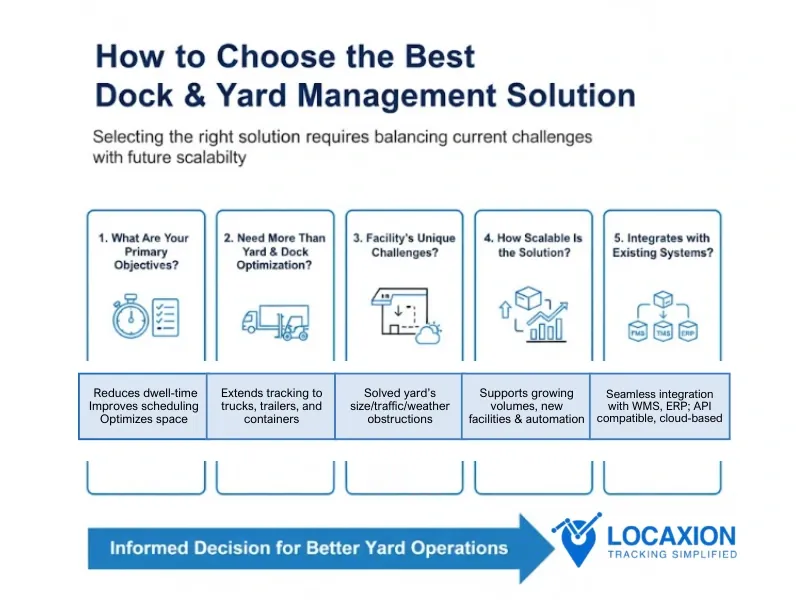
**How to Choose the Best Dock & Yard Management Solution **
Choosing the right Dock and Yard Management Solution is less about feature lists and more about how well the system supports real operating conditions today and as your operation scales. For many organizations, this decision also determines how effectively RTLS yard management can support broader logistics workflows. Selecting the right Dock & Yard Management Solution (YMS) requires balancing your current operational challenges with future scalability. Use these guiding questions to make an informed decision:
1. Define Clear Operational Objectives
Start by identifying the specific outcomes you want to improve.
-
Are you looking to reduce truck dwell times, improve dock scheduling, or optimize yard space utilization?
-
Clarifying these objectives helps you avoid unnecessary features that add complexity without real value.
2. Evaluate the Scope of Yard Visibility Required
Not all yards have the same visibility needs.
-
Do you plan to extend tracking to yard trucks, forklifts, trailers, or containers?
-
If yes, consider a Digital Twin platform that offers custom workflow configurations rather than a traditional YMS.
-
Accuracy matters: Outdoor asset tracking may require RTK or LoRa, while indoor dock operations benefit from UWB or BLE-based RTLS.
3. Account for Facility-Specific Constraints
Every yard has physical and operational constraints that affect system performance.
-
Yard size, traffic flow, and external factors (e.g., extreme weather, obstructions) affect system performance.
-
Technology choice matters: Use RTK or LoRa outdoors for seamless tracking, and avoid costly RFID gates if frequent tag replacements are required.
4. Plan for Scalability and Future Automation
A yard management solution should support growth without repeated redesign.
-
Does the system support growing trailer volumes, new facilities, and automation features like predictive dock scheduling and automated gate control?
-
Ensure the RTLS solution can scale without major infrastructure overhauls.
5. Assess Integration with Existing Systems
Integration is critical for execution.
- Seamless integration with Fleet Management Systems (FMS), Transportation Management Systems (TMS), Warehouse Management Systems (WMS), ERP, and telematics platforms is critical for real-time visibility and automated workflows.
- Look for API compatibility and cloud-based solutions to future-proof your operations.
Find the Right RTLS Solution for Your Yard Operations
Integrating RTLS into dock and yard operations helps optimize yard operations, reduce operational costs, and strengthen safety by enabling real-time yard monitoring and asset tracking for yards. Within an RTLS supply chain, this level of visibility allows logistics teams to move from manual coordination to more predictable, data-driven execution across yard workflows.
Choosing the right approach depends heavily on your facility size, asset mix, and existing WMS/TMS integrations. LocaXion specializes in engineering custom RTLS solutions that bridge the gap between physical yard assets and your digital logistics platforms. Contact our team today to discuss your yard operations and explore a purpose-built RTLS strategy that delivers measurable performance gains.
Connect with us to discuss your yard operations and RTLS requirements.\
FAQs About RTLS in Supply Chain Operations
How does RTLS benefit supply chain management?
RTLS improves supply chain management by providing continuous visibility into asset movement, dwell times, and workflow bottlenecks. In an RTLS supply chain, teams can identify delays earlier, coordinate resources more effectively, and reduce reliance on manual status checks across yard and logistics operations.
What is RTLS supply chain visibility?
RTLS supply chain visibility refers to the ability to see where assets, vehicles, and equipment are at any moment. Through real-time supply chain tracking, operations teams gain accurate, up-to-date insights that support faster decisions and more predictable execution across logistics environments.
How can RTLS improve inventory management?
RTLS improves inventory management by enabling asset tracking for yards, ensuring trailers, containers, and equipment are accounted for continuously. This reduces misplaced assets, improves inventory accuracy, and helps align physical inventory with system records.
Is RTLS used in supply chain logistics?
Yes. RTLS for logistics is widely used to monitor yard activity, dock operations, and asset movement across logistics hubs. It supports better coordination between yards, warehouses, and transportation systems by providing a consistent operational view.
What causes poor visibility in supply chain operations?
Poor visibility is usually caused by fragmented systems, manual tracking, and delayed data updates. Without consistent supply chain monitoring, teams rely on assumptions instead of real-time information, leading to missed handoffs, longer dwell times, and reactive decision-making.