
eBook
Forklift Safety Technology Guide for Warehouses & Distribution Centers
An overview, decision framework, and checklist for DC and warehousing leaders navigating mixed fleets, rising automation, and OSHA's sharpened enforcement focus without sacrificing throughput.
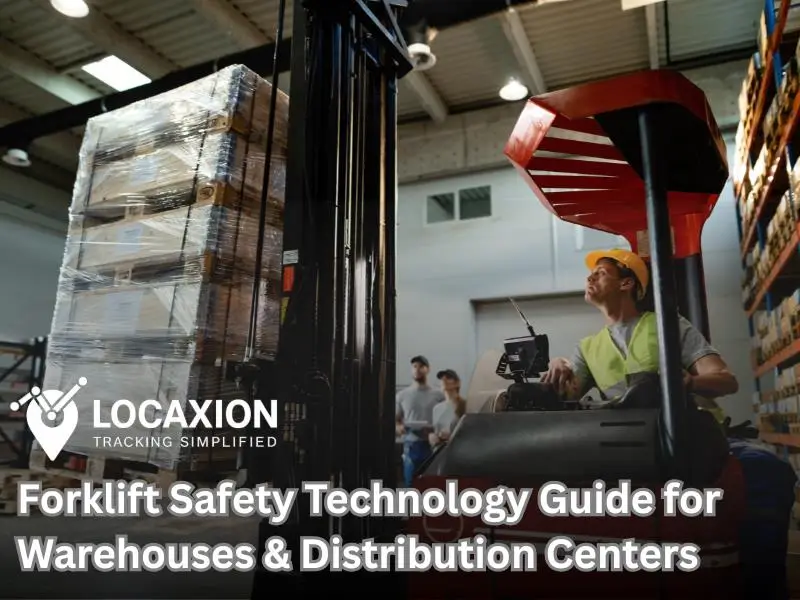
Forklift Safety Technology Guide for Warehouses & Distribution Centers
Author : Viren Mathuria
Evaluate, deploy, and scale forklift safety technologies that prevent incidents before they happen.
What this eBook is about?
Distribution centers and warehouses sit at the heart of modern supply chains, yet they rank among the most hazardous workplaces in the country. With warehouse injury rates nearly double the all-industry average and OSHA launching a strict National Emphasis Program (NEP) targeting the sector, relying on passive warnings is an extreme regulatory and operational gamble. This guide details how to move past isolated, siloed safety tools to build an integrated, future-proof safety ecosystem.
The Scale of the Risk: Warehousing & DC Data
| INDUSTRY BENCHMARK | REALITY CHECK |
|---|---|
| Industry Injury Rate | 4.8 injuries per 100 FTE workers — nearly double the all-industry average. |
| The Fulfillment Risk | E-commerce fulfillment centers see an alarming 5.9 injuries per 100 workers. |
| The Serious Trend | Serious warehouse worker injuries climbed 20% between 2018 and 2022. |
| OSHA Scrutiny | Powered industrial truck citations ranked #6 overall, generating $8M+ in fines. |
Core Themes: What You Will Discover
1. The Automation Crossover Paradox
While long-term automation projects promise to reduce overall injury profiles, the transition period introduces unmapped operational dangers. Discover the unexpected rise in near-miss volumes occurring where manually driven forklifts, autonomous mobile robots (AMRs), and human pedestrians mix in the exact same high-velocity corridors.
2. Why Racking Canyons and Docks Break Legacy Safety
Convex mirrors and blue spotlights were built for a simpler era. We break down the precise conditions under which 40-foot racking canyons, high-density dock staging lanes, and 12-hour shift fatigue combine to trigger total alert fatigue, turning passive sirens into background noise that workers completely tune out.
3. The Unannounced OSHA Inspection Checklist
Under the current Warehouse NEP, compliance officers are conducting randomized, unannounced inspections with a heavy focus on forklift operations. Discover how transitioning to digitized compliance can instantly swap out high-risk, easily falsified paper logs for an ironclad, auditor-ready digital audit trail.
Evaluating the 5 Pillars of Modern Safety Tech
The right answer for a complex DC is rarely a single piece of hardware; it is a strategic combination. The full guide provides a granular, honest assessment of the five core architectures dominating the market:
- Fleet Telematics & Digital Checklists: Building the foundational layer of operator ID and impact telemetry.
- AI Camera Systems (Vehicle-Mounted): Leveraging local edge computing and Human Form Recognition without wearable tags.
- Reverse RTLS (Infrastructure-Based): Unleashing absolute, sub-meter spatial tracking to stop vehicles around completely blind corners.
- SLAM-Based Vision Systems: Mapping the environment from the vehicle outward for advanced, infrastructure-free slow-downs.
- Ambient Infrastructure AI: Turning your pre-existing overhead security cameras into active PPE and zone compliance monitors.
The Architectural Secret: Siloed vs. Integrated
The ultimate unlock for your safety investment lies not in the hardware you buy, but in how that hardware communicates. Inside, we demonstrate the stark performance gap between independent safety tools and an integrated Digital Twin platform. Learn how unifying location streams, camera feeds, and vehicle analytics under a single technology-agnostic umbrella converts raw near-miss data into actionable layout optimization and premium insurance relief.
Included: The Strategic 10-Point Evaluation Framework
Ready to audit potential solutions? Flip to Chapter 7 for a comprehensive evaluation framework covering mixed-OEM fleet integration, lease vs. ownership hurdles, tag compliance culture, and the blueprint for executing a risk-free, 30-day pilot program in a single high-congestion zone.