Skip to content
Understanding how to proactively eliminate production bottlenecks is essential for maintaining a competitive edge in modern industry. Leveraging RTLS for improving manufacturing workflows provides the real-time visibility necessary to transform reactive operations into proactive, data-driven systems. By integrating location intelligence with lean methodologies and automation, facilities can significantly reduce waste, enhance resource allocation, and achieve measurable ROI across the entire production lifecycle. Inefficiencies, often caused by limited process visibility and workflow disruptions, account for up to 60% of production losses. Resolving these issues requires a complete, technology-agnostic approach.
This comprehensive guide covers battle-tested strategies and technologies, including manufacturing RTLS, automation, AI-powered analytics, and lean methodologies. Discover how to increase output, predict equipment failures, and improve profitability through structured, vendor-neutral process improvements.
What Is Industrial Manufacturing Process Optimization?
Industrial Manufacturing process optimization is a systematic approach to driving continuous improvement in production efficiency, product quality, and resource utilization by leveraging data-driven insights and automation. Establishing a culture of continuous improvement ensures that optimization efforts are sustained over time.
Key Aspects of Manufacturing Process Optimization:
- Analyzing current workflows to identify inefficiencies & bottlenecks
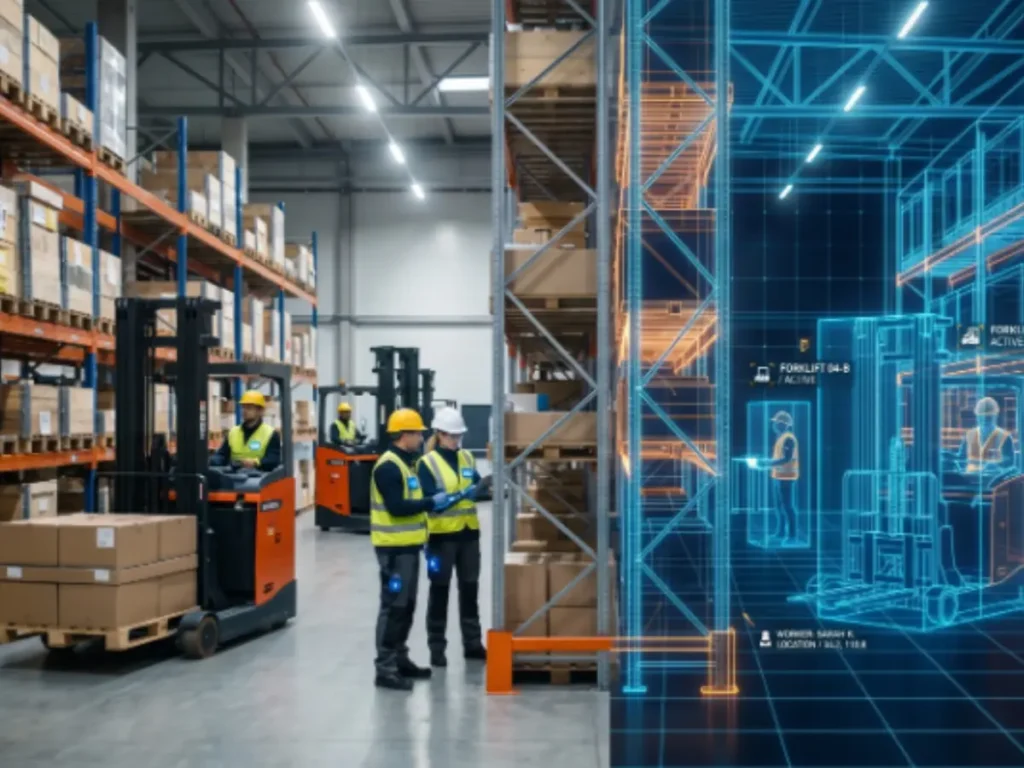
- Implementing advanced technologies like manufacturing RTLS, AI, and IoT to build a complete digital twin Reducing waste & production costs through battle-tested process optimization techniques
- Enhancing real-time visibility with automation & predictive analytics
A recent Deloitte report found that manufacturers who adopt data-driven process optimization experience a 20% reduction in production waste and a 30% increase in operational efficiency.
Key Components of Manufacturing Optimization
- Process Automation
- Real-Time Monitoring
- Lean Manufacturing Principles
- Predictive Maintenance
- Workforce Development
1. Process Automation
Reducing manual intervention to improve speed, accuracy, and consistency in production. Automation technologies not only reduce errors but also increase productivity by speeding up repetitive tasks.
2. Real-Time Monitoring
Implementing RTLS Asset Tracking System has been proven to increase productivity by providing real-time asset tracking.
3. Lean Manufacturing Principles
Eliminating waste, reducing downtime, and optimizing process flow using methodologies like Six Sigma and Kaizen. Continuous improvement frameworks play a crucial role in refining each step within the production system.
4. Predictive Maintenance
Leveraging AI & machine learning alongside RTLS data helps detect early signs of manufacturing equipment failure, allowing teams to proactively prevent unexpected, costly downtime.5. Workforce Development.
Proper training ensures that employees can operate manufacturing equipment safely and efficiently. Employee involvement is key to the success of any optimization effort.
A case study by General Electric revealed that implementing predictive maintenance strategies reduced unplanned downtime by 40%, leading to multi-million dollar cost savings.

How Supports Continuous Improvement in Manufacturing
Real-Time Location Systems (RTLS) play a key role in continuous improvement in manufacturing by providing real-time visibility into assets, workflows, and production performance.
This visibility enables automation, reduces inefficiencies, and supports data-driven decisions across the shop floor
Key RTLS Applications in Manufacturing Optimization
- Asset & Equipment Tracking. Instantly locate tools, raw materials, and machines to minimize search time and loss.
- Workforce Efficiency. Analyze worker movement and task distribution to boost productivity and improve labor utilization.
- Production Flow Optimization. Track work-in-progress (WIP) movement to identify and eliminate bottlenecks to drive manufacturing process efficiency.
- Predictive Maintenance. Monitor equipment health in real time to prevent unexpected failures and reduce downtime.
- Supply Chain Synchronization. Improve material flow coordination to avoid delays and enhance throughput.
Industry leaders like BMW and Airbus have leveraged RTLS to cut production lead times by 25% and increase asset utilization by 30%, demonstrating its value in driving ongoing operational improvement.
Key Benefits of Manufacturing Process Optimization
-
- Higher Production Efficiency
-
- Cost Reduction & Waste Elimination
-
- Minimized Downtime & Equipment Failures
-
- Improved Product Quality & Compliance
-
- Enhanced Decision-Making with Data Analytics
1. Higher Production Efficiency
Automated workflows help shorten cycle times by reducing manual intervention and repetitive tasks. Real-time data provides better visibility into production schedules, allowing for quicker adjustments and fewer delays.
Additionally, reorganizing the physical layout of equipment can minimize unnecessary movement and idle time, helping teams complete tasks more efficiently.
2. Cost Reduction & Waste Elimination
Cutting unnecessary costs starts with identifying where materials, time, or labor are being wasted. Lean manufacturing principles support smarter use of resources without sacrificing output.
Tracking the return on each process change also ensures that optimization efforts are practical and sustainable, reinforcing a habit of steady, measurable improvement.
3. Minimized Downtime & Equipment Failures
Unplanned machine breakdowns can bring production to a halt. Predictive maintenance helps avoid these interruptions by flagging potential issues before they become serious.
With real-time performance tracking, maintenance teams can schedule repairs at the right time, reducing both downtime and long-term wear on equipment.
4. Improved Product Quality & Compliance
Automated tracking systems and process quality control with RTLS make it easier to maintain consistent output and catch errors early in the processStandardizing procedures also helps meet regulatory requirements with less effort. Investing in updated equipment can further raise product standards, leading to fewer defects and better overall reliability.
5. Enhanced Decision-Making with Data Analytics
Smart use of analytics allows teams to spot inefficiencies and correct them faster. By keeping a close eye on key performance indicators (KPIs) in real time, manufacturers can make decisions that are grounded in facts rather than assumptions.
Staying committed to continuous improvement also helps organizations stay responsive as customer needs and market conditions shift.
How to Implement Manufacturing Process Optimization?
Step 1: Assess Current Processes
-
- Identify inefficiencies, bottlenecks, and waste.
-
- Map workflows using value stream mapping.
Leveraging real-time location data, continuous improvement cycles help in identifying and eliminating inefficiencies in the production process, ensuring that optimizations are sustained over time.
Step 2: Choose the Right Optimization Technologies and manufacturing process optimization software.
-
- RTLS & IoT Sensors for real-time tracking.
-
- AI & Machine Learning for predictive analytics.
-
- Robotics & Automation for process efficiency.
Step 3: Integrate with Existing Systems
-
- Ensure compatibility with MES, ERP, and SCM software.
-
- Implement cloud-based data synchronization.
Step 4: Monitor & Optimize Continuously
-
- Use data-driven insights to make iterative improvements.
-
- Conduct ongoing performance analysis.
How to Select the Right RTLS for Manufacturing Process Optimization?
Choosing the right RTLS solution is crucial for accurate tracking, efficiency improvements, and long-term scalability.
Key Considerations:
-
- What Are Your Optimization Goals? WIP tracking, asset utilization, or workforce efficiency?
-
- Which RTLS Technology Suits Your Needs? UWB, BLE, RFID, or hybrid RTLS?
-
- Does the RTLS Integrate with Your Existing Systems? Ensure compatibility with ERP, MES, and automation software.
-
- What Are Your Facility Challenges? Large factories may require LoRa for long-range tracking, while UWB provides high-precision tracking.
Real-World Use Cases of Manufacturing Process Optimization
Automobile Manufacturing: RTLS-powered tracking to streamline assembly lines and drive overall factory optimization. Discover how RTLS impacts warehouse management in the automotive industry by sequencing parts perfectly to streamline complex assembly lines
Electronics Production: AI-driven quality control to reduce defects.
Electronics Production: AI-driven quality control to reduce defects.
Aerospace Industry: Aviation production floor optimization and maintenance for critical machinery.
Future Trends in Manufacturing Process Optimization
- AI-powered process automation for smart factories.
- 5G & edge computing to enhance real-time monitoring.
- Digital Twin technology for simulation-based optimization.
Conclusion – Why Manufacturing Optimization with RTLS is a Competitive Advantage
In today’s fast-paced industrial landscape, manufacturing process optimization is essential for reducing downtime, improving throughput, and maintaining a competitive edge. Real-Time Location Systems (RTLS), combined with automation and data-driven insights, enable manufacturers to eliminate bottlenecks, enhance resource allocation, and streamline workflows.
Looking to learn how to optimize manufacturing processes on your production floor? Explore how a vendor-neutral RTLS for manufacturing can help you boost efficiency, reduce operational costs, and future-proof your factory
Frequently Asked Questions (FAQs)
How does RTLS improve manufacturing workflows?
RTLS improves workflows by providing uninterrupted, real-time visibility into the exact location of assets, personnel, and inventory. This allows managers to proactively identify bottlenecks, optimize routing, and eliminate the non-value-added time employees spend searching for missing tools or materials.
What manufacturing processes benefit from RTLS?
Almost all processes benefit but specifically work-in-progress (WIP) tracking, predictive maintenance, forklift fleet management, and process quality control with RTLS see the highest measurable ROI. It ensures materials are at the right station at the exact right time.
How do RTLS systems integrate with manufacturing?
Modern RTLS solutions are architected to integrate seamlessly with existing enterprise systems like MES (Manufacturing Execution Systems) and ERPs via APIs. This creates a unified digital twin of the facility, allowing location data to trigger automated workflows within your current software.
What ROI can be expected from RTLS in manufacturing?
Facilities utilizing RTLS for improving manufacturing workflows typically experience significant payback through a 20-30% reduction in production waste, massive decreases in unplanned downtime, and heightened overall equipment effectiveness (OEE), leading to millions in cost savings.